



A Steward Partners executive made a blunt observation this week that cuts to the heart of what’s frustrating growth investors right now: “Nvidia is unbelievable. If you looked at their last earnings report it was staggering and I think in a different environment, that stock would have really taken off but in this climate, investors are nervous.”
He’s not wrong on either count.
The Earnings Were, In Fact, Staggering
Nvidia (NASDAQ:NVDA | NVDA Price Prediction) posted Q4 FY2026 results that most companies would consider a career highlight. Revenue hit $68.13 billion, up 73% year-over-year. Net income came in at $42.96 billion, nearly doubling from the prior year. Free cash flow for the quarter alone was $34.9 billion.
The Data Center business generated $62.31 billion in revenue, up 75% year-over-year, with networking revenue exploding 263% to $10.98 billion. That networking number reflects how deeply Nvidia’s NVLink fabric is embedded in hyperscaler infrastructure — it’s not just selling chips, it’s selling the connective tissue of AI data centers.
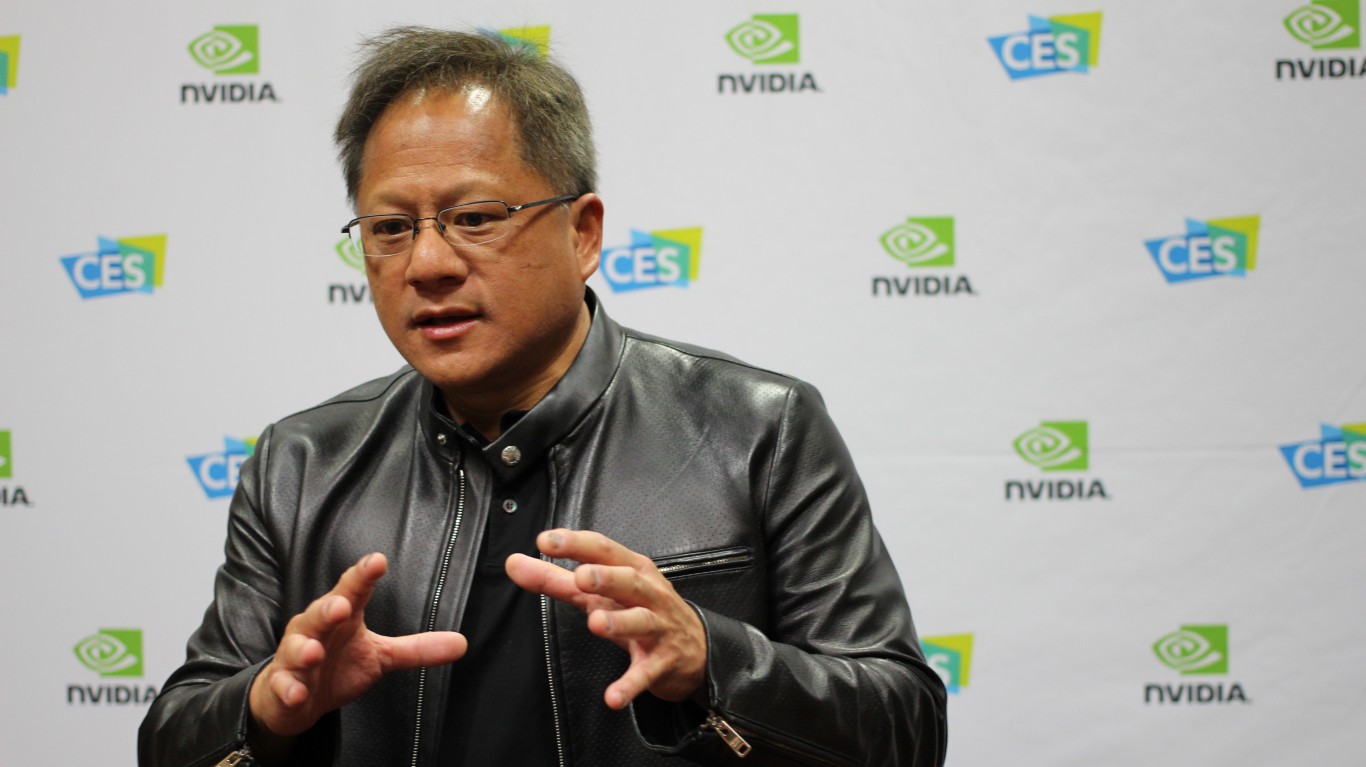
CEO Jensen Huang framed the moment on the earnings call: “Computing demand is growing exponentially — the agentic AI inflection point has arrived.” Q1 FY2027 guidance of ~$78 billion suggests the growth engine isn’t slowing.
So Why Is the Stock Down?
Nvidia closed at $195.95 the day earnings were filed, then sold off to $178.56 as of March 19, putting it down 4.25% year-to-date.
The Steward Partners exec pointed to geopolitical uncertainty — Middle East tensions specifically — as the governor on risk appetite. The VIX sits at 25.09, in the 91st percentile of readings over the past year. Fear is elevated, and elevated fear means investors trim first and ask questions later.
The exec also noted that several Mag 7 names are in bear market territory, and the numbers confirm it. Microsoft (NASDAQ:MSFT) is down nearly 20% year-to-date. Tesla (NASDAQ:TSLA) has shed over 15% in 2026. Meta (NASDAQ:META) is down 8% year-to-date. This is broad de-risking, not an Nvidia-specific story.
The Valuation Case
Here’s where the exec’s argument gets interesting. He noted Nvidia is trading in the mid-20s on a forward P/E, which he described as cheap relative to where it’s been. The data supports that: the forward P/E sits around 23x, against a company growing revenue at 65%+ annually and generating over $96 billion in free cash flow for the full year.
Analyst consensus has a price target of $268.43 with 59 buy ratings and just one sell.
The exec expressed a contrarian view, noting that broad market selloffs have historically created valuation opportunities — though he acknowledged ongoing geopolitical uncertainty remains a risk factor. “Buying when other people are selling is the prudent move.” Whether that thesis plays out will depend on how quickly macro uncertainty resolves. Nvidia’s customers — including Meta committing to millions of Blackwell and Rubin GPUs and Microsoft Azure ramping CapEx 89% year-over-year — remain a key part of the demand picture.











 Top Gaining Stocks
 Top Losing Stocks