


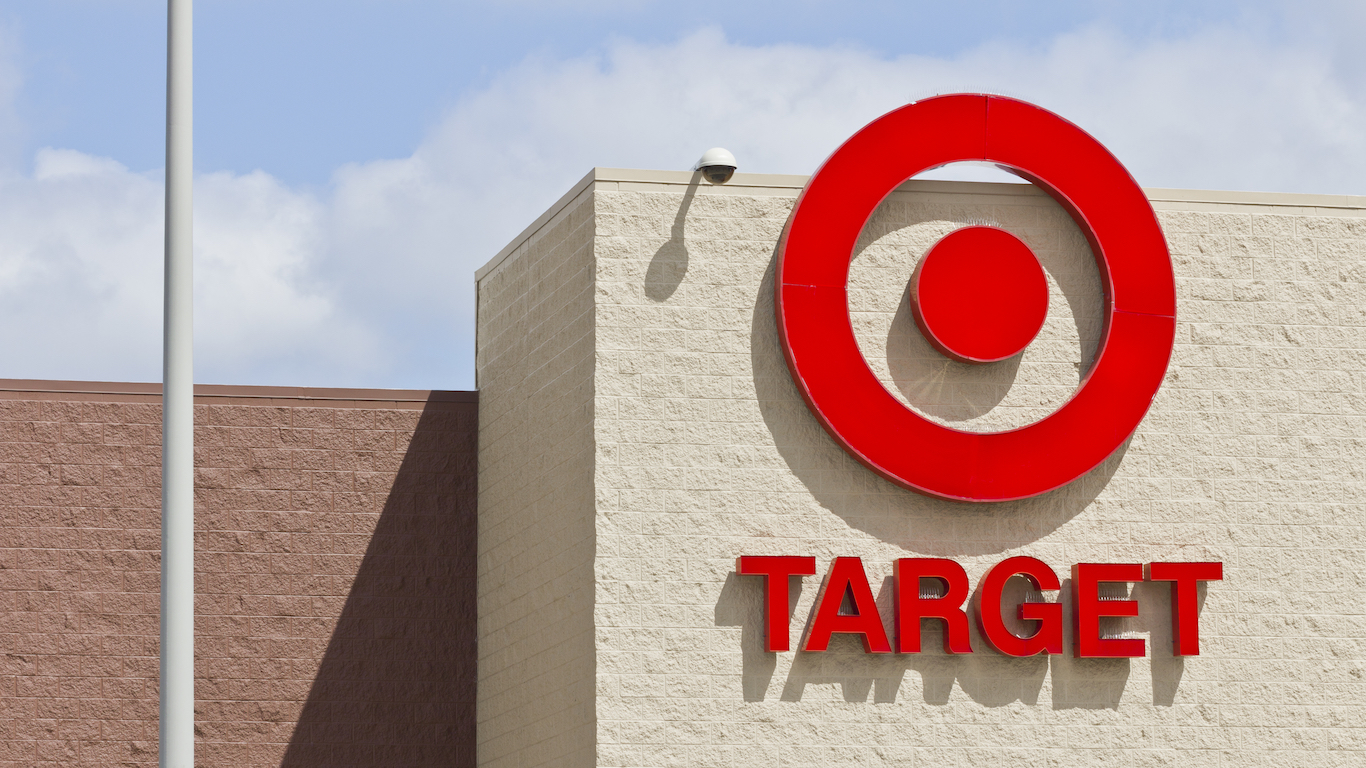
Retailers entered 2026 still sorting through uneven consumer budgets. Inflation has cooled, yet discretionary spending remains picky — food holds steady while big-ticket items lag. Some chains expanded; others posted their third straight year of flat or falling sales.
Against that backdrop, Target (NYSE:TGT | TGT Price Prediction) shares have climbed 44% from the 52-week low of $83.44 reached last year. The stock closed near $120 per share on Friday. So the question for income-seeking investors is straightforward: Has the retailer finally turned the corner on its troubles?
Let’s examine the numbers from Target’s fourth-quarter and full-year 2025 earnings release issued earlier this month. They show clear progress without pretending the road was smooth.
The Numbers Show Stabilization, Not a Blowout
Fourth-quarter net sales totaled $30.5 billion, down 1.5% from the year-ago period. Comparable sales declined 2.5% — stores fell 3.9% while digital rose 1.9%. Adjusted operating income held roughly flat at $1.5 billion. Yet adjusted earnings reached $2.44 per share, beating the consensus estimate of $2.16 and topping last year’s $2.41 per share. Gross margin expanded 40 basis points to 26.6%, driven by lower inventory shrink, reduced supply-chain and fulfillment costs, plus growth in advertising revenue. Those gains offset higher product costs and category mix pressure.
For the full year, net sales slipped 1.7% to $104.8 billion while adjusted EPS landed at $7.57, down from $8.86 in 2024. The numbers reflect a tough 2025, marked by markdowns and purchase-order cancellations. Still, the quarter closed on an improving note: traffic and sales trends accelerated in December and February posted healthy gains.
The Turnaround Plan Is Gaining Traction
Target’s new leadership under CEO Michael Fiddelke has zeroed in on three levers — store experience, category focus, and digital speed. Food and beverage, beauty, and toys posted sales gains in the quarter even as overall traffic softened. Inventory shrink improved materially, a quiet but important win after years of elevated theft and supply-chain friction. The company also trimmed SG&A expense while investing in wages and benefits, proving it can control costs without sacrificing service.
Digital sales growth of 1.9% may look modest, but it outpaced the broader retail slowdown and sets up the next phase of AI-driven personalization and faster fulfillment. These moves address the exact pain points — price perception, selection, and convenience — that drove shoppers elsewhere in 2024 and 2025.
2026 Guidance Points to Modest but Real Growth
Management laid out a deliberate plan for fiscal 2026. Net sales should rise around 2%, including a small increase in comparable sales plus contributions from new stores and non-merchandise revenue. Adjusted operating income margin is forecast to expand roughly 20 basis points from the 4.6% posted in 2025. Adjusted EPS guidance sits between $7.50 and $8.50, with the midpoint implying low- to mid-single-digit earnings growth. The company expects positive net sales growth in every quarter.
That outlook sits above the 1.75% consensus estimate for sales growth and ahead of FactSet’s $7.30 EPS forecast. Target also plans more than $2 billion in incremental investments across stores, food, technology, and labor — spending that management believes will compound into higher traffic and basket size by the back half of the year.
The Risks That Still Require Watching
Granted, retail never lacks competition. Walmart (NYSE:WMT) and Costco (NASDAQ:COST) continue to deliver stronger comparable-sales growth in many categories, trading at 40-plus times forward earnings while Target sits near 16 times current-year estimates. Brand perception issues from past boycotts and theft concerns have not vanished overnight. And a 2% sales target, while realistic, leaves little room for error if consumer spending softens again.
That said, the binding improvements in margin, shrink, and category momentum give the plan a firmer foundation than 2025’s results suggested. The 44% stock rebound already prices in some optimism; the data now needs to validate it.
Key Takeaway
Target has not erased every scar from its recent troubles, but the Q4 beat, margin expansion, and 2026 guidance mark the clearest inflection point in three years. For safety-focused investors who prize a 16-times multiple and visible path to low-single-digit earnings growth, this Dividend King — it has raised the payout for 57 consecutive years — now offers a data-backed entry rather than a hope trade.
Execution over the next two quarters will decide whether this rebound becomes a sustained recovery. Investors should watch Target’s first-quarter report in May closely — consistent traffic gains there would confirm the corner has indeed been turned.






 Top Gaining Stocks
 Top Losing Stocks