


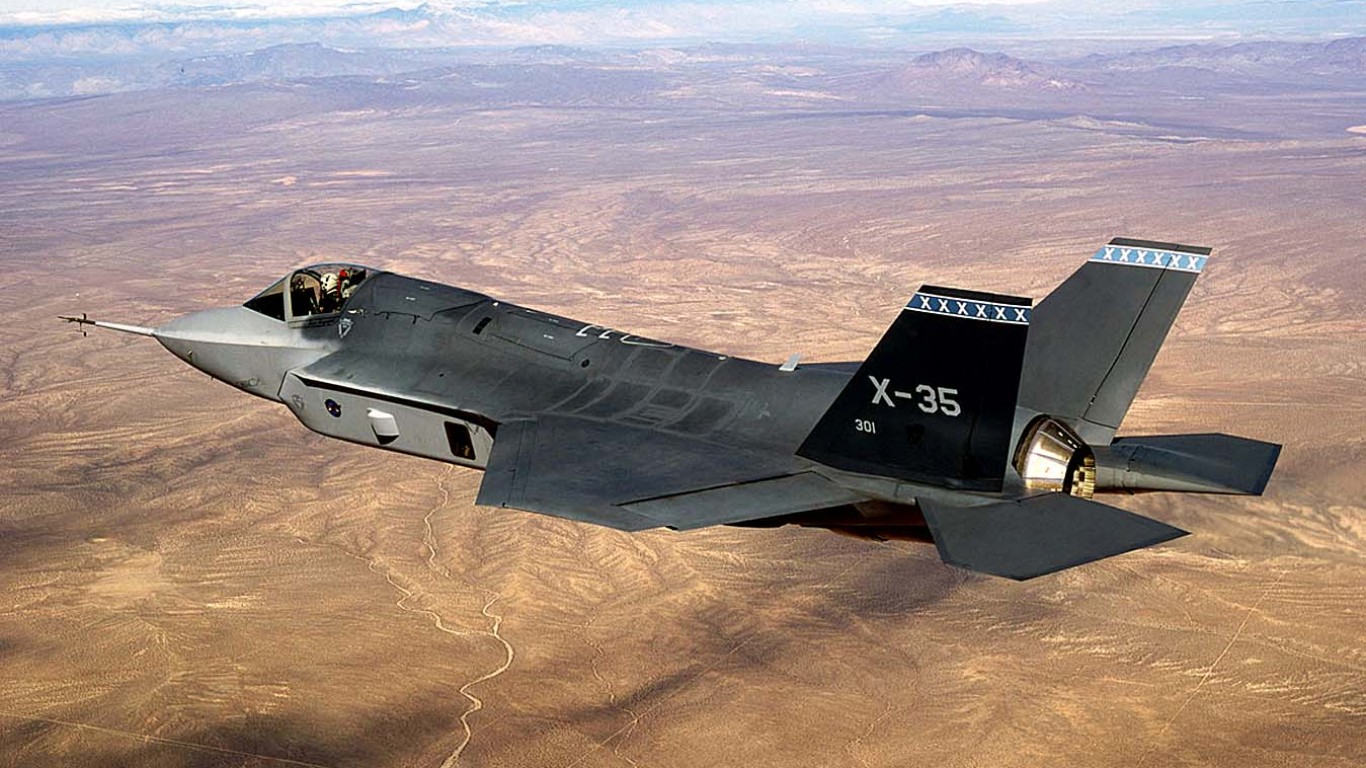
The decisive, lethal, and comparatively brief strategic military strikes executed by President Trump and Secretary of War Hegseth have once again elevated the profile of US military supremacy. Thanks to the successes of Operation Midnight Hammer, Operation Rough Rider, the Nigerian Christmas Day Strike, and the soon-to-be-concluded Operation Epic Fury, the US defense industry has seen a surge in the past year, and defense industry ETFs have benefited handsomely. The Invesco Aerospace & Defense ETF (NYSE: PPA | PPA Price Prediction) notched +37.80% in the past year. Another defense ETF, iShares US Aerospace and Defense ETF (CBOE: ITA), edges PPA out slightly, with a +38.30% 12-month gain. However, the relative newcomer military tech focused GlobalX Defense Tech ETF (NYSE: SHLD) smoked them both, with a +47.82% gain, despite launching only in 2023.
Each ETF represents a different perspective on the defense industry and is designed to appeal to investors with corresponding mindsets and views. Upcoming geopolitical events and agreements are likely to continue to propel the industry and these ETFs throughout 2026.
Invesco Aerospace & Defence ETF

Boeing’s Apache helicopter.
PPA is an ETF designed to track the SPADE Defense Index and invests up to 90% of its $8.2 billion in a range of stocks that are involved with defense, aerospace, government space, and homeland security. The companies’ range of industries include aircraft, missiles, drones, infrastructure, services, IT, etc. that are determined to be “systematically important” to the US defense sector. PPA has the highest Morningstar rating of 5-stars. A $10,000 investment in PPA made 10 years ago would be worth $49,117 at the time of this writing.
|
NAV |
$160.18 |
Inception |
10-26-2005 |
|
Net Assets |
$8.24 billion |
Expense Ratio |
0.58% |
|
Yield |
0.36% |
1-year Return |
37.80% |
|
Average Volume |
326,708 shares |
3-Year Return |
31.94% |
|
# of stocks held |
60 |
5-Year Return |
22.75% |
|
Beta |
1.02 |
10-Year Return |
19.38% |
Top 10 PPA holdings include:
- Lockheed Martin: 9.32%
- RTX Corp. : 8.86%
- Boeing: 7.67%
- General Electric: 7.64%
- Northrop Grumman: 6.45%
- General Dynamics: 5.25%
- L3Harris Technologies: 4.59%
- Honeywell International: 4.54%
- Howmet Aerospace: 4.27%
- Elbit Systems: 3.44%
iShares US Aerospace and Defense ETF
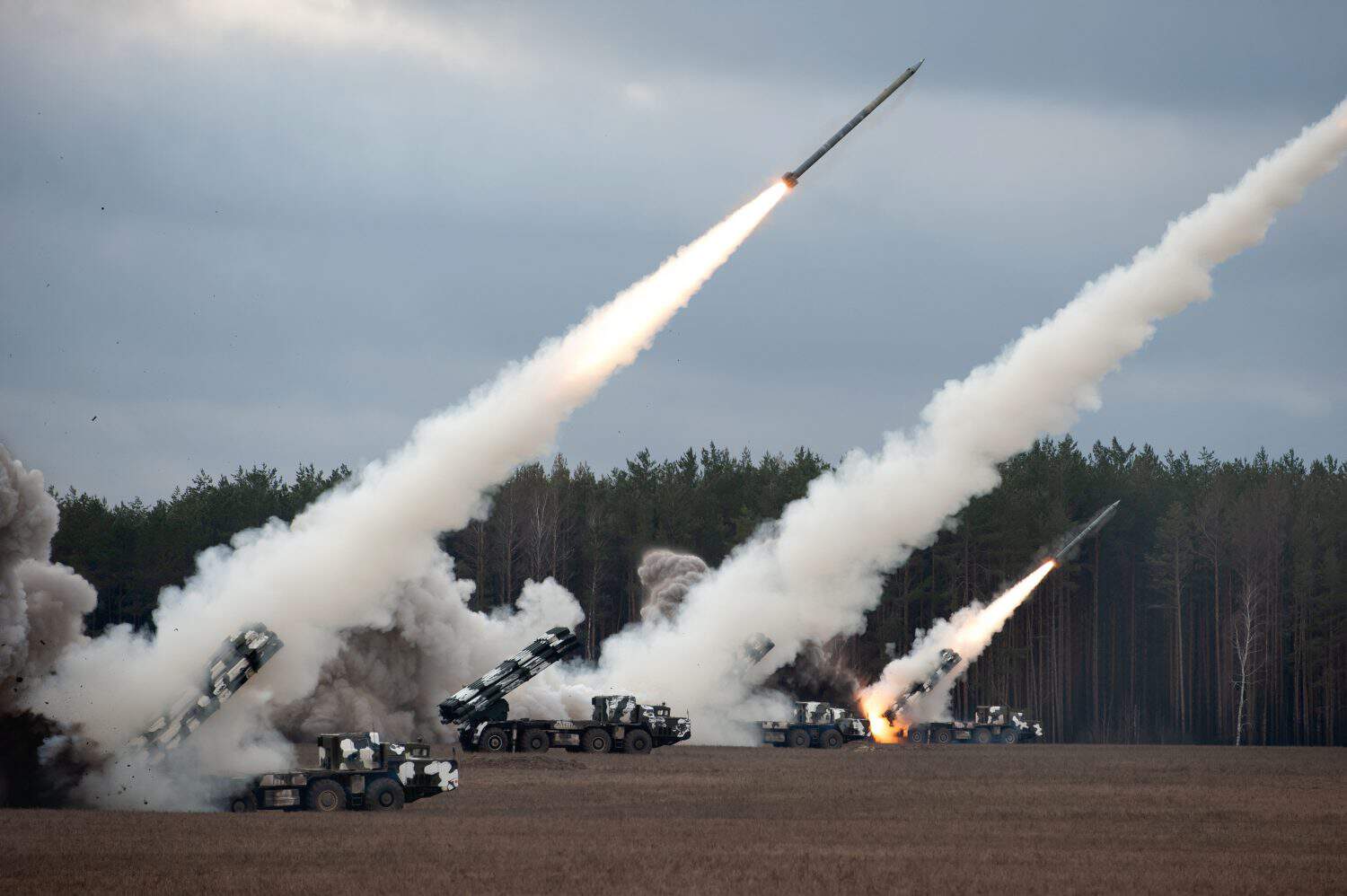
ITA is the largest defense sector ETF with $16 billion net assets.
Using the Dow Jones US Select Aerospace & Defense Index as its benchmark, ITA covers a cross section of the top US companies involved with designing, manufacturing, and selling military aircraft, sea vessels, land transport, missiles, and the associated electronics and other support to make them operate at maximum efficiency. Up to 20% of its assets may be allocated to certain futures, options and swap contracts. A $10,000 investment in ITA in 2016 would be worth $39,588 today. It has a 4-star Morningstar rating.
|
NAV |
$210.70 |
Inception |
5-1-2006 |
|
Net Assets |
$16.01 billion |
Expense Ratio |
0.38% |
|
Yield |
0.48% |
1-year Return |
38.30% |
|
Average Volume |
1.3 million shares |
3-Year Return |
29.66% |
|
# of stocks held |
44 |
5-Year Return |
21.64% |
|
Beta |
1.20 |
10-Year Return |
17.05% |
The top 10 stocks held by IRA are:
- GE Aerospace: 20.99%
- RTX Corp:15.79%
- Boeing: 7.55%
- Lockheed Martin: 5.26%
- Howmet Aerospace: 5.13%
- Northrop Grumman: 4.90%
- L3Harris Technologies: 4.79%
- General Dynamics: 3.92%
- Transdigm Group: 3.76%
- Axon Enterprise (3.48%)
GlobalX Defense Tech ETF

SHLD focuses on military digital technology companies.
The utilization of AI, big data, and cybersecurity technology in military warfare and equipment is cutting edge and often proprietary, being subject to ITAR (International Trafficking in Arms Regulations). SHLD is an ETF that focuses more on the stocks that GlobalX analysts have determined have the best cyber-related technology upside prospects for the aerospace and defense sector. Therefore, the GlobalX Defense Tech Index is its benchmark. As SHLD was launched, ominously, on 9-11 in 2023, its operating history is comparatively brief, but its stock target emphasis is very pertinent going forward into 2026. That emphasis on defense companies means that those with significant commercial aviation or other non-defense sector businesses are omitted from its benchmark index. It has a “neutral” Morningstar rating, due to its short history. Unlike ITA or PPA, SHLD has a number of international companies in its portfolio not found in the other two. A $10,000 investment at its launch date would be worth $27,910 today.
|
NAV |
$68.73 |
Inception |
9-11-2023 |
|
Net Assets |
$7.53 billion |
Expense Ratio |
0.50% |
|
Yield |
0.48% |
1-year Return |
47.82% |
|
Average Volume |
2.25 million shares |
3-Year Return |
N/A |
|
# of stocks held |
50 |
5-Year Return |
N/A |
|
Beta |
N/A |
10-Year Return |
N/A |
The top 10 holdings of SHLD are:
- Lockheed Martin: 9.46%
- RTX Corp: 7.92%
- General Dynamics: 7.15%
- Rheinmetall AG: 6.78%
- Palantir: 5.60%
- Northop Grumman: 4.92%
- L3Harris Technologies: 4.91%
- BAE Systems: 4.60%
- Hanwha Aerospace: 4.24%
- Thales S.A.: 4.17%
A Changing Geopolitical Landscape

Modern warfare is now being engaged on multiple levels in the 21st century.
The short and decisive military successes in Venezuela, Nigeria, and previously in Iran showed the silent and deadly power of US forces. However, the Biden fiascos in Ukraine and Afghanistan left US munitions stockpiles depleted as of mid-2025. SecWar Hegseth has requested $2 billion to restock, which has yet to be approved by Congress. However, Operation Epic Fury is proving to be a success, and the participation of Israel, Qatar, UAE, Jordan, Saudi Arabia and Kuwait is helping to ameliorate excessive inventory stress until it can be replenished.
Yet, replenishment is certainly a priority – not only for US national security, but in order to have the deterrent strength to enforce the newly created Shield of Americas. Additionally, NATO has committed 5% GDP defense spending over the next 9 years, so a ripe export market will add to demand.
ITA, PPA, and SHLD represent a cross-section of the defense industry landscape, from well established large military contractors providing tangible, heavy metal weapons and transport for war, to digital, IT based cyber warfare companies on the cutting edge of 21st century technology.












 Top Gaining Stocks
 Top Losing Stocks