


Nvidia (NASDAQ: NVDA | NVDA Price Prediction) and Palantir Technologies (NASDAQ: PLTR) both reported blockbuster quarters and sit at different layers of the same AI wave. Nvidia sells the physical infrastructure that makes AI possible; Palantir sells the software intelligence that makes AI actionable inside real organizations. Comparing them after earnings reveals two very different bets on how the AI economy creates durable value.
Blackwell Dominates Hardware. AIP Reshapes Enterprise Software.
Nvidia’s fourth quarter revenue hit $68.13 billion, up 73.2% year-over-year, with the Data Center segment alone generating $62.31 billion, up 75% YoY. Networking inside that segment grew even faster: NVLink fabric revenue surged 263% YoY to $10.98 billion as hyperscalers wired up GB200 and GB300 systems at scale.
Palantir’s story is structurally different. Quarterly revenue reached $1.41 billion, up 70% YoY, powered by a U.S. commercial segment that grew 137% YoY to $507 million. The AIP platform is converting enterprises from cautious AI experimenters into committed operational users. The Rule of 40 score hit 127%, a figure signaling simultaneous growth and profitability at a rare level.
| Business Driver | Nvidia (Q4 FY2026) | Palantir (Q4 2025) |
|---|---|---|
| Revenue | $68.13B (+73% YoY) | $1.41B (+70% YoY) |
| Primary Growth Engine | Blackwell GPU + NVLink fabric | AIP-driven U.S. commercial |
| Free Cash Flow | $34.90B | $791M |
| Forward Revenue Guide | ~$78.0B (Q1 FY2027) | $7.18–$7.20B (FY2026) |
Hardware at Massive Scale vs. Software With Minimal Capex
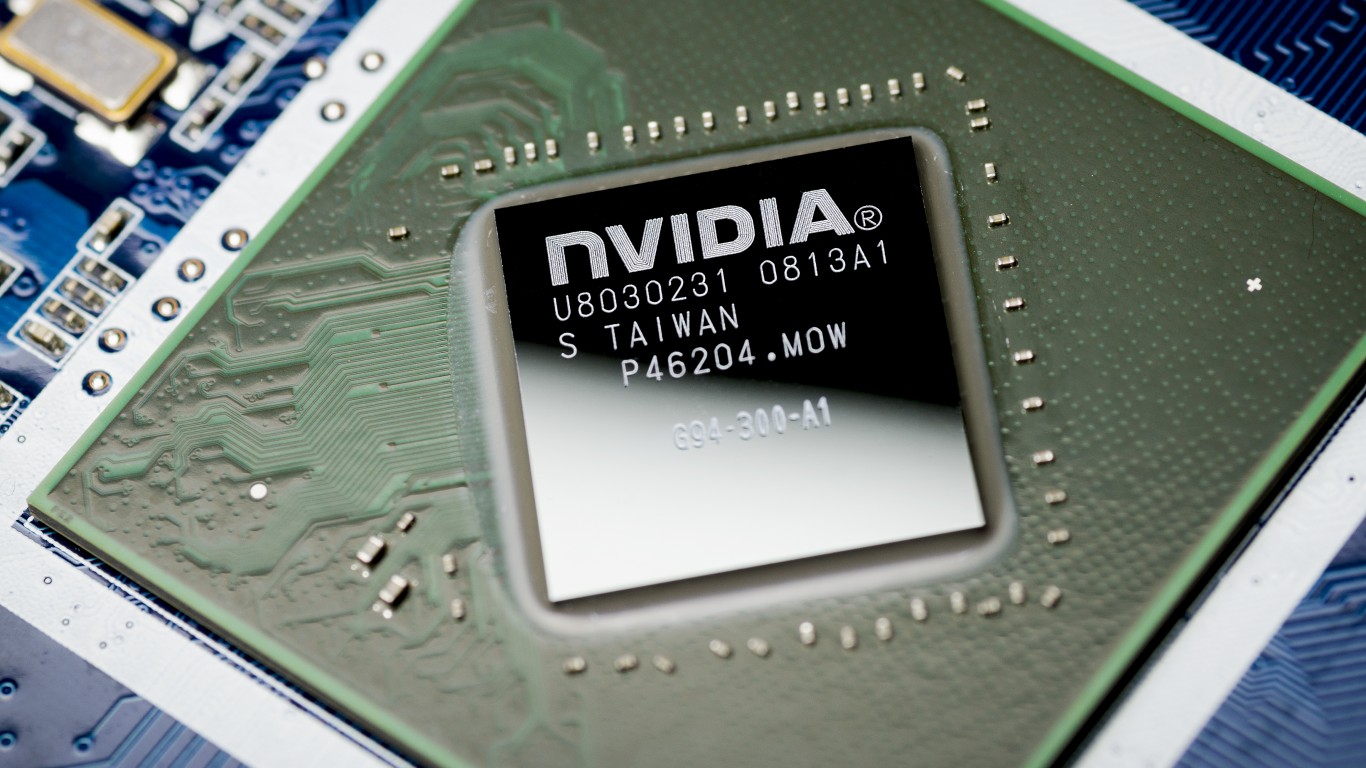
The divergence is sharpest in capital intensity. Nvidia carries $95.2 billion in total supply commitments and depends on Taiwan Semiconductor (NASDAQ:TSM) for manufacturing — a competitive moat but also a concentration risk. China export controls already triggered a $4.5 billion charge in Q1 FY2026, and Q1 FY2027 guidance explicitly excludes Data Center compute revenue from China.
Palantir spent just $13.3 million in capex during Q4. Its risk profile skews toward valuation and stock-based compensation: $684 million in SBC for full-year 2025 is a real dilution concern at current share prices.
| Lens | Nvidia | Palantir |
|---|---|---|
| Trailing P/E | 36x | 239x |
| Forward P/E | 22x | 114x |
| Profit Margin | 55.6% | 36.3% |
| YTD Price Change | -4.88% | -16.48% |
The Next Test Is Whether Enterprise AI Spending Holds
For Nvidia, the critical watch item is whether hyperscaler capex commitments translate into sustained GPU orders as Rubin replaces Blackwell. Partnerships with Meta Platforms (NASDAQ:META | META Price Prediction), CoreWeave, and OpenAI suggest demand depth, but any slowdown in AI infrastructure spending would hit revenue fast. Gaming recovery also bears watching: supply constraints are expected to weigh on Gaming in Q1 FY2027, a smaller but meaningful margin contributor.
For Palantir, the question is whether the AIP-driven commercial surge sustains. The company guided for U.S. commercial revenue exceeding $3.14 billion in 2026, implying at least 115% growth — an extraordinary target. Remaining deal value of $4.38 billion, up 145% YoY provides some confidence, but long sales cycles and government contract renewal risk remain real.

Valuation Comparison: Nvidia vs. Palantir
Both companies delivered genuine earnings beats. The difference is valuation. Nvidia trades at forward P/E of roughly 22x with 63 analyst buy or strong-buy ratings and a consensus price target of $268.22 against a current price of $177.39.
Palantir trades at forward P/E near 114x with a consensus target of $185.25, barely above where shares trade today. Palantir’s AIP story carries a premium valuation that reflects high growth expectations and limited margin of safety.
Nvidia’s valuation at 22x forward earnings is more moderate relative to its scale and free cash flow generation. China export restriction developments warrant close attention given their direct impact on Data Center revenue. Palantir’s AIP commercial trajectory and whether enterprise pilots convert into large, sticky contracts at scale remain the key variables to monitor.











 Top Gaining Stocks
 Top Losing Stocks