


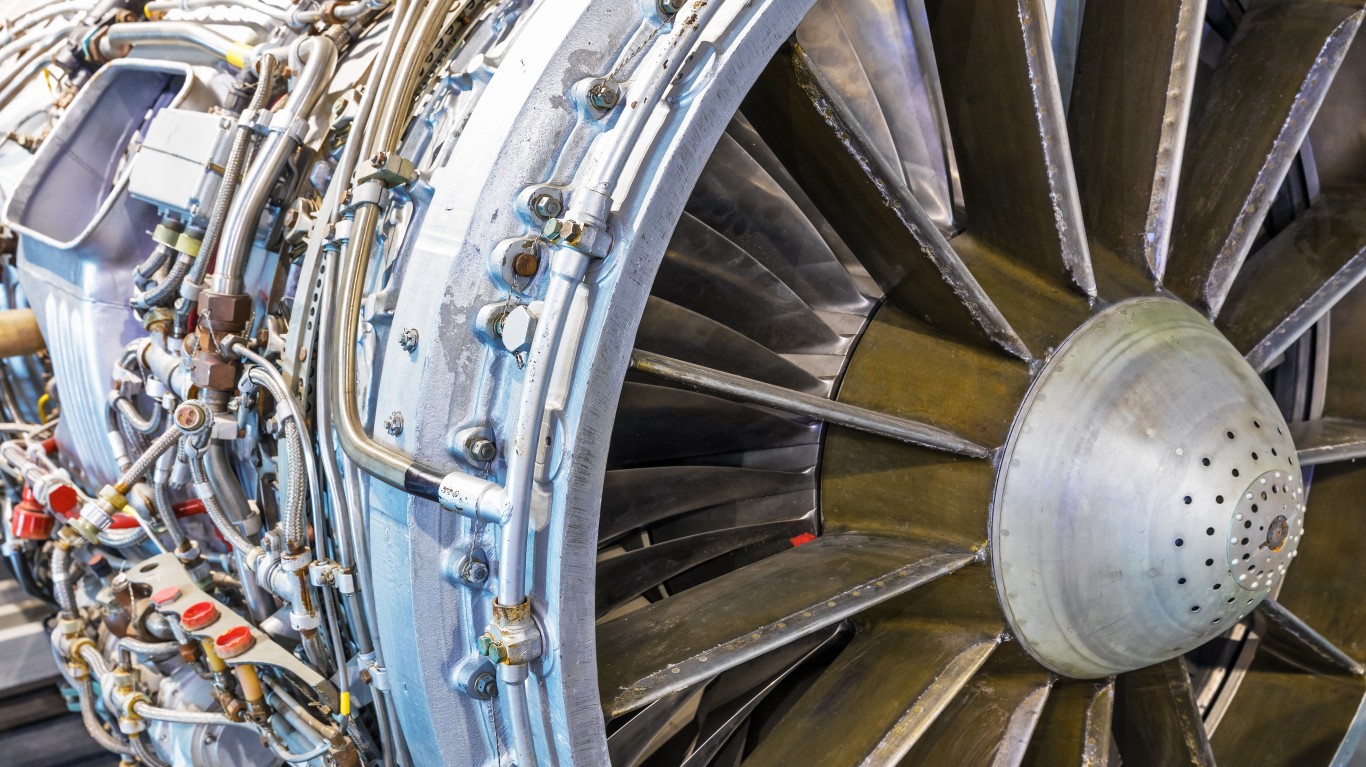
GE Aerospace (NYSE:GE | GE Price Prediction) reports first-quarter 2026 results tomorrow morning before the open. With a $190 billion backlog, a stock up 68% over the past year, and Wall Street expecting another strong print, the bar is high.
Momentum Meets a Tougher Hurdle
GE Aerospace closed out 2025 on a strong note. Full-year revenue reached $45.86 billion, up 18.48% year over year, on a GAAP basis, and 21% adjusted, while operating income climbed 47.91% to $10.0 billion and free cash flow more than doubled to $7.69 billion. CEO H. Lawrence Culp, Jr. called it an “outstanding year,” and the numbers backed that up.
But Q4 2025 introduced a wrinkle. Although EPS came in at $1.57, handily beating the estimate of $1.44 by 9.03%, and revenue surged 28% year over year to $12.72 billion, CES margins compressed 420 basis points, driven by a lower spare engine ratio and a higher mix of install deliveries. That margin pressure is the story heading into Q1 2026. Investors want to know if it was a one-quarter blip or the start of a trend. Management also guided for low double-digit gains for the full-year, raising concerns of slowing growth.
The stock has traded roughly flat year to date, down 1.12% since December 31, 2025, after a massive run. Shares are up 68.18% over the past year, which means the market has already priced in a lot of execution. Tomorrow’s report needs to deliver.
Consensus Estimates vs. Year-Ago Results
| Metric | Q1 2026 Estimate | Q1 2025 Actual | YoY Change |
|---|---|---|---|
| Adjusted EPS | $1.59 | $1.49 | +6.7% |
| Revenue | Low double-digit growth implied | $9.94B | Mid-teens expected |
| Metric | FY2026 Guidance | FY2025 Actual | YoY Change |
| Adjusted EPS | $7.10–$7.40 | $6.37 | +11.5% to +16.2% |
| Revenue | Low double-digit growth | $45.86B | Low double-digit |
| Operating Profit | $9.85B–$10.25B | $10.0B | Roughly flat to +2.5% |
| Free Cash Flow | $8.0B–$8.4B | $7.69B | +4% to +9.2% |
CES Margins, Tariffs, and Guidance Reaffirmation Are the Real Tests
The Commercial Engines and Services segment margin deserves the closest scrutiny. Q4 2025 saw CES margin compress 420 basis points as install deliveries outweighed higher-margin spare engine shipments. If that mix dynamic persists into Q1 2026, operating profit could trail revenue growth, which is exactly what happened last quarter. Management needs to show the spare parts ratio is recovering.
Tariffs are the second major watch item. In Q1 2025, Culp acknowledged tariff headwinds directly, revised the full-year departure growth assumption to low single digits, and noted the company was “controlling costs and leveraging available trade programs.” A year later, trade policy uncertainty has not disappeared. How management frames any updated tariff exposure and whether the $500M offset strategy from 2025 is still holding will be worth monitoring closely.
Engine delivery pace and services revenue are the two areas where GE Aerospace has consistently outrun expectations. In Q1 2025, services revenue grew 17%, and spare parts were up more than 20%. The company enters 2026 guiding for CES mid-teens revenue growth and services mid-teens growth specifically. Any sign of softening there would spook investors more than a modest EPS miss.
Finally, the Defense and Propulsion Technologies segment deserves attention. DPT revenue grew just 1% in Q1 2025 despite strong order momentum elsewhere. Full-year 2026 guidance calls for mid-single to high-single-digit DPT revenue growth and operating profit of $1.55B to $1.65B. Whether defense deliveries accelerate early in the year or back-load again is worth tracking.
Analysts carry an average price target of $350.65, with 18 buy ratings against just 1 sell. The bar for a positive reaction is a clean beat plus guidance reaffirmation.
Guidance Reaffirmation Could Be the Whole Story
GE Aerospace has beaten EPS estimates in each of the last four quarters, with surprise margins ranging from +9.79% to +17.32%. The stock’s 68% one-year gain reflects that track record. Tomorrow, the clearest signal investors need is a confident reaffirmation of full-year 2026 EPS guidance of $7.10 to $7.40. If Culp can pair that with evidence that CES margins are stabilizing and tariff impacts remain manageable, sentiment can shift quickly. Any wobble on guidance, given the valuation, carries real downside risk.







 Top Gaining Stocks
 Top Losing Stocks