


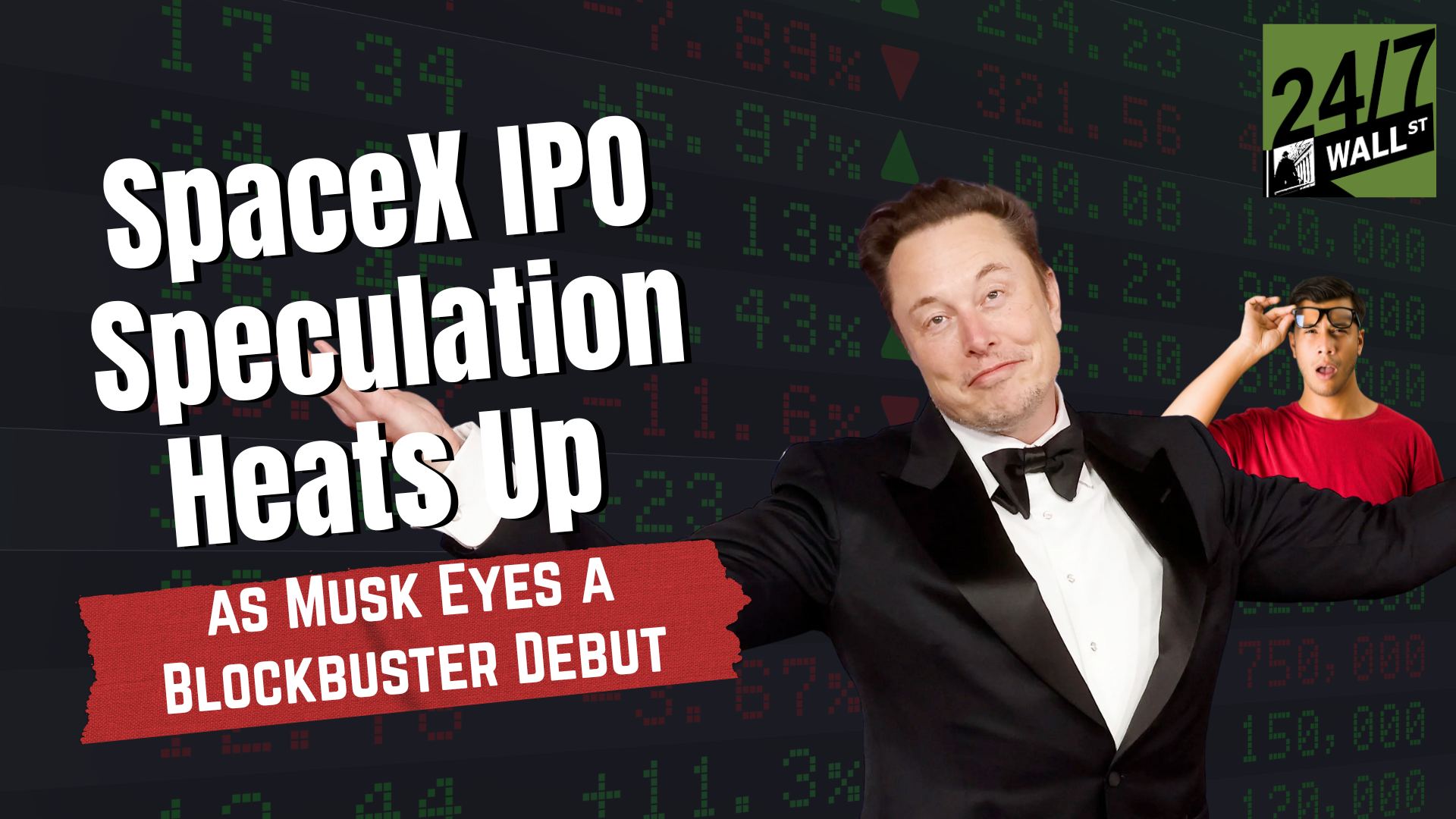
In 20 years of investing, I can’t recall an IPO generating this level of strategic noise across so many asset classes at once.
SpaceX’s valuation has ramped from roughly $350 billion in May 2025 to $800 billion by December 2025 to $1.25 trillion by February 2026, with a targeted $1.8 trillion at IPO. Prediction markets currently put a 71.5% probability on the IPO completing by June 30, 2026.
So how do you and I profit from this? Let’s dive in.
Way #1: The Free Ride (Lowest Risk)
The simplest play requires zero action. At $1.8 trillion, SpaceX becomes a top-10 S&P 500 holding on listing day. Anyone holding broad-index ETFs like QQQ or SPY gets automatic proportional exposure the moment index committees add the stock. Your effective SpaceX weight in a diversified portfolio will be small, but for a retirement-focused investor who wants exposure without concentration risk, this is the cleanest path. And easiest. Just do nothing.
Way #2: Pre-IPO Vehicles With Direct Stakes
The ARK Venture Fund (ARKVX) carries roughly a 17% SpaceX weight. Destiny Tech100 (DXYZ) and XOVR offer pre-IPO access. The catch is fees, premiums or discounts to net asset value, and limited liquidity compared to publicly traded shares. We covered the ARK Venture Fund in detail in our April 16 piece, which walks through the NAV mechanics and fee drag in depth.
Fidelity-managed funds including Contrafund (FCNTX) and Blue Chip Growth (FBGRX) also carry reported private SpaceX positions, giving retail investors another indirect path through funds they may already own in a 401(k).
Way #3: The Supply Chain Barbell
Morgan Stanley’s “Space 60” framework identifies publicly traded companies most exposed to the commercial space buildout. We covered six pure plays in our April 19 analysis, including Rocket Lab (NASDAQ:RKLB), AST SpaceMobile (NASDAQ:ASTS), and Planet Labs (NYSE:PL). Pure-plays like Rocket Lab offer maximum beta to the SpaceX IPO narrative (RKLB is up roughly 350% over the past year), while tier-two embedded plays in diversified defense or industrial companies offer the same thematic exposure with far less volatility. The April 19 piece has the full breakdown.
Way #4: The “Already on the Cap Table” Play
This is the one I find most underappreciated by investors. A regulatory filing revealed Alphabet holds a 6.11% stake in SpaceX, valued at an estimated $122 billion. Google and Fidelity led a roughly $1 billion funding round into SpaceX in January 2015 at a roughly $12 billion valuation. If that stake has been held through subsequent rounds, the implied mark at $1.8 trillion is a staggering multiple on cost.
I’ve held Alphabet (NASDAQ:GOOGL | GOOGL Price Prediction) for over a decade and their move from “just” a search engine to…well kind of an everything-company has been remarkable. The SpaceX stake is a quiet lottery ticket that has been sitting in the portfolio the whole time.
Alphabet currently trades at roughly $337, up 12% over the past month. The consensus analyst target sits at $376.50 with 62 buy ratings and zero sells. The SpaceX stake is optionality on top of a business already generating $402.84 billion in FY2025 revenue with Google Cloud growing 48% year over year to $17.66 billion in Q4.
Way #5: The “Water From a Tap” Long Thesis (Most Asymmetric)
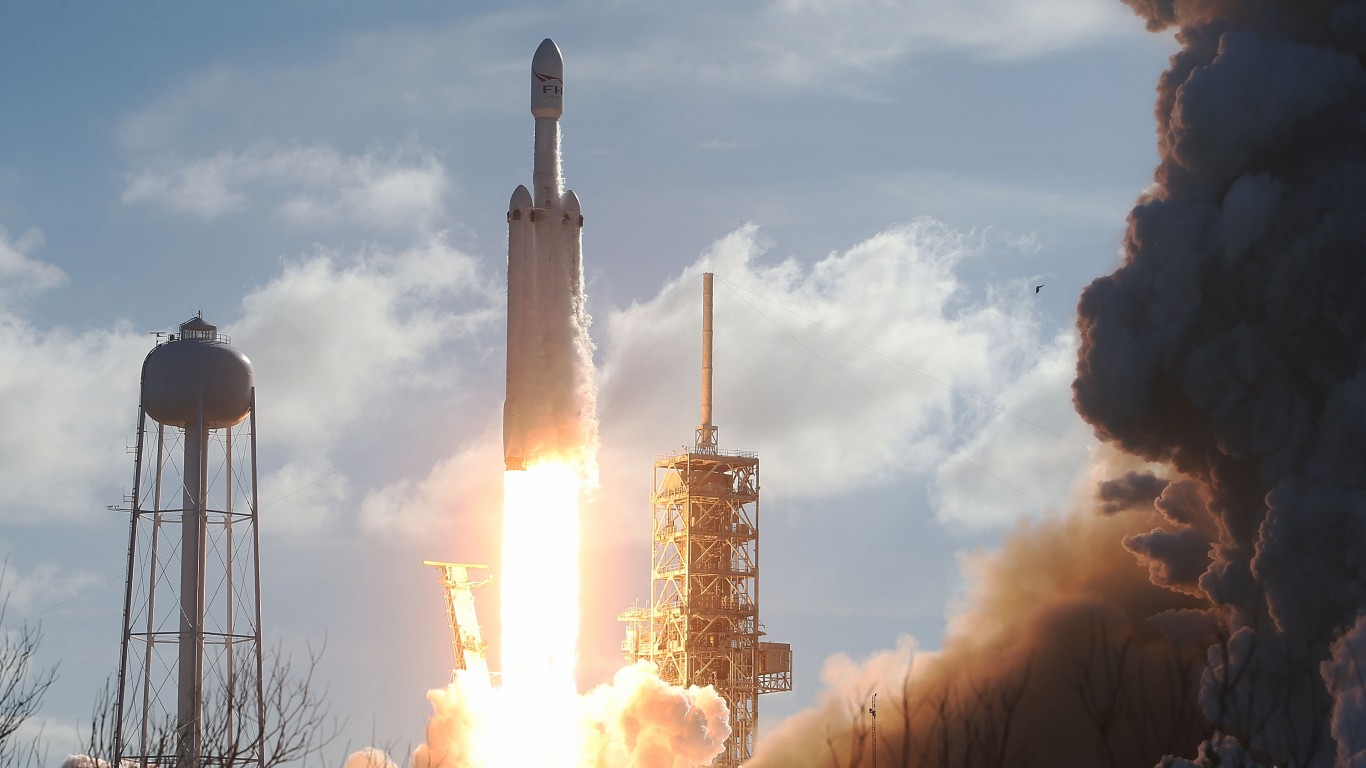
The Space Shuttle era cost roughly $50,000 per kilogram to orbit. Falcon 9 reusability brought that to roughly $2,700 per kilogram. Starship targets $100 per kilogram or below. When orbital access becomes as cheap and reliable as flowing water, SpaceX captures the pipes. But the applications layer is where the multi-trillion outcomes get built. Cheap bandwidth did not make ISPs the winners. It built Google and Meta.
Four sub-themes worth holding for the decade:
- Satellite proliferation: AST SpaceMobile is building the only cellular broadband network in space for unmodified smartphones. The company reported Q4 2025 revenue of $54.30 million, a roughly 2,700% year-over-year increase, and holds over $1.2 billion in contracted partner commitments. Planet Labs operates the largest commercial Earth observation fleet, with remaining performance obligations of $672 million, up roughly 360% year over year. Iridium Communications (NASDAQ:IRDM) provides the mission-critical IoT and M2M layer with roughly 2.5 million subscribers and a $738.5 million fixed-price U.S. Space Force contract.
- In-space manufacturing: Redwire (NYSE:RDW) is the purest public play on zero-gravity pharmaceutical production, crystalline semiconductors, and fiber optics. The company guided for $450 million to $500 million in 2026 revenue with a record backlog of $411 million. This is early-stage and carries real execution risk, but the addressable market is enormous if launch costs collapse as projected.
- Defense and national security: Lockheed Martin (NYSE:LMT) sits on a $194 billion backlog with a Space segment guided to roughly $11 billion in FY2026. Golden Dome and space-based ISR architectures all assume cheap, reliable launch. Lockheed is the incumbent integrator when those programs scale.
- Space tourism: Virgin Galactic (NYSE:SPCE) is the speculative purity play, but the balance sheet demands respect. The company carries roughly $422 million in convertible notes against a market cap of $237 million and burns cash at a rate that makes the 2026 commercial flight timeline the only thing standing between the stock and a dilution spiral. If you believe in the timeline, the asymmetry is real.
SpaceX is building the 1994 internet of space. The portfolio question is not whether to own SpaceX. It is which of the applications-layer bets you are comfortable holding for the decade it takes the water to actually start flowing.
So here’s what I’m trying to say. SpaceX is going to make a lot of people rich. At IPO, and beyond. You can position yourself to take advantage as they come public through some of the ways above. But really, the day after they IPO is when the real race begins.










 Top Gaining Stocks
 Top Losing Stocks