


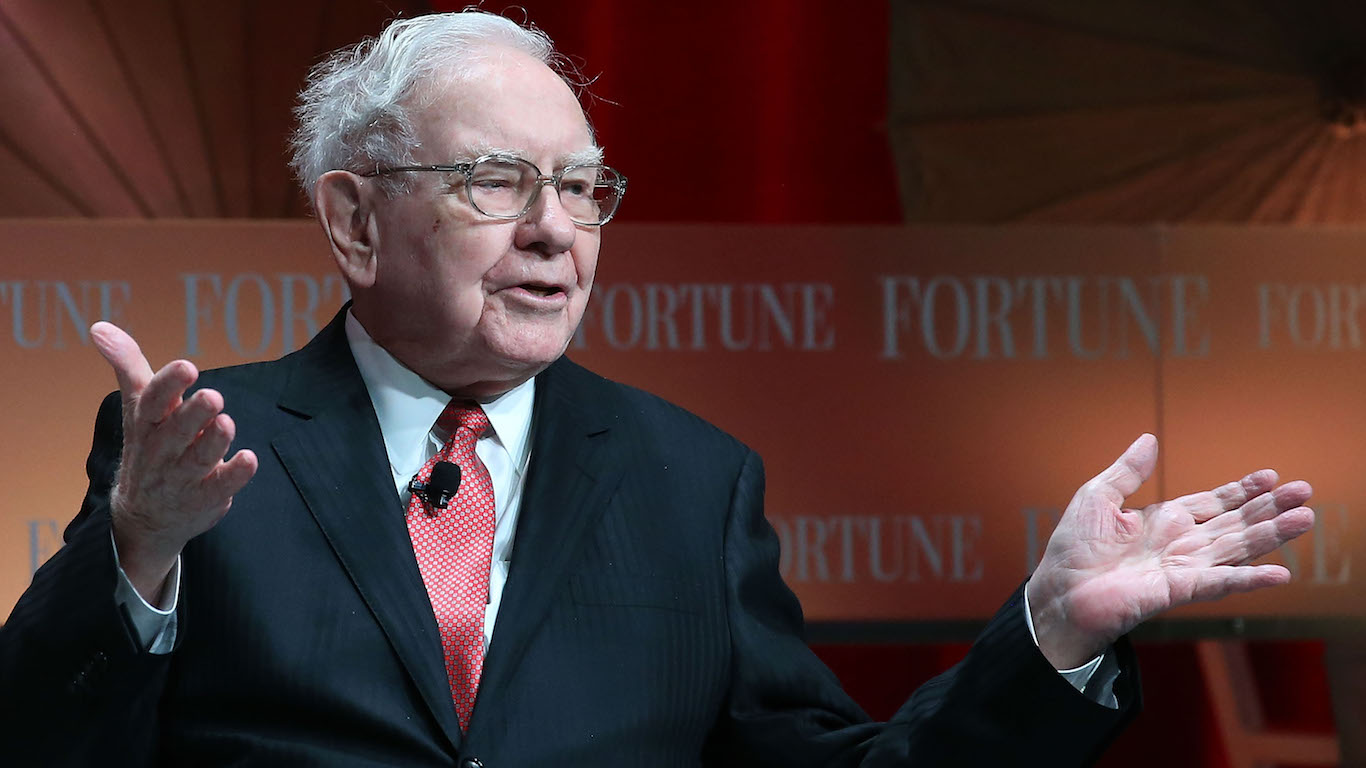
Berkshire has long been defined by patience and concentration, often holding positions for years or even decades. When it reduces exposure across multiple major holdings in a single quarter, it tends to reflect a deliberate reassessment of value, risk, or future return potential. For investors, understanding why these positions were cut can be more useful than simply tracking what was bought.
In the final quarter of 2025, Berkshire Hathaway (NYSE:BRK.B | BRK.B Price Prediction) trimmed its exposure to four of its most prominent equity positions: Apple (NASDAQ:AAPL), Bank of America (NYSE:BAC), Pool Corporation (NASDAQ:POOL), and Amazon (NASDAQ:AMZN). The moves occurred under Warren Buffett’s watch before his retirement on December 31, 2025, and now fall to Greg Abel, Berkshire’s new CEO, to either continue or reverse. Understanding why these positions were cut provides the most actionable context for investors.
Apple: Trimming the Largest Position
Apple remains Berkshire’s largest holding by a wide margin, even after a reduction. The firm cut 10,294,956 shares last quarter (-4.32%), bringing the position to 20.67% of the portfolio. Q1 FY2026 revenue reached $143.756 billion, up 15.65% year over year, with EPS of $2.84 beating the consensus of $2.67 by 6.34%. iPhone revenue hit a record $85.269 billion, up 23.3%. Over the past year, shares have risen 37.78%, compressing future return potential. Berkshire began trimming Apple well before this quarter, and the continued reduction suggests the position size relative to intrinsic value no longer meets the firm’s threshold.
Bank of America: Reducing Financial Exposure
Berkshire made a more meaningful reduction in Bank of America, cutting 50,774,078 shares (-8.94%), bringing the position to 9.49% of the portfolio. Bank of America’s bear case centers on rate sensitivity. A 100-basis-point parallel decline in rates would reduce net interest income by approximately $2 billion over 12 months. The 10-year Treasury yield currently sits at 4.32%, up from a 12-month low of 3.97% in late February 2026, providing some near-term relief. But the rate environment remains uncertain, and BAC shares are down 1.42% year to date despite a strong Q1. Q1 2026 net interest income of $15.74 billion grew 9% year over year, but that growth is contingent on rates staying elevated.
Pool Corporation: Trimming a Cyclical Winner
Berkshire also reduced its position in Pool Corporation, cutting 390,000 shares (-11.28%), bringing the holding to 0.23% of the portfolio. Pool is a more cyclical business tied to housing and discretionary spending. After strong performance during the pandemic-driven home improvement boom, growth has normalized, and now the stock is down approximately 34% over the past year as of the Q4 report, and Q4 2025 adjusted EPS of $0.84 missed estimates of $0.98 by 13.85%. Full-year 2025 revenue of $5.29 billion declined 0.41% year over year. The company’s 2026 EPS guidance of $10.85 to $11.15 implies only modest recovery. A director did make an open-market purchase at $218, a signal of insider confidence, but that alone does not offset the macro drag on pool construction and renovation activity.
Amazon: A Significant Cut to a Smaller Position
Amazon saw the most aggressive reduction in percentage terms. Berkshire cut 1,724,000 shares (-77.24%), leaving the position at just 0.18% of the portfolio. The business is accelerating, with AWS growing 24% year over year in Q4 2025, and full-year 2025 net income reached $77.670 billion, up 31.09%. But the capital expenditure trajectory is the concern. Amazon plans approximately $200 billion in capital expenditures in 2026, and free cash flow declined approximately 66% year over year to $11.194 billion in full-year 2025 as a direct result of the capex surge. Berkshire’s investment culture prizes free cash flow generation above businesses burning through cash.







 Top Gaining Stocks
 Top Losing Stocks