



“Days to turn.” “Days on lot.” “Market Day Supply”. Each shows how long it takes to sell a car, measured in days, from the time it is delivered to the dealer. CarEdge defines it. “MDS (market days supply) is a measure of the number of days it would take to sell all of a particular model of car, based on the current sales rate, assuming no additional inventory is added.”
There are some advantages to buyers. Among those is that dealers do not like to hold cars in inventory for over 100 days. On the other hand, cars with low MDS are those on which dealers keep prices high.
Interestingly, the cars with the lowest MDS have an average price of $66,969. The slowest-selling models have an average price of $55,161. Common sense would dictate that the figure should be the other way around. Low-priced cars should sell faster.
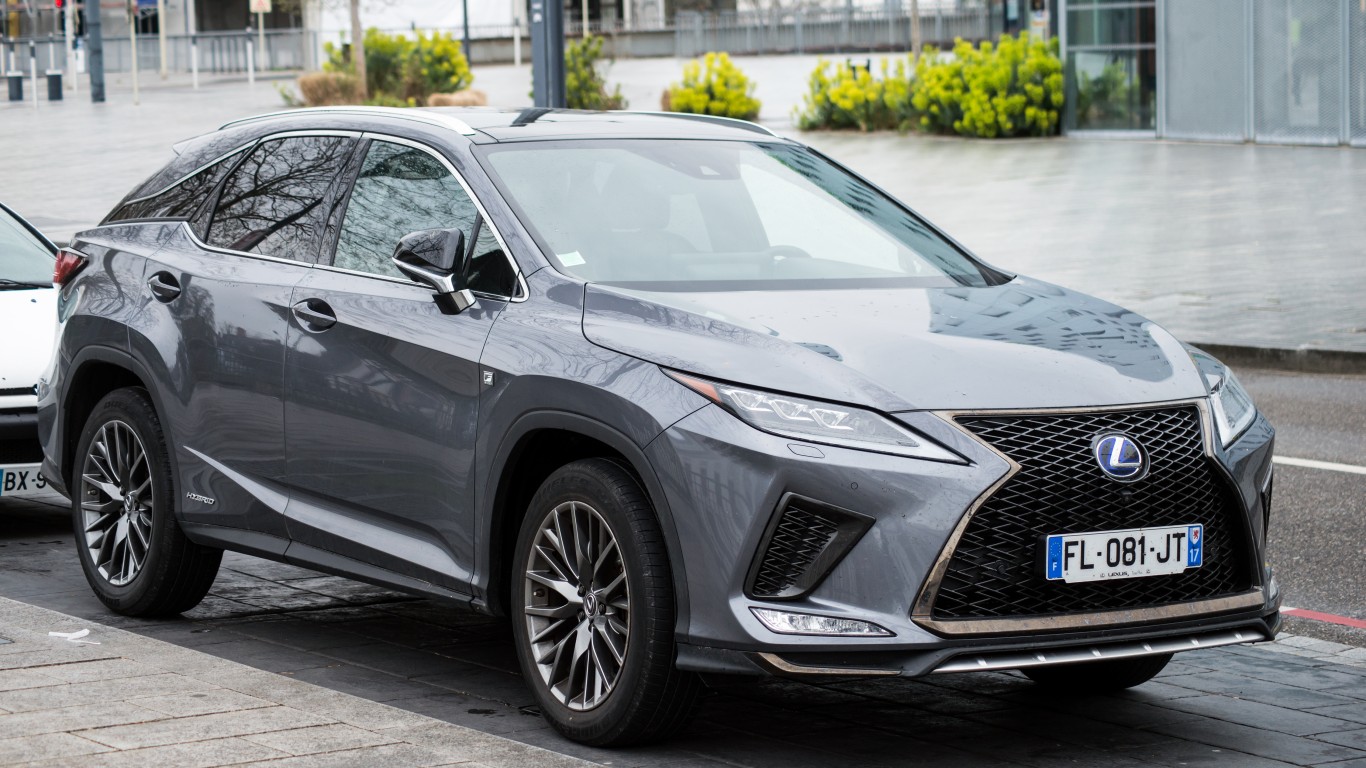
The two vehicles with the lowest MDS are both Lexuses, Toyota’s luxury brand. The MDS for the Lexus GX in March was 19 days. It is a high-priced SUV with a sticker price of $67,735. Next on the low MDS is the Lexus ES. It is the modestly priced Lexus sedan, priced at $48,795. Its MDS is 23 days.
Among the reasons that Lexus vehicles do so well is quality. The brand ranked first in the J.D. Power 2025 U.S. Dependability Study.
Of the next ten models with low MDS, six are Toyotas. These are the Prius (26 days), Sienna (34), RAV4 (36), Corolla Cross (36), Highlander (39), Sequoia (41), and Camry (41). Toyota ranks 4th on the J.D.Power list.
At the far end of the spectrum are the VW ID.4 (536) and Dodge Charger (452).












 Top Gaining Stocks
 Top Losing Stocks