


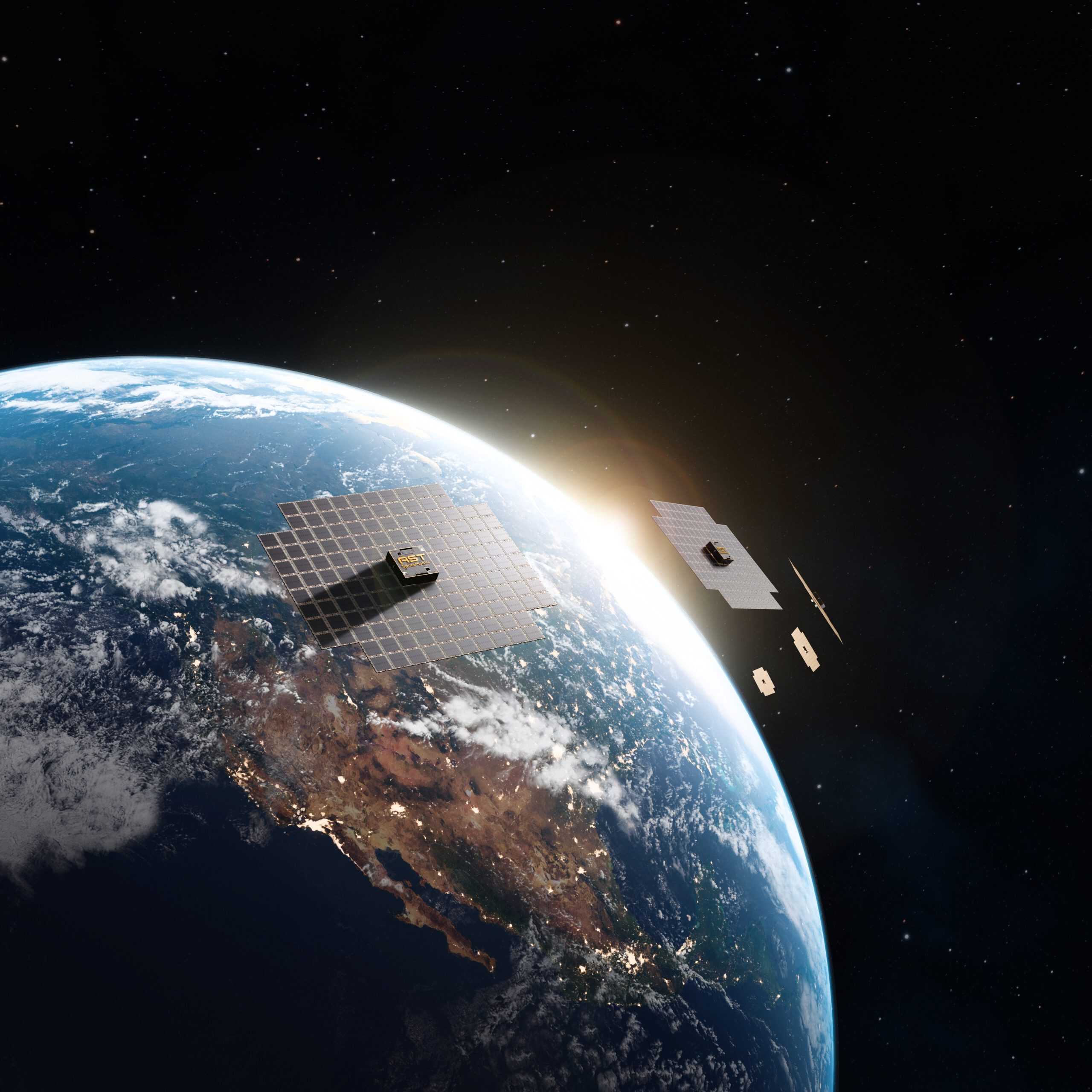
Meta Platforms’ (NASDAQ: META | META Price Prediction) pact to explore space-based solar power for its data center fleet is fundamentally a launch story. Beaming gigawatt-scale energy from orbit only works if you can deploy massive arrays cheaply and frequently, which puts the spotlight on launch economics and small-sat platforms. Several public companies sit somewhere on this stack. Here we look at five names to see which actually stand to benefit most from Meta’s clean-energy buildout, both in orbit and on the ground.
Five Companies Tied to Meta’s Clean-Energy Stack
Rocket Lab (NASDAQ: RKLB) builds small rockets, satellites, and space components. Management introduced advanced silicon solar arrays designed to power gigawatt-scale space-based data centers, putting the company directly inside the orbital-power thesis. Backlog finished at $1.85 billion, up 73% year over year.
Nextpower (NASDAQ: NXT), formerly Nextracker, sells utility-scale solar trackers and software. Lifetime shipments now exceed 150 GW, with backlog greater than $5 billion. Meta’s reference to beaming energy into existing solar facilities makes Nextpower a natural retrofit beneficiary.
Northrop Grumman (NYSE: NOC) is a defense prime with a Space Systems segment running roughly $11 billion in annual revenue. Northrop has been developing space-based solar power beaming for the U.S. military, and Meta’s move validates a commercial dual-use market.
Entergy (NYSE: ETR) is the regulated utility that powers Meta’s Louisiana data center campus, with regulators approving generation and transmission tied to a 2.5 GW solar and nuclear support framework.
Fluence Energy (NASDAQ: FLNC) sells grid-scale battery storage. Pipeline grew approximately 30% to $30 billion since September 2025, fueled by data-center demand.
How Each Business Is Positioned
| Company | What It Sells | Trend Exposure | Key Advantage |
|---|---|---|---|
| Rocket Lab | Launch + satellites + space solar arrays | High (orbital) | Vertical integration of launch and payload |
| Nextpower | Utility solar trackers | High (terrestrial) | 150+ GW shipped, record backlog |
| Northrop Grumman | Defense space systems | Medium | Existing power-beaming R&D |
| Entergy | Regulated electricity | High (baseload) | Direct hyperscaler service agreements |
| Fluence | Battery energy storage | High (firming) | $5.5 billion record backlog |
Rocket Lab is the only public name that touches both the launch vehicle and the orbital solar hardware. Nextpower, Entergy, and Fluence handle the terrestrial side of Meta’s 24/7 clean-energy stack. Northrop sits closest to Rocket Lab technically but earns most of its revenue from defense programs like B-21 and Sentinel.
How the CEOs See It
Rocket Lab CEO Peter Beck: “We delivered record quarterly revenue of $180 million, which brought our full year revenue to a record $602 million, representing 38% growth year on year.”
Nextpower CEO Dan Shugar: “Bookings for our tracker products remain healthy, leading to a record backlog of greater than $5 billion.”
Northrop Grumman CEO Kathy Warden: “Our record backlog supports our 2026 outlook of mid-single digit sales growth.”
Entergy CEO Drew Marsh: “We continued to secure significant electric service agreements with data centers and traditional industrial customers.”
Fluence CEO Julian Nebreda: “Accelerating data center growth, utility demand and rising industrial loads continue to drive energy storage demand globally.”
Who Actually Benefits Most
Rocket Lab looks best positioned for the specific space-based solar angle. The $816 million Space Development Agency contract for 18 satellites, the Mynaric laser-comms acquisition, and the new silicon solar arrays give the company direct exposure to orbital power infrastructure. Stifel raised its price target to $105.00, and shares are up 247.2% over the past year.
Entergy is the cleanest terrestrial winner because Meta is already a paying customer. Nextpower captures the retrofit cycle, Fluence supplies the firming storage, and Northrop quietly benefits if defense-grade power-beaming research migrates to commercial use.
The Bottom Line
Meta’s clean-energy roadmap spans solar trackers, batteries, utility baseload, and orbital arrays. Rocket Lab is the surprising central name because launch cadence is the gating factor for any space-based solar deployment. Entergy, Nextpower, Fluence, and Northrop each play meaningful supporting roles. Watch Neutron’s Q4 2026 debut and hyperscaler power agreements for the next signals.












 Top Gaining Stocks
 Top Losing Stocks