


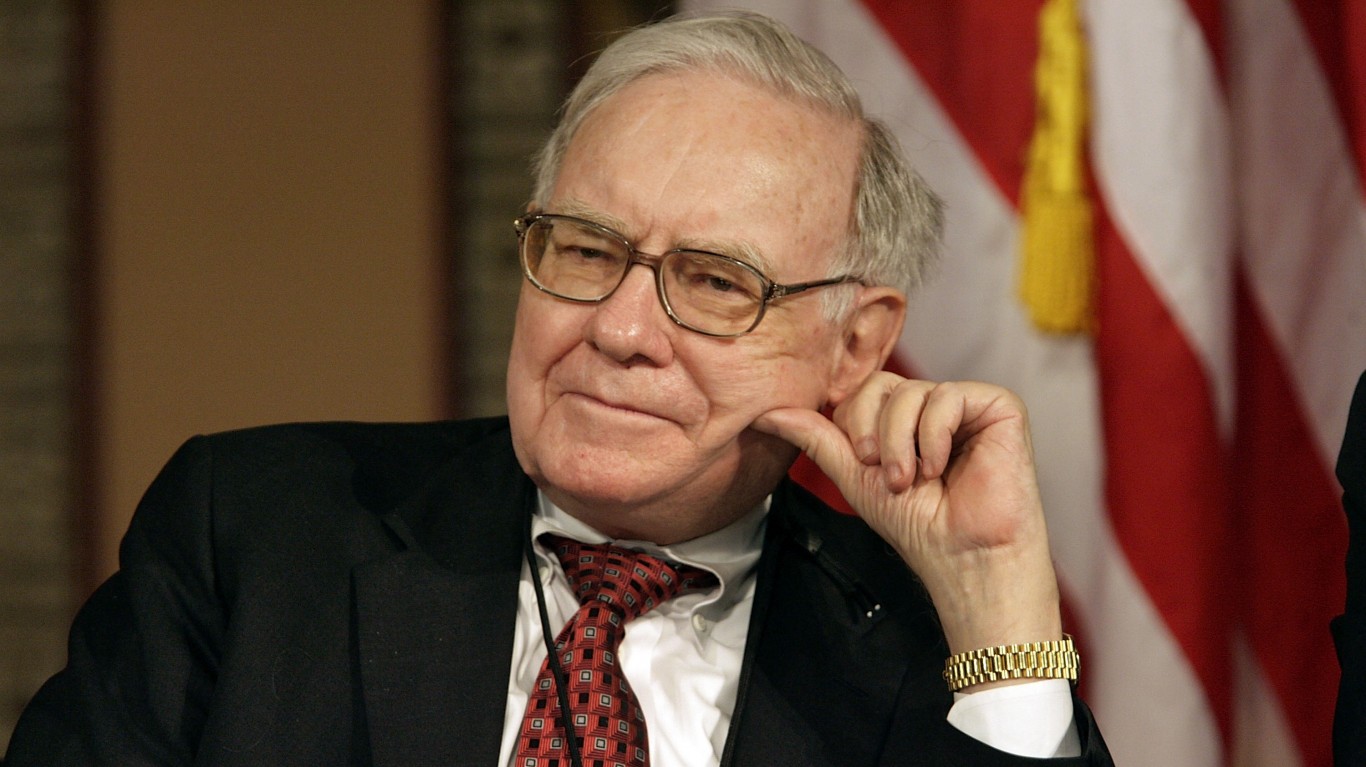
Warren Buffett stepped down as chief executive of Berkshire Hathaway (NYSE: BRK-B | BRK-B Price Prediction) on December 31, 2025, after six decades leading the conglomerate he transformed from a struggling textile mill into a $1 trillion empire. The “Oracle of Omaha” left his successor, Greg Abel, with a very concentrated portfolio: more than 65% of Berkshire’s $381 billion portfolio is invested in just six stocks. Abel, who has served as vice chair overseeing non-insurance operations, officially took over as CEO on January 1, 2026. At 95 years old, Buffett isn’t fully retiring—he will remain board chair and plans to continue coming to the Omaha headquarters as much as before. However, he has stated he will be “going quiet” and leaving all decision-making to Abel.
Longtime investors and Buffett mavens are familiar with this quote: “His favorite holding for an S&P 500 stock is forever.” While much more concentrated than most portfolio managers would consider, the strategy has worked well for Berkshire Hathaway investors for years and is likely to continue doing so.
Three stocks that have been mainstays in the portfolio are members of the prestigious Dividend Aristocrats. Investors like Buffett, seeking defensive companies that pay substantial dividends, are drawn to the Dividend Aristocrats, and with good reason. The 69 companies that made the cut for the 2026 list have increased their dividends (not just maintained them) for 25 consecutive years. But the requirements go even further, with the following attributes also mandatory for membership on the aristocrats list:
- Companies must be worth at least $3 billion for each quarterly rebalancing.
- Their average daily volume must be at least $5 million transactions for every trailing three-month period at every quarterly rebalancing date.
- They must be members of the S&P 500.
Why do we cover Warren Buffett’s Berkshire Hathaway stocks?
Few investors have the results and reputation that Buffett has garnered over the past 60 years. While investing has evolved over the years, buying good companies with products and services recognized worldwide and paying dividends will always remain a timeless approach. Here are the three Dividend Aristocrats in the Berkshire Hathaway portfolio; all are rated Buy by the top Wall Street firms we cover.
Chevron
Chevron (NYSE: CVX) is an American multinational energy company primarily focused on oil and gas. This integrated giant is a safer option for investors looking to position themselves in the energy sector, and it pays a substantial 3.67% dividend, which was raised by 5% earlier this year. Chevron operates integrated energy and chemicals businesses worldwide through its subsidiaries. Berkshire Hathaway bought a very well-timed 8 million additional shares in the fourth quarter and now owns 130.16 million shares, which equals 6.5% of the float and 8% of the portfolio.
The company operates in two segments. The Upstream segment is involved in the following:
- Exploration, development, production, and transportation of crude oil and natural gas
- Processing, liquefaction, transportation, and regasification associated with liquefied natural gas
- Transportation of crude oil through pipelines and storage
- Marketing of natural gas, as well as operating a gas-to-liquids plant
The Downstream segment engages in:
- Refining crude oil into petroleum products
- Marketing crude oil, refined products, and lubricants
- Manufacturing and marketing renewable fuels
- Transporting crude oil and refined products by pipeline, marine vessel, motor equipment, and rail car
- Manufacturing and marketing of commodity petrochemicals, plastics for industrial uses, and fuel and lubricant additives
It also involves cash management, debt financing, insurance operations, real estate, and technology businesses.
Citigroup has a Buy rating with a $235 target price.
Coca-Cola
Coca-Cola (NYSE: KO) is an American multinational corporation founded in 1892. This company remains a top long-time holding of Buffett and has been in the portfolio for 38 years. He owns a massive 400 million shares, which totals 9.3% of the float and 9.9% of the portfolio. The stock pays a dependable 2.71% dividend.
Coca-Cola is the world’s largest beverage company, offering consumers more than 500 sparkling and still brands. Led by Coca-Cola, one of the world’s most valuable and recognizable brands, the company’s portfolio features 20 billion-dollar brands, including:
- Diet Coke
- Coca-Cola Light
- Coca-Cola Zero Sugar
- Caffeine-free Diet Coke
- Cherry Coke
- Fanta Orange
- Fanta Zero Orange
- Fanta Zero Sugar
- Fanta Apple
- Sprite
- Sprite Zero Sugar
- Simply Orange
- Simply Apple
- Simply Grapefruit
- Fresca
- Schweppes
- Dasani
- Fuze Tea
- Glacéau Smartwater
- Glacéau Vitaminwater
- Gold Peak
- Ice Dew
- Powerade
- Topo Chico
- Minute Maid
Globally, it is the top provider of sparkling beverages, ready-to-drink coffees, juices, and juice drinks. Through the world’s most extensive beverage distribution system, consumers in more than 200 countries enjoy the company’s beverages at a rate of over 1.9 billion servings per day. Remember that the company owns 19.5% of Monster Beverage (NASDAQ: MNST), which continues to deliver strong financial results.
UBS has a Buy rating and set a target price of $90.
Johnson & Johnson
Johnson & Johnson (NYSE: JNJ) is a multinational American corporation specializing in pharmaceuticals, biotechnology, and medical devices that has raised the dividend shareholders receive for 64 years. It increased that payout by 3.1% on April 14th. With shares trading at 14.5 times forward earnings and paying a 2.22% dividend, this diversified healthcare giant is a strong buy at current prices.
Johnson & Johnson is among the most conservative of the major pharmaceutical companies, with a diverse product portfolio and a familiar, solid brand. The company researches, develops, manufactures, and sells a range of healthcare products. Its primary focus is on products related to human health and well-being. Johnson & Johnson carries a payout ratio of just 47%, meaning the company is paying out less than half its earnings as dividends, which is a healthy cushion. It operates through two segments.
The Innovative Medicine segment is focused on various therapeutic areas, including:
- Immunology
- Infectious diseases
- Neuroscience
- Oncology
- Pulmonary hypertension
- Cardiovascular and metabolic diseases
Products in this segment are distributed directly to retailers, wholesalers, distributors, hospitals, and healthcare professionals for prescription use.
The MedTech segment encompasses a diverse portfolio of products used in orthopedics, surgery, interventional solutions, cardiovascular intervention, and vision care. It also offers a commercially available intravascular lithotripsy platform for the treatment of coronary artery disease and peripheral artery disease.
Argus has a Buy rating with a $275 target price.






 Top Gaining Stocks
 Top Losing Stocks