


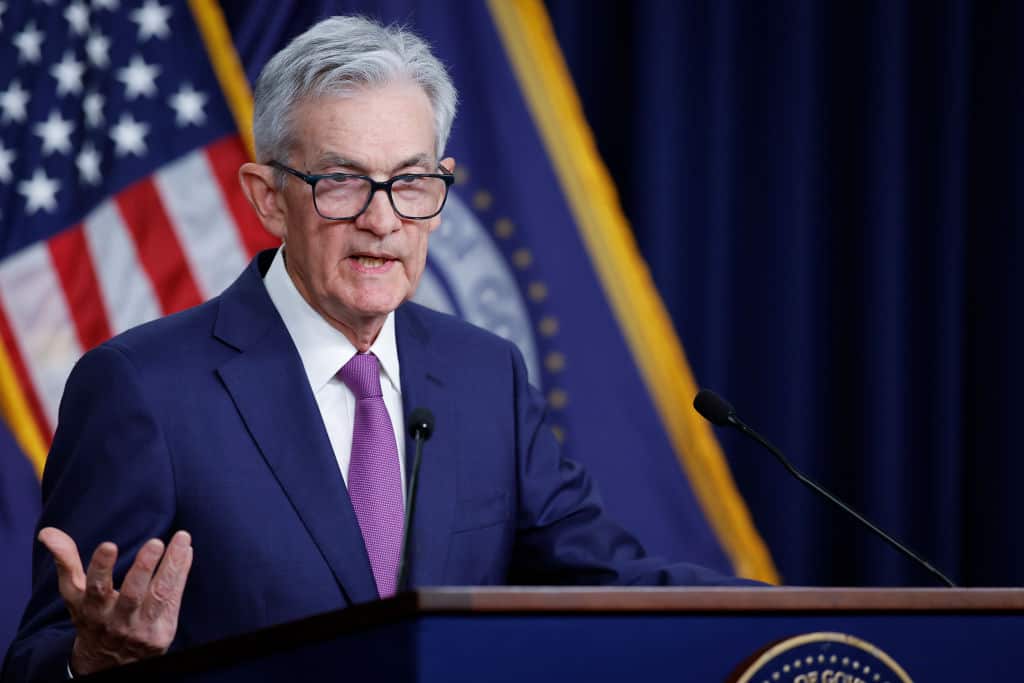
For years, Wall Street operated under one core assumption: when markets cracked, the Federal Reserve would step in with liquidity, bond buying, and lower rates. That safety net helped fuel one of the longest bull markets in history. But what happens if the next Fed chair decides the safety net itself was the problem?
That’s the question investors are now wrestling with after President Trump’s pick to head up the Federal Reserve, Kevin Warsh, used his Senate Banking Committee testimony to sharply criticize current chair Jerome Powell. His target wasn’t just inflation policy. It was the Fed’s swollen balance sheet — which still sits near $6.6 trillion after exploding during the pandemic era.
And if Warsh becomes chair, investors may be looking at the biggest shift in Fed philosophy since the 2008 financial crisis.
Warsh Is Signaling the End of “Easy Money”
Let’s start with what the balance sheet actually means.
When the Fed buys Treasury bonds and mortgage-backed securities, it injects liquidity into the financial system. That process — quantitative easing, or QE — helped push interest rates lower and asset prices higher after both the 2008 crisis and the 2020 pandemic.
The numbers tell the story:
| Federal Reserve Balance Sheet | Approximate Size |
| Before 2008 financial crisis | $900 billion |
| Pandemic-era peak in 2022 | $8.9 trillion |
| Current level in 2026 | $6.6 trillion |
Source: Federal Reserve data; Senate Banking Committee testimony.
Warsh argued during his testimony that the Fed became too dependent on extraordinary stimulus tools and blurred the line between monetary policy and market support. He specifically called for a smaller balance sheet and a return to what he described as the Fed’s “core mandate.”
That’s a fancy way of saying he wants the Fed to stop acting like Wall Street’s emergency response team every time volatility spikes. Surprisingly, that could mean tighter financial conditions even if short-term interest rates eventually decline.
What a Smaller Fed Could Mean for Stocks and Bonds
Investors often focus entirely on the fed funds rate. But balance sheet policy matters, too — sometimes more than the headline rate itself. Here’s why.
When the Fed shrinks its holdings through quantitative tightening, or QT, there’s less institutional demand for Treasuries. That can push long-term yields higher because private investors demand more compensation to absorb the debt.
In practical terms:
- Mortgage rates could stay elevated
- Corporate borrowing costs could remain expensive
- High-growth tech stocks may face valuation pressure
- Banks and cash-generating value stocks could outperform
That matters because the current market still trades at historically rich valuations.
The S&P 500 entered 2026 trading near 24 times forward earnings, according to FactSet data. Meanwhile, the 10-year Treasury yield has hovered around 4.3% to 4.4% for much of the year. Historically, higher bond yields compress stock valuations because investors suddenly have a real alternative to equities.
Granted, some investors may initially welcome Warsh’s inflation hawkishness. If markets believe the Fed will defend price stability more aggressively, inflation expectations could cool. That would help long-duration assets over time. But the transition itself could be rocky.
For over a decade, markets grew accustomed to abundant liquidity. Warsh appears intent on reversing that framework.
Powell’s Legacy Versus Warsh’s Vision
To be fair, Jerome Powell inherited extraordinary crises — a pandemic shutdown, supply-chain chaos, regional bank failures, and inflation that peaked above 9% in 2022, according to Bureau of Labor Statistics data.
His defenders argue aggressive Fed intervention prevented a deeper recession. Warsh sees it differently.
He has repeatedly suggested the Fed’s massive asset purchases helped fuel the inflation surge by keeping monetary conditions too loose for too long. That critique lines up with a broader movement inside conservative economic circles that believes central banks distorted asset prices and encouraged excessive risk-taking.
That’s why this nomination matters far beyond politics. A Warsh-led Fed could mean:
- Faster balance sheet reduction
- Less forward guidance
- Greater tolerance for market volatility
- More emphasis on inflation credibility than asset support
In any case, investors should not assume the next Fed chair will respond to downturns the same way Powell did.
Key Takeaway
In short, Kevin Warsh is signaling a Federal Reserve that may look far less friendly to speculative assets and far more focused on shrinking its footprint in financial markets.
That does not automatically mean a stock market collapse. Regardless of how you look at it, corporate earnings still drive long-term returns. But it could mean a world where liquidity is no longer the market’s dominant fuel source.
For smart investors, that changes the playbook. Companies with durable cash flow, pricing power, and manageable debt loads could become more attractive than expensive momentum trades built entirely on cheap money. Bond investors may finally regain leverage after years of being punished by near-zero rates.
When all is said and done, Warsh’s comments weren’t just criticism of Jerome Powell. They were a warning that the era of easy money may finally be ending.








 Top Gaining Stocks
 Top Losing Stocks