



Avis Budget Group (NASDAQ: CAR | CAR Price Prediction) stock surged from roughly $148 a share on March 27, 2026, to a 52-week high of $847.70 in a matter of weeks, then crumpled back to $182.01 by April 28. That arc, peak euphoria followed by a 74.51% one-week drop, lands the rental-car operator in rare company. Below are the most famous parabolic short squeezes of the modern era, ranked by mechanical force and market scar tissue, with the actual numbers behind each one.
The Comparison Table
| Stock | Year | Pre-Squeeze | Peak | Approx. Days to Peak | Post-Peak Drawdown to Date | Primary Catalyst |
|---|---|---|---|---|---|---|
| Theater chain (see #4) | 2021 | $97.06 | $370.05 | ~60 | −98.4% (5Y) | Retail call buying, theater rescue narrative |
| Volkswagen | 2008 | approximate | approximate | ~2 | approximate | Porsche float disclosure |
| Video-game retailer (see #2) | 2021 | $4.31 | peak approximate | ~20 | −43.0% (5Y) | Retail vs. hedge funds, gamma squeeze |
| Rental-car operator (see #1) | 2026 | $148.45 | $847.70 | ~25 | −74.5% (1W from peak window) | 71% ownership concentration, hedge-fund standoff |
4. AMC Entertainment, 2021
AMC Entertainment (NYSE: AMC) was the meme-stock encore. Split-adjusted, shares ran from $97.06 on May 3, 2021, to $370.05 by July 30, 2021, a 281.3% surge driven by retail call buyers and CEO Adam Aron’s open courtship of shareholders. The chain monetized the rally with equity issuance, but the hangover lingered. AMC closed at $1.64 on April 28, 2026, down 98.4% over five years. Q4 2025 still produced a $127.4 million net loss against $142.2 million of quarterly interest expense and roughly $4.0 billion in corporate borrowings.
3. Volkswagen, 2008
The original sovereign-style squeeze. Porsche disclosed control of most of Volkswagen’s float in late October 2008, and with sellers and shorts boxed out, VW briefly became the most valuable company in the world. Peak prices and drawdowns were extreme but are referenced here as approximate per source verification standards. The lesson endured: when the float is tighter than the short interest, fundamentals cease to price the stock and supply mechanics take over. Volkswagen does not trade on a U.S. exchange, but every modern squeeze, including the Avis episode, traces a logical line back to that two-day spike.
2. GameStop, 2021
GameStop (NYSE: GME) is the cultural anchor. Split-adjusted, shares moved from $4.31 on January 4, 2021, through the late-January gamma squeeze, with the custom window through February 26, 2021, showing a 489.8% gain. Today, GameStop is a different company: Q3 FY2026 delivered adjusted EPS of $0.24 on $821 million in revenue, with $7.84 billion in cash, a $519.4 million Bitcoin position, and $4.16 billion in long-term debt from convertible issuance. The stock closed at $25.09 on April 28, 2026, with a trailing P/E of 33x.
1. The Rental-Car Squeeze, 2026
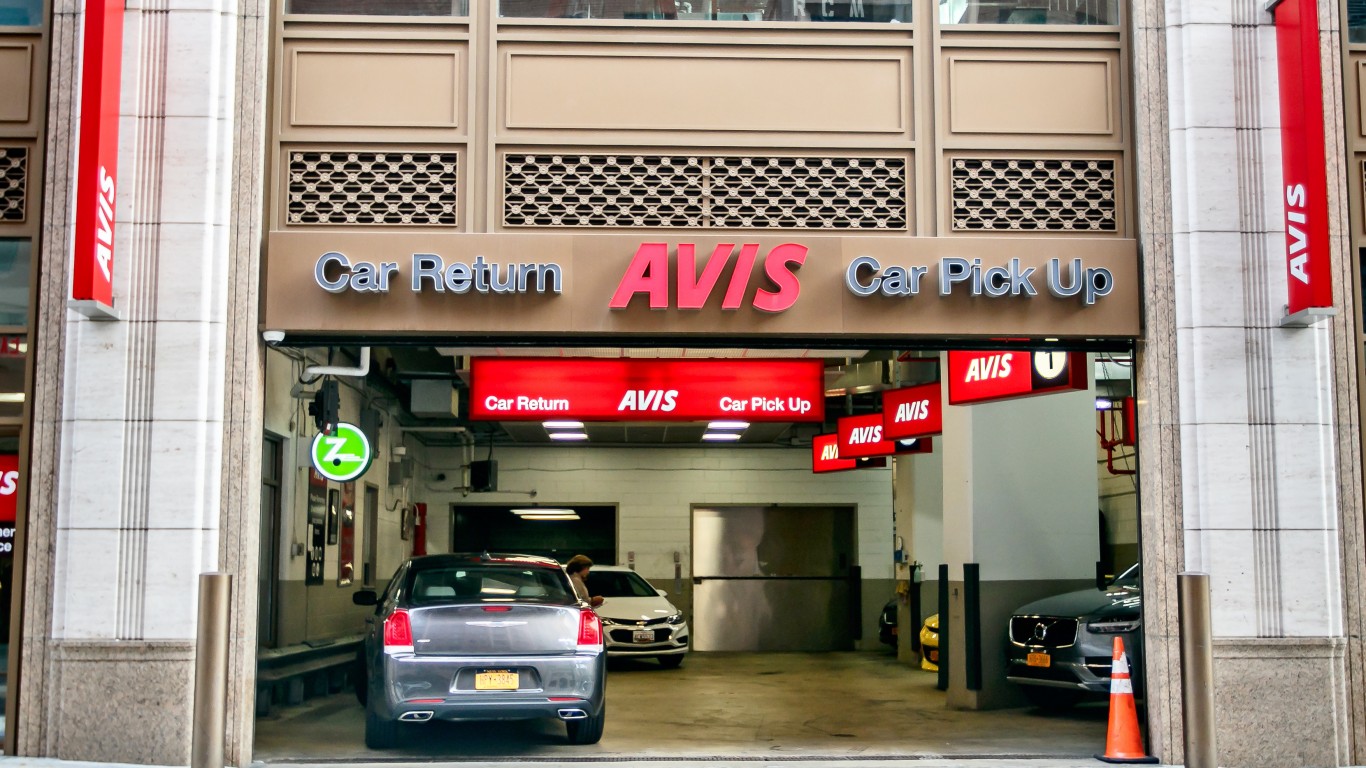
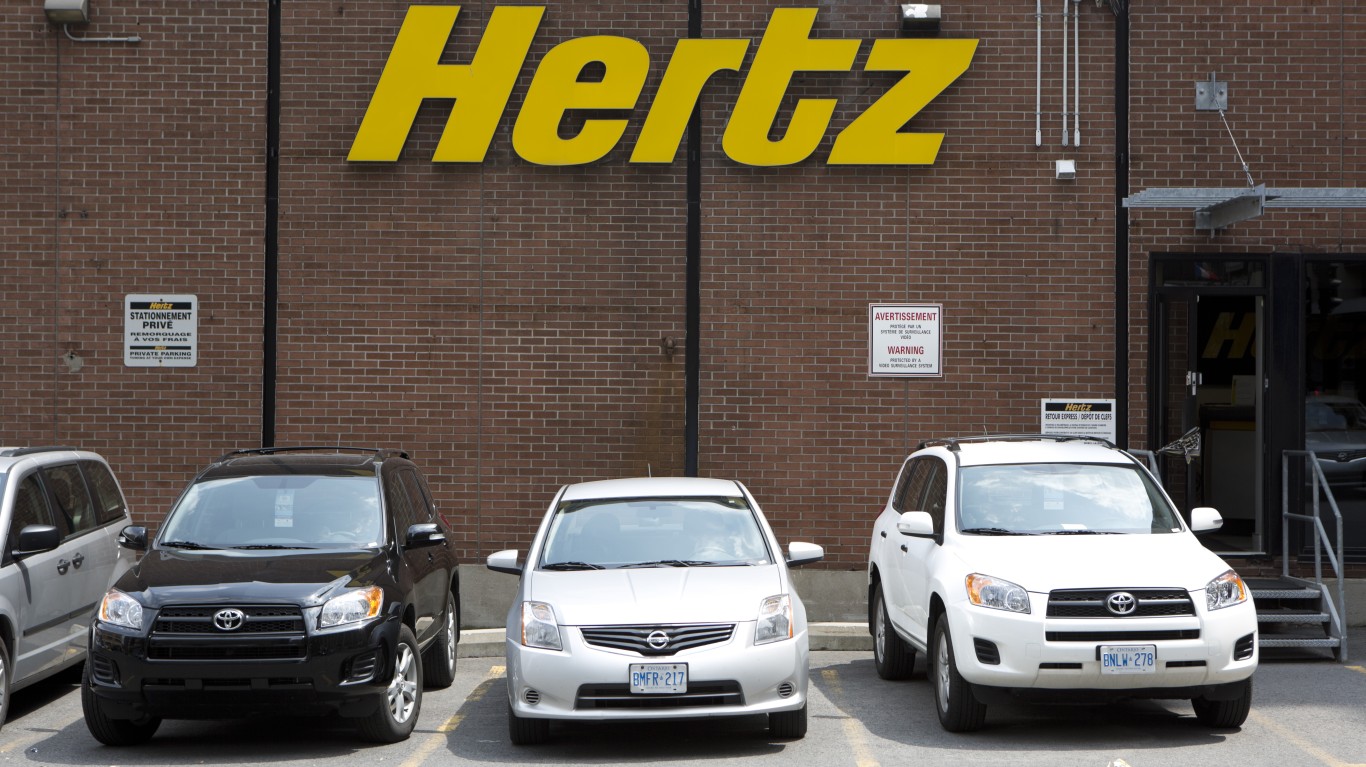
Avis tops the list because the mechanics were extreme and professional capital, not retail traders, drove the action. Per Wall Street Journal reporting, the rally was a battle between professional investors, specifically hedge funds SRS Investment Management and Pentwater Capital Management, who together controlled approximately 71% of Avis shares, alongside cash-settled equity swaps. Short interest stood near 25% of shares outstanding against a float of just 10.14 million shares. The unwind was just as fast: Pentwater sold $510.9 million in Avis shares across April 22 and 23, and Bloomberg called the 70% crash a quick end to the squeeze. Reddit’s r/wallstreetbets caught the moment with the “CAR (Avis) Put $1200 -> $35,000” post (932 upvotes) before pivoting to “Avis Squeeze is Officially Over” within 48 hours. Fundamentals never supported the move: Q4 FY2025 produced an $856 million net loss driven by a $518 million EV fleet impairment, negative shareholders’ equity of −$3.13 billion, and $6.1 billion of corporate debt. Consensus rating now reads Strong Sell with an average target near $120.
The Takeaway
Each of these squeezes confirmed the same pattern: concentrated ownership plus crowded shorts plus a narrative spark equals a parabola, and parabolas resolve through sharp drawdowns that take years to repair, if they repair at all. AMC remains 98.4% below its 2021 peak window, GameStop is still 43.0% lower over five years, and Avis has already given back most of April’s gains. The investor-first lesson is risk management and position sizing, not searching for the next squeeze candidate.







 Top Gaining Stocks
 Top Losing Stocks