



Seagate Technology (NASDAQ:STX | STX Price Prediction) has received Wall Street’s boldest hard disk drive (HDD) call of 2026. Rosenblatt raised its price target on Seagate stock to $1,000 from $500 while keeping a Buy rating, towering over every competing target on the Street. The upgrade arrives alongside fresh target hikes from BofA, Citi, Goldman Sachs, and Barclays after a blowout fiscal Q3 2026 print.
For long-term Seagate investors, the revised outlook signals growing conviction in a structural HDD upcycle driven by AI-era storage demand. Near-term volatility remains a real risk given how far Seagate stock has already run.
| Ticker | Company | Firm | Action | Old Rating | New Rating | Old Target | New Target |
|---|---|---|---|---|---|---|---|
| STX | Seagate Technology | Rosenblatt | Price target raised | Buy | Buy | $500 | $1,000 |
The Analyst’s Case
Rosenblatt’s thesis hinges on supply scarcity. The firm notes that nearline capacity to all hyperscale customers is fully allocated through 2027, with customers already engaging in 2028 supply. That visibility underwrites sustained pricing power across the cycle.
The second pillar is technology. Rosenblatt argues that Seagate’s heat-assisted magnetic recording (HAMR) technology will drive strong earnings leverage through capacity gains and lower cost per bit. Mozaic-platform drives are already qualified with five of the world’s largest cloud customers.
Company Snapshot
Seagate Technology is an HDD manufacturer led by CEO Dave Mosley, with a market capitalization of roughly $129.7 billion. The board declared a quarterly dividend of $0.74 per share, payable July 7.
Seagate’s fiscal Q3 2026 revenue hit $3.11 billion, up 44% year over year (YoY), with non-GAAP EPS of $4.10 and free cash flow of $953 million. Management guided fiscal Q4 2026 revenue to $3.45 billion and EPS to $5.00, above Street estimates.
Why the Move Matters Now
Seagate stock has rallied 139% year to date (YTD). Shares trade at a forward P/E ratio of 33x against a 12-month consensus target of $558.25.
Several other firms have also turned constructive on Seagate stock. BofA lifted its target to $840 from $700, Barclays to $750 from $625, Citi to $740 from $595, and Goldman Sachs to $700 from $385, each citing tight HDD supply, hyperscaler AI demand, and pricing power.
The dissent on Seagate comes from UBS, which raised its price target to $545 from $515 but kept a Neutral rating, warning that the market may already price in structural improvements. That tension defines the debate around STX stock today.
What It Means for Your Portfolio
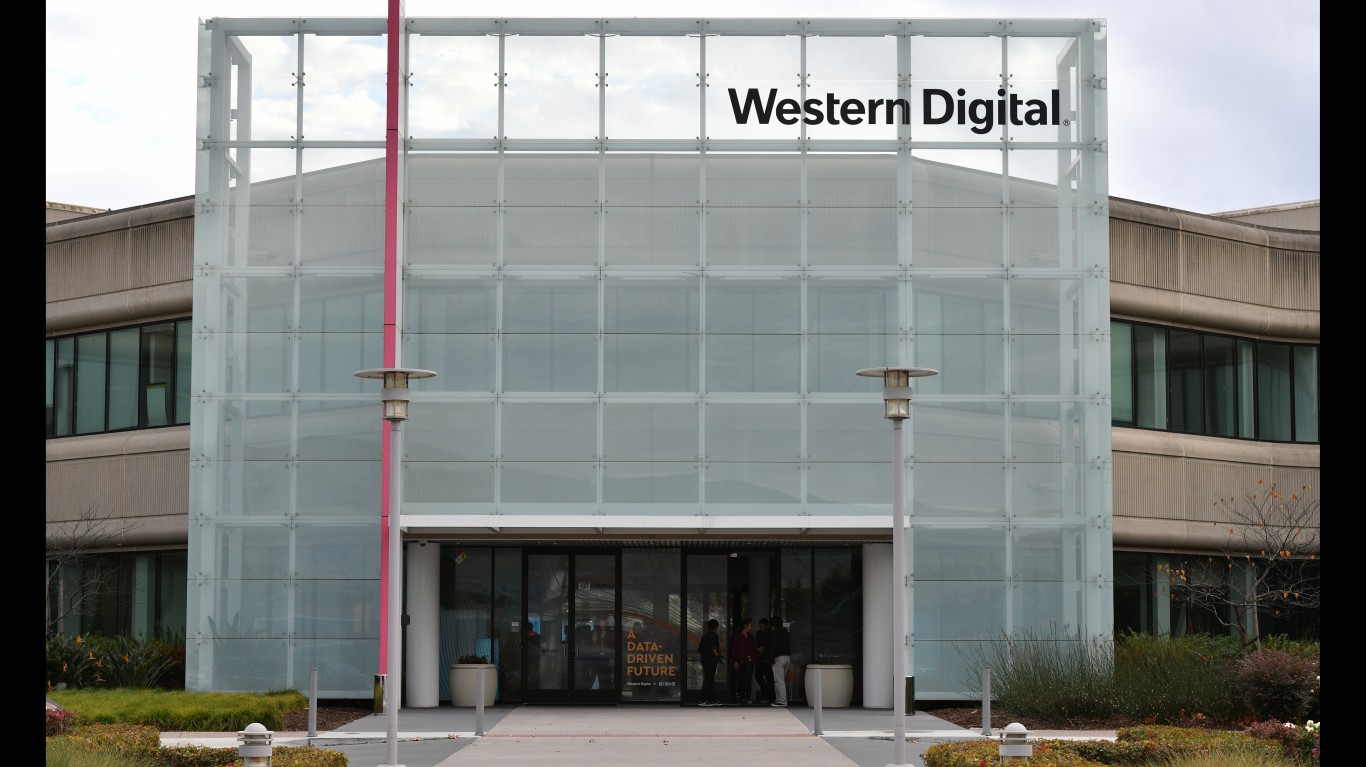
The bull case for Seagate rests on multi-year visibility, an HDD oligopoly with Western Digital (NASDAQ:WDC), and AI capex inflating exabyte demand. Seagate’s non-GAAP gross margin expansion from 36% to 47% in a single year underscores the operating leverage on display.
The bear case is cyclicality. If hyperscaler capex normalizes or solid-state drives encroach on nearline workloads, today’s Seagate pricing power could fade. Recent insider selling totaling $46.48 million deserves attention, and you can read more in our Seagate earnings recap.
Prudent investors weighing Seagate stock should consider moderate position sizing given how much good news is already reflected in the price. Watch for whether Seagate’s fiscal Q4 2026 results and FY27 commentary confirm the visibility narrative Rosenblatt is underwriting with the most bullish HDD call of the year.












 Top Gaining Stocks
 Top Losing Stocks