


It took quite a few months, but Nvidia (NASDAQ:NVDA | NVDA Price Prediction) found its way back into the $5 trillion club. Until now, it’s the only member, and while there’s a risk that Jensen Huang’s GPU empire might get the boot from the club again as shares show signs of looking lower, I do think that it’s the longer-term trajectory that should be of most interest to investors, especially as Nvidia gears up, not just for the boom in its Vera Rubin chips, but for the other parts of its business that stand to rise as AI and agents become more advanced, more monetizable, and more widespread across the enterprise and consumers.
Perhaps it’s the consumer potential that might still be underrated as the AI revolution looks to enter its next stage, while investors try to uncover the next wave of AI winners before the herd.
Which firms will be last year’s memory chip darlings? Perhaps Nvidia is ready to move on after its multi-month checkpoint. Whether it’s this “breakout” rally or the next, it’s worth taking a step back and considering the fundamentals and long-term narrative, rather than trying to time the name over the near term as we move past the prime of the latest tech earnings season.
Nvidia is rolling higher as its Mag Seven peers report
Indeed, good earnings from the Mag Seven heavyweights and lingering concerns over the CapEx overhang might not be out of the ordinary. A similar flavor to the kind of action we witnessed in the prior earnings season.
In due time, though, I’d look for AI monetization figures and plans to take center stage. After that, maybe investors will welcome rather than throw in the towel over higher CapEx figures. When that time comes (if it comes at all in the next two years), I do think Nvidia will get the market’s permission to set new high watermarks.
Perhaps the road to a $9 trillion market cap might be set. And while it probably won’t be a straight line for Nvidia to get there, I do think it’s set up quite well as the firm shows it can keep its high-margin growth numbers going strong while putting up a good fight in the age of AI inference and custom silicon. Indeed, there’s quite a bit on the line when it comes to using one’s own chip designs while hoping to wean off Nvidia’s red-hot GPUs.
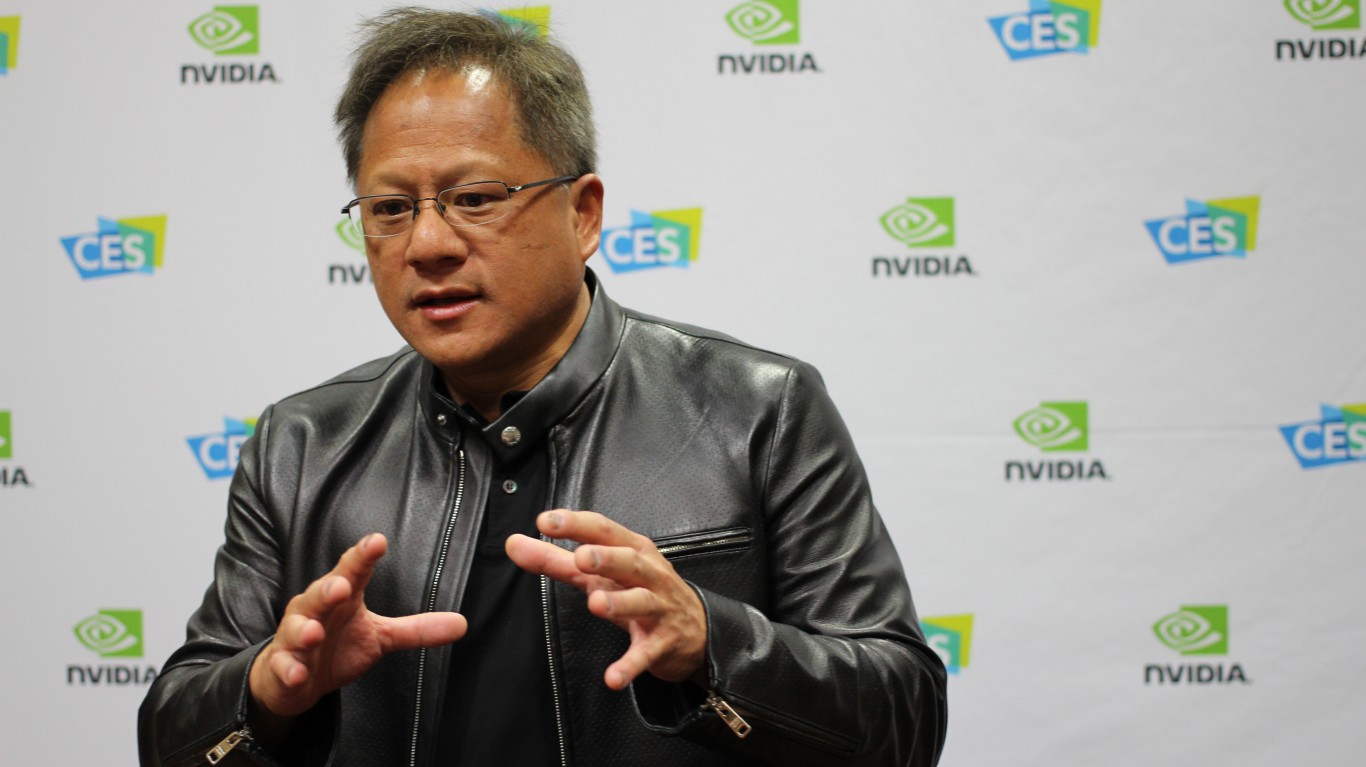
But the big question is whether custom silicon can make that big dent in Nvidia, or if the AI demand is so strong that the market is growing so quickly that it might not matter if Nvidia surrenders a bit of share to a large number of firms it’ll probably keep selling GPUs to. Either way, I think a growing number of competitors in AI chips might act as fuel for Jensen Huang to push the boundaries of what’s possible. After all, Jensen Huang put it best himself in a sitdown with Dwarkesh Patel, “I didn’t wake up a loser.”
The path to $380.00 per share and a valuation of $9 trillion is getting clearer
Of course, a lot of things need to go right for Nvidia to sustain a move towards a $9 trillion valuation. One Wall Street bull who currently holds the Street-high price target of $380.00 thinks a lot of factors could come into play for the year ahead. A move to $380.00 per share would send Nvidia into the $9 trillion market cap club, sending its valuation ahead of more G7 nations.
Melius Research’s Ben Reitzes holds the big bull who thinks the expanded ecosystem might be underrated by investors. Indeed, perhaps too many are focused on GPUs and their potential to lose steam in the age of inference. With Reitzes outlining Groq, networking, and the $1 trillion sales target (from Blackwell and Vera Rubin), perhaps $380.00 per share isn’t so outlandish, after all.
If the AI agent lift-off comes in fast, perhaps those sky-high sales might even surprise to the upside. Add the potential behind NVLink, NVQLink, and its broad investments and partnerships across hyper-growth companies across the AI scene, and perhaps the next re-heating of the AI trade could be enough to put Nvidia on the bull-case path.
Is Nvidia without its fair share of risks? Most definitely not, especially if the recent report of the OpenAI growth miss winds up being just the first big disappointment served up by the firms at the frontier.











 Top Gaining Stocks
 Top Losing Stocks