


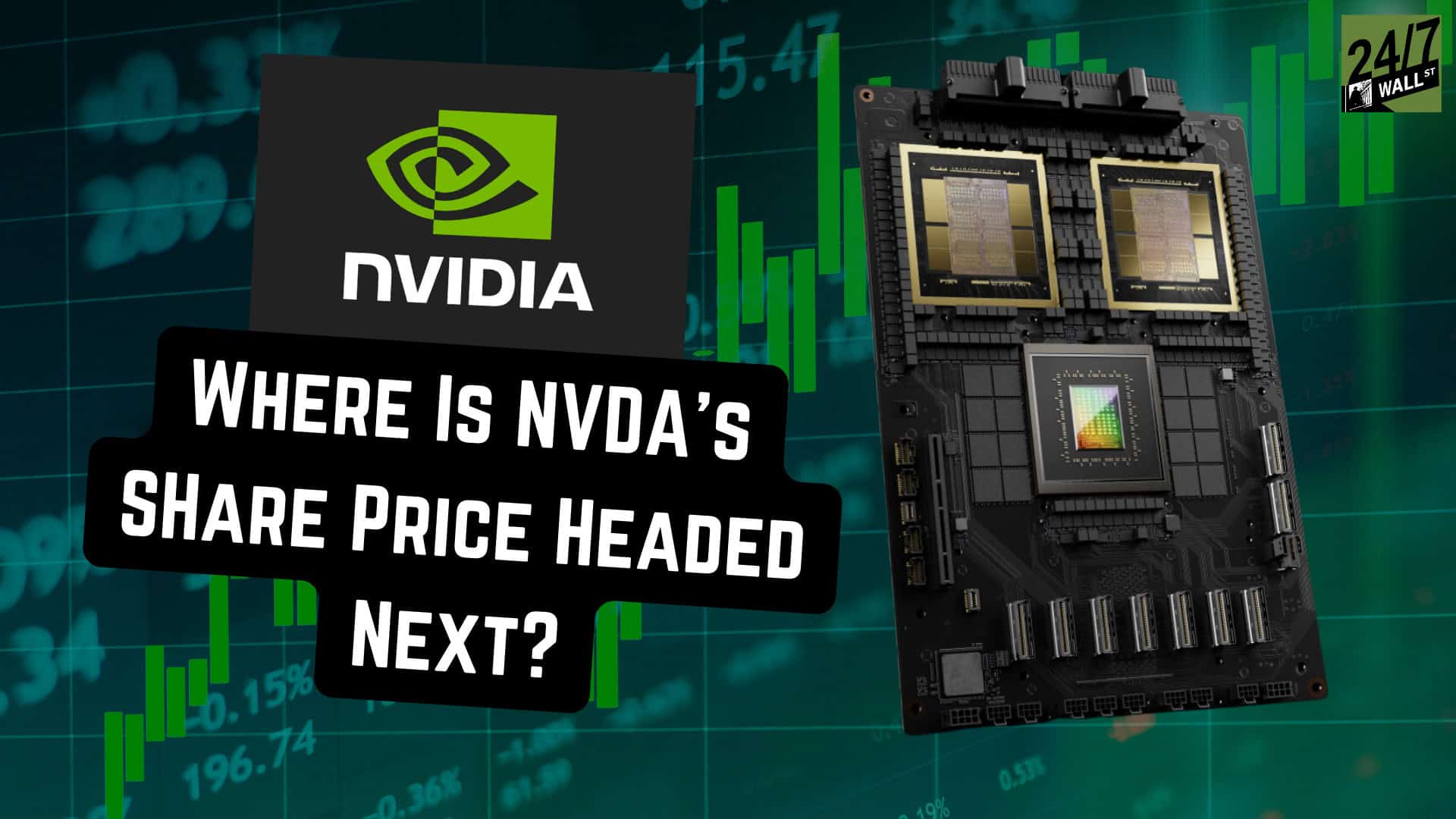
NVIDIA (NASDAQ:NVDA | NVDA Price Prediction) currently trades around $208.27, while Wall Street’s consensus price target sits at $268.61, leaving a gap of roughly 29% between where the stock currently trades and where analysts think the stock is going. NVIDIA designs the GPUs and networking fabric powering hyperscaler data centers, sovereign AI projects, and enterprise agent deployments. With a market cap of over $5 trillion, it has reclaimed the title of the world’s most valuable public company. With analysts’ $268 price target, they’re effectively saying they believe the AI capex cycle has more room to run than current prices imply.
Why a Stock Near All-Time Highs Still Trades Below Its Target
Nvidia has rallied, but there are still reasons analysts are worried about the stock. First, on the valuation front, some analysts argue Nvidia is “priced for perfection” with valuations at “euphoric and unsustainable levels”. Second, competition from in-house companies like Google’s announcement of new AI training and inference chips, plus discussions with Marvell on TPU successors, makes analysts less optimistic about the company. Third, China poses some concerns, with NVIDIA’s Q1 FY2027 guidance of roughly $78 billion explicitly excluding any Data Center compute revenue from China. The company already absorbed a $4.5 billion inventory charge.
These are running concerns that have kept the multiple compressed even as fundamentals accelerate.
Why Analysts Keep Raising Targets
Analyst sentiment remains overwhelmingly positive. Of 60 firms, 57 rate the stock Buy or Strong Buy, with just 2 Holds and 1 Sell. That confidence is driven by the numbers. Q4 FY2026 revenue reached $68.1 billion, up 73.2% year over year. Data Center networking grew 263%, driven by NVLink adoption. Free cash flow hit $34.9 billion in a single quarter. The $78 billion Q1 FY2027 guide implies continued growth even without China.
Future demand is also visible. The Blackwell Ultra ramp is underway, and the Vera Rubin platform targets up to a 10x reduction in inference cost. Large commitments include 10GW with OpenAI, 5GW with CoreWeave by 2030, and a multi-year deal with Meta Platforms. CEO Jensen Huang said “the agentic AI inflection point has arrived,” pointing to accelerating enterprise adoption. The forward P/E sits near 26x, which analysts view as reasonable given the growth rate.
Bottom Line
NVIDIA trades at $208.27 versus a $268.61 consensus target, implying that the stock has about 29% upside if analysts are right. The stock has already outperformed, up 11.68% year to date and 95.73% over the past year, yet it still lags expectations. Earnings are growing rapidly, with revenue up over 70% and free cash flow near $35 billion in a single quarter, while the forward P/E sits around 26x. Analysts see that as reasonable for a company compounding this quickly.
The risk is that expectations are already high. Slower hyperscaler spending, rising competition, or continued China restrictions could limit upside. However, the opportunity is that if AI spending holds and new platforms ramp as expected, the stock does not need a higher multiple to move higher. It just needs the fundamentals to keep catching up.











 Top Gaining Stocks
 Top Losing Stocks