



The hosts of The Best One Yet (TBOY) podcast have been arguing that the macro baton is changing hands. After interest rates dominated the economy for the past four years following the 2022 inflation spike, oil is now becoming the primary economic lever. The framing is straightforward. High interest rates “froze” housing markets, “closed” construction markets, and made stock markets super interest rate sensitive. Now, with the UAE leaving OPEC and weakening the cartel’s ability to stabilize prices, and Iran discovering “how much leverage they can get by controlling the Strait of Hormuz,” the variable that matters most for asset prices is barreling back toward the wellhead.
The price action backs them up. WTI bottomed near $56.01 on January 7, 2026 and spiked to $114.58 on April 7, 2026. Brent monthly averages tell the same story, jumping from $70.89 in February to $103.13 in March 2026. That is the kind of swing that overwrites a Fed dot plot.
The Beneficiaries: Integrated Majors
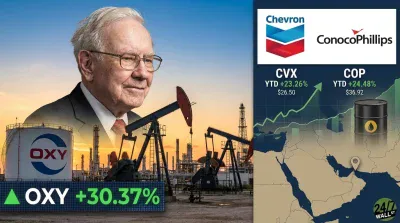
ExxonMobil (NYSE:XOM | XOM Price Prediction) is up 29.41% year-to-date and 47.64% over the past year, even after FY2025 net income slipped to $28.84 billion from $33.68 billion on softer crude. CEO Darren Woods has emphasized resilience and pointed to $15.1 billion in cumulative structural cost savings since 2019 and record production of 4.7 million oil-equivalent barrels per day. The 43-year dividend growth streak looks even sturdier in this regime, a point we explored in our recent breakdown.
Chevron (NYSE:CVX) has rallied 27.36% YTD, helped by the closed Hess deal and record 2025 production of 3,723 MBOED, up 12% YoY, with $27.10 billion returned to shareholders. Mike Wirth called “industry-leading free cash flow growth and superior shareholder returns, despite declining oil prices” the headline of the year. Our Chevron versus ConocoPhillips comparison walks through the trade-offs.
Across the Atlantic, Shell (NYSE:SHEL) is up 22.13% YTD and leans on record LNG sales of 73 million tonnes. BP (NYSE:BP) is the surprise leader, up 36.52% YTD and 76.51% over one year, after its trading desk swung customers and products underlying RC profit from $13M to $2.19B during the Iran conflict.
The Collateral: Shipping
ZIM Integrated Shipping Services (NYSE:ZIM) shows the other side. Q4 2025 freight rates per TEU fell 29% to $1,333 as Red Sea reroutings normalized, but Eli Glickman flagged “a complex geopolitical landscape, frequent changes in tariff policies and an ongoing global trade war.” The $35.00/share Hapag-Lloyd merger is the exit.
What to watch next: OPEC+ supply discipline, Strait of Hormuz transit data, and whether refining cracks hold. In an oil-led cycle, those inputs matter more than the next FOMC statement.
Interest rates right now are essentially subordinate to these oil price trends. If oil prices go down, so will interest rates. If oil prices stay high, so will interest rates. There’s no rationale for an interest rate cut if oil prices stay above $100. The increased transportation prices and general volatility will eventually seep into everything. The 2022 inflation wave wasn’t bad just because prices were high. It was bad especially because you had a crisis in Eastern Europe as Russian oil stopped flowing to Europe and Europe started relying on the U.S. for energy.
Now if this oil crisis lasts longer, Asia will also be relying on the U.S. for energy. Unless exports are throttled, that demand will translate into higher domestic oil prices, and eventually, higher inflation and then higher interest rate. Thus, oil is the most important variable by far right now.











 Top Gaining Stocks
 Top Losing Stocks