


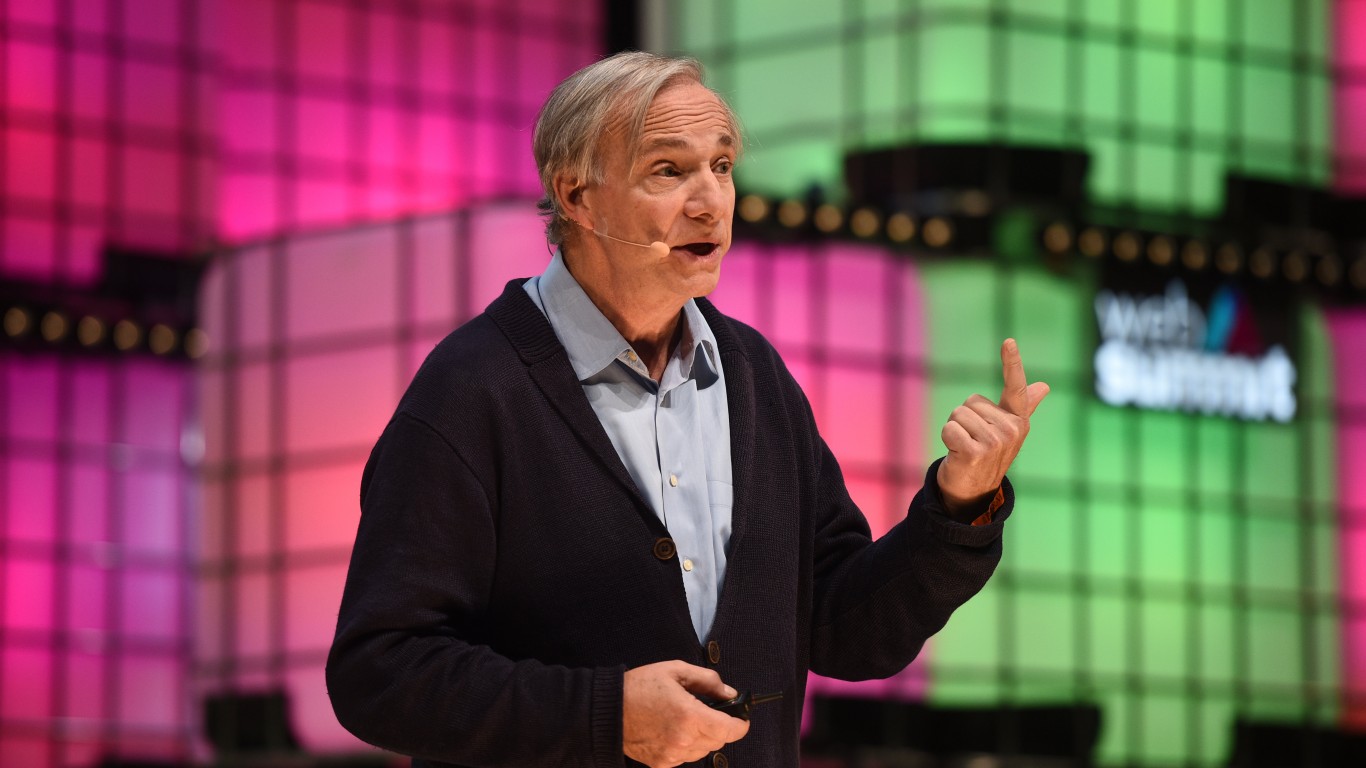
Ray Dalio is telling investors to circle the calendar. On a recent episode of Prof G Markets titled “Ray Dalio: The World Order Has Unraveled,” the Bridgewater founder framed the stretch between the 2026 midterms and the 2028 presidential election as a particularly vulnerable window for the United States. The thesis rests on three converging threats: a deteriorating monetary situation, declining global demand for US debt, and escalating international conflict.
The 40% Overspending Problem
Dalio’s fiscal math is the foundation of the warning. “The US government spends $7 trillion. It takes in about $5 trillion. So it has, it’s 40% overspending,” he said. That gap has to be financed in the bond market, and the bond market has a tone problem.
The 10-year Treasury yield sits at 4% as of April 28, 2026, in the 79.5th percentile of the past 12 months. The 10Y-2Y spread has compressed to 1%, down from a February high of 1%, signaling rising caution about near-term conditions even without an outright inversion. M2 money supply has climbed to $22.69 trillion as of March 1, and core PCE, the Fed’s preferred inflation gauge, is at a 12-month high (91.7th percentile). That combination keeps the Fed’s policy flexibility narrow precisely when the Treasury needs accommodation.
Foreign Buyers Stepping Back
The second leg of the thesis is demand. Dalio pointed to Chinese accumulation of dollars through trade surpluses, combined with fears of potential sanctions, contributing to falling demand for US debt. The structural picture is consistent with that framing: the trade balance shows a February 2026 deficit of -$57.3 billion, and 2026 Q1 imports grew 21% versus exports at 13%. Dollars flow out, accumulate abroad and the question is whether they recycle back into Treasuries at the price the US needs.
The Political Calendar
The third leg is governance. Dalio predicted Republicans likely lose the House in 2026, leading to “great conflicts, including, you know, impeachments, investigations and so on.” Treat that as his forecast rather than fact. The economic backdrop into the vote is wobbly: 2026 Q1 real GDP growth of 2% follows a 1% Q4 2025 reading, and University of Michigan consumer sentiment has slid to 53.3 in March 2026, deep in pessimistic territory. The VIX printed 31.05 on March 27, 2026 before normalizing to 18.81, a reminder that markets can swing fast.
What Investors Should Take From It
Dalio characterized the coming years as “going through a time warp” of rapid technological change and geopolitical realignment. The takeaway for retirement-minded investors is awareness. Fiscal arithmetic, foreign Treasury demand, and the 2026-2028 political calendar are now linked variables. Watch the auctions, watch the spreads and watch Washington. You can read the Federal Reserve’s Treasury yield series directly at FRED to track the bond market signal in real time.












 Top Gaining Stocks
 Top Losing Stocks