


From Blocked Merger to Independent Operator
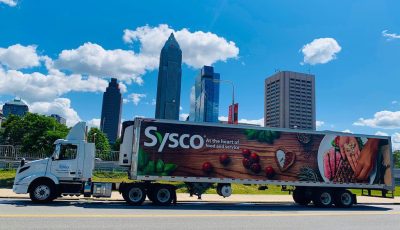
US Foods (NYSE: USFD | USFD Price Prediction) hit public markets in May 2016 after the FTC blocked its proposed sale to Sysco the prior year. What started as a fallback plan turned into a decade of building. The Rosemont, Illinois-based distributor now serves roughly 250,000 customer locations through more than 70 broadline distribution centers and over 90 cash-and-carry stores, with about 30,000 associates handling roughly $39.4 billion in annual sales.
The story since the IPO has three chapters. First, steady share gains with independent restaurants. Second, a brutal pandemic shock that crushed restaurant volumes and the stock. Third, a sharp rebound under CEO Dave Flitman, anchored by the CHEF’STORE acquisition in 2020 and recent broadline tuck-ins like Jake’s Finer Foods in Houston and Shetakis in Las Vegas. Management is now exploring a sale of the CHEF’STORE cash-and-carry business to focus on core distribution.
$1,000 Invested at IPO Is Now $3,690
In the following table, investment date assumes the first available trading price after IPO. The starting investment in US Foods in each period is $1,000.
| Time Period | Total Return | Ending Value | S&P 500 Return |
|---|---|---|---|
| 1 Year | 34.3% | $1,343.20 | 28.5% |
| 3 Years | 138.8% | $2,388.40 | 75.5% |
| 5 Years | 129.1% | $2,290.80 | 71.5% |
| Since IPO (May 2016) | 269.1% | $3,690.50 | 245.8% |
Roughly tripling your money over a decade is solid, and it outperforms the S&P 500’s run over the same span. The shape of the journey matters: shares cratered in early 2020 as restaurants closed, and patient holders had to stomach years of choppy recovery. The real outperformance occurred over the past three years, as US Foods surged when margins finally inflected.
FY2025 cemented the turn: revenue of $39.42 billion (+4.08%), net income of $676 million (+36.84%), and adjusted diluted EPS of $3.98. The company pays no dividend but announced a fresh $1 billion buyback in November 2025.
The Bull Case, With One Eye on the Consumer
The bull case rests on Flitman delivering his 20% adjusted EPS CAGR through 2027, and it is straightforward: 19 consecutive quarters of independent restaurant growth, 2026 guidance calling for 18% to 24% adjusted EPS growth, and a forward P/E around 31 that looks reasonable for that trajectory.
The bear case hinges on whether consumer spending is weakening. Chain volume fell 3.4% in Q4, GLP-1 adoption is a real demand overhang, and $4.6 billion of debt limits flexibility in a downturn. Revenue has missed estimates in four of the past six quarters, even as EPS beats pile up.
The execution has been consistent, and the buyback provides a floor.








 Top Gaining Stocks
 Top Losing Stocks