


State Street’s 2026 Global ETF Outlook puts a stake in the ground on page 20: the first $1 trillion ETF will land this year. The frontrunner is the Vanguard 500 Index Fund ETF (NYSEARCA:VOO | VOO Price Prediction), which closed Monday at $660 with $839 billion in net assets as of early May. VOO sits roughly $160 billion shy of the milestone, and it is the only S&P 500 tracker realistically positioned to break the tape in 2026.
The chasers are the iShares Core S&P 500 ETF (NYSEARCA:IVV) at roughly $802 billion and the SPDR S&P 500 ETF Trust (NYSEARCA:SPY) at about $652 billion. State Street sponsors SPY, the original 1993 ETF, but its own forecast effectively crowns a Vanguard product.
Why VOO Is the Flow Magnet
VOO pulled in roughly $124 billion in net inflows during 2025, absorbing nearly a tenth of the $1.49 trillion that flooded into US ETFs last year. Its expense ratio of 3 basis points matches IVV and undercuts SPY’s roughly 9 basis points, a gap that compounds on institutional allocations and explains why advisor model portfolios keep migrating away from the older State Street product.
Performance has done the rest. VOO is up 28% over the past year and about 6% year to date, with a 9% rally in the last month alone. Rising NAVs drive most AUM growth: at the current asset base, every 1% move in the S&P 500 adds roughly $8 billion to VOO’s net assets before new inflows arrive.
The Macro Factor: S&P 500 Path and Concentration Risk
Whether VOO crosses $1 trillion in 2026 hinges on the S&P 500’s trajectory, specifically the megacap tech complex driving it. SPY’s sector breakdown shows 33% in Information Technology, with NVIDIA at 8%, Apple at 7%, and Microsoft at 5%. VOO mirrors that exposure to the basis point.
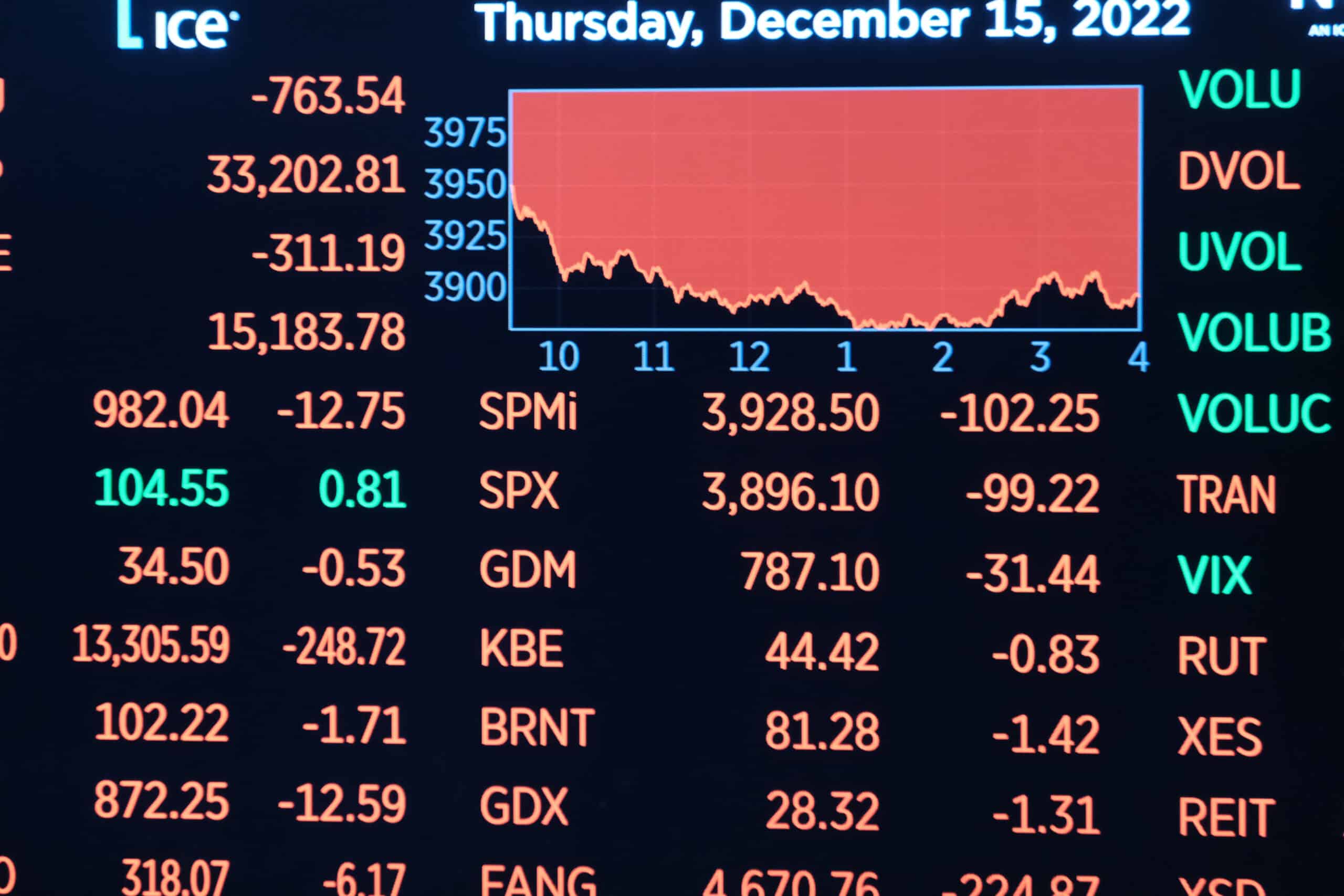
Watch the index level relative to roughly 7,500 on the S&P 500. A move of that magnitude, combined with steady inflows, gets VOO over the line by year-end. Monitor quarterly earnings from the top three holdings (NVIDIA, Apple, Microsoft) and the BLS CPI release on the second Tuesday of each month, the single biggest catalyst for index repricing this cycle. A 10% drawdown in the megacap tech cohort, similar to early 2022, would erase roughly $80 billion of VOO’s NAV in weeks and push the $1 trillion crossing into 2027.
The Fund-Specific Factor: Inflow Velocity and the Fee Gap
The fund-specific signal is VOO’s monthly net creations relative to IVV’s. Bloomberg and ETF.com publish weekly flow data; Vanguard reports official monthly figures the second week after month-end. VOO has been running roughly $10 billion ahead of IVV per quarter on flows. If that lead narrows to under $3 billion for two consecutive months, BlackRock’s distribution muscle is closing the gap and the race tightens.
For investors already holding VOO, a $1 trillion AUM milestone brings tighter bid-ask spreads, deeper authorized-participant arbitrage, and lower implementation costs on rebalances. The risk is concentration. At a trillion dollars tracking 500 names with the top 10 holdings near 35% of the index, any forced rebalance or single-name blowup gets transmitted into VOO’s NAV with no diversification cushion the wrapper itself can offer.
The Path to Thanksgiving
Track the S&P 500’s path toward 7,500 and the monthly Vanguard flow report. If VOO continues averaging $10 billion-plus in monthly creations and the index holds its YTD trajectory, the first $1 trillion ETF crosses the line before Thanksgiving. If megacap tech earnings disappoint in the July or October cycles, the milestone slips, and IVV stays close enough to make the back half of the year a genuine race.














 Top Gaining Stocks
 Top Losing Stocks