


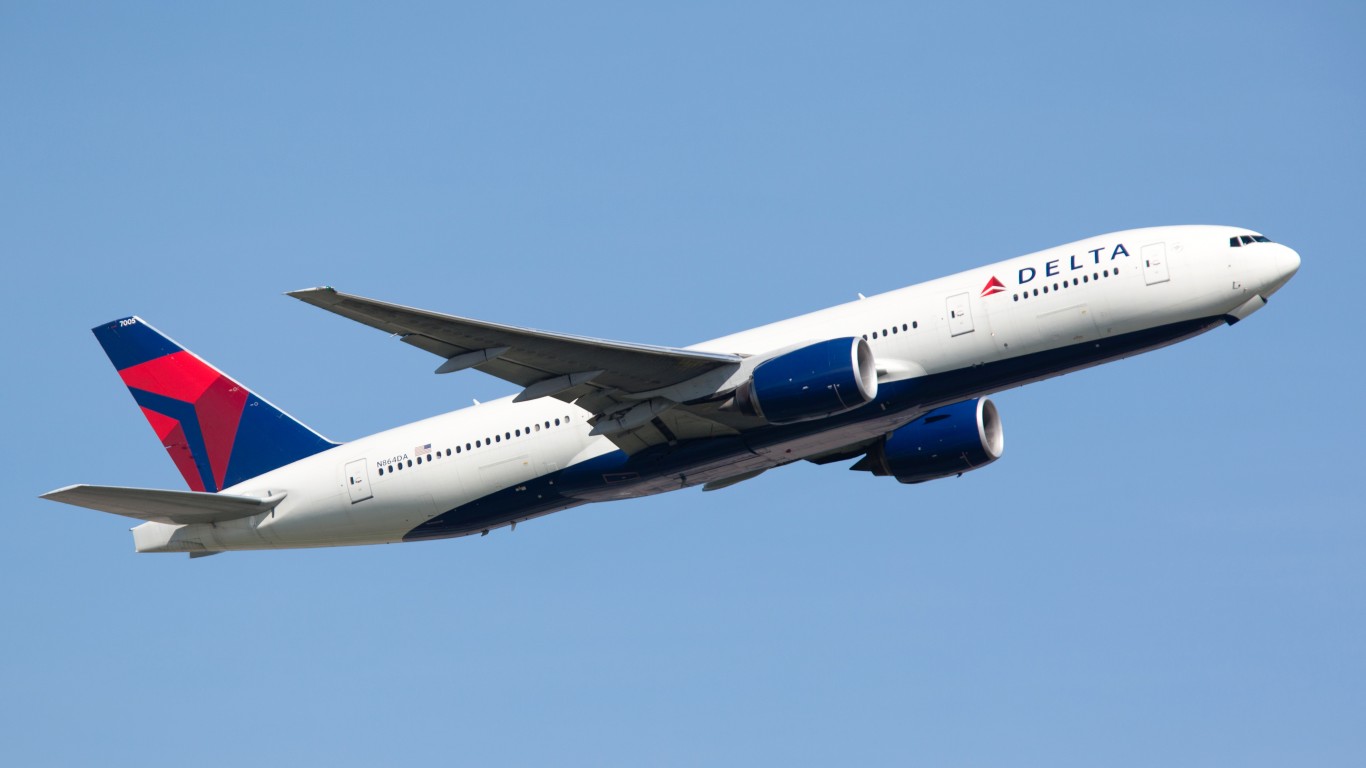
UBS just turned more bullish on one of the airline industry’s premium-strategy poster children. The firm raised its price target on Delta Air Lines (NYSE:DAL | DAL Price Prediction) stock to $95 from $86 and reiterated a Buy rating, pointing to a margin and earnings trajectory that looks structurally different from past airline cycles. For prudent investors, the call reframes Delta stock as less of a cyclical trade and more of a premium-mix story.
The bullish thesis hinges on management’s roadmap to at least $13 in EPS in coming years versus about $6 in 2025, anchored by mid-teens EBIT margins, premium cabin segmentation, brand partnerships, and a stronger loyalty program. Delta Air Lines shares closed at $73.34 on May 6, putting the stock up roughly 66% over the past year.
| Ticker | Company | Firm | Action | Old Rating | New Rating | Old Target | New Target |
|---|---|---|---|---|---|---|---|
| DAL | Delta Air Lines | UBS | Price Target Raised | Buy | Buy | $86 | $95 |
The Analyst’s Case
UBS frames Delta as moving away from volume-and-economy competition toward a segmented premium cabin strategy spanning Delta One, Delta Premium Select, First Class, Comfort+, Main Cabin, and Basic Economy. That mix shift, paired with the American Express partnership, is increasingly producing high-margin, recurring revenue.
The Q1 FY2026 numbers reinforce the thesis. Delta Air Lines’ premium ticket revenue rose 14% year over year (YoY) to $5.363 billion, while American Express (NYSE:AXP) remuneration crossed $2 billion, up 10% YoY, and diversified high-margin streams reached 62% of total adjusted revenue.
Company Snapshot
Delta Air Lines is an Atlanta-based legacy carrier operating up to 5,500 daily flights to more than 300 destinations. Market cap sits at roughly $48.18 billion, and the company carries investment-grade ratings from all three major agencies.
Furthermore, Q1 FY2026 delivered adjusted EPS of $0.64, up 44% YoY, on revenue of $14.2 billion. Delta Air Lines CEO Ed Bastian asserted, “In the June quarter, we expect to lead the industry with $1 billion of profit.”
Why the Move Matters Now
Delta stock trades at a P/E ratio of 11x trailing earnings and 12x forward earnings, valuations historically reserved for cyclical airline peaks. The UBS price target raised to $95 implies the market may be underpricing the durability of premium and loyalty revenue versus traditional ticket pricing.
Fuel remains the swing factor. WTI crude oil at $109.76 per barrel is driving a projected $2 billion-plus YoY fuel headwind in Q2 FY2026, with Delta Air Lines’ EPS guided to $1 to $1.50.
What It Means for Your Portfolio
The bull case rests on whether Delta can sustain mid-teens premium revenue growth and convert loyalty monetization into the durable, lower-volatility earnings stream UBS is underwriting. The Wall Street consensus target sits at $79.45, so the UBS call is meaningfully above the pack.
The bear case is real. Airlines remain economically sensitive, fuel shocks can compress margins quickly, and recent operational issues, including nearly 350 weekend flight cancellations tied to pilot scheduling, highlight execution risk. For context on how cycle-sensitive names are being repriced, see this 2026 airline sector outlook from 24/7 Wall St.
For long-term investors, Delta Air Lines stock warrants a closer look as a premium-mix industrial rather than a pure cyclical. Position sizing should respect the sector’s inherent volatility.













 Top Gaining Stocks
 Top Losing Stocks