



Owning energy stocks usually means accepting volatility. Drillers live by spot crude prices, integrated majors face refining margin swings, and oilfield services firms get cut first when capex tightens. The whole sector behaves like a leveraged commodity bet you cannot control, which is why income-focused investors often avoid it.
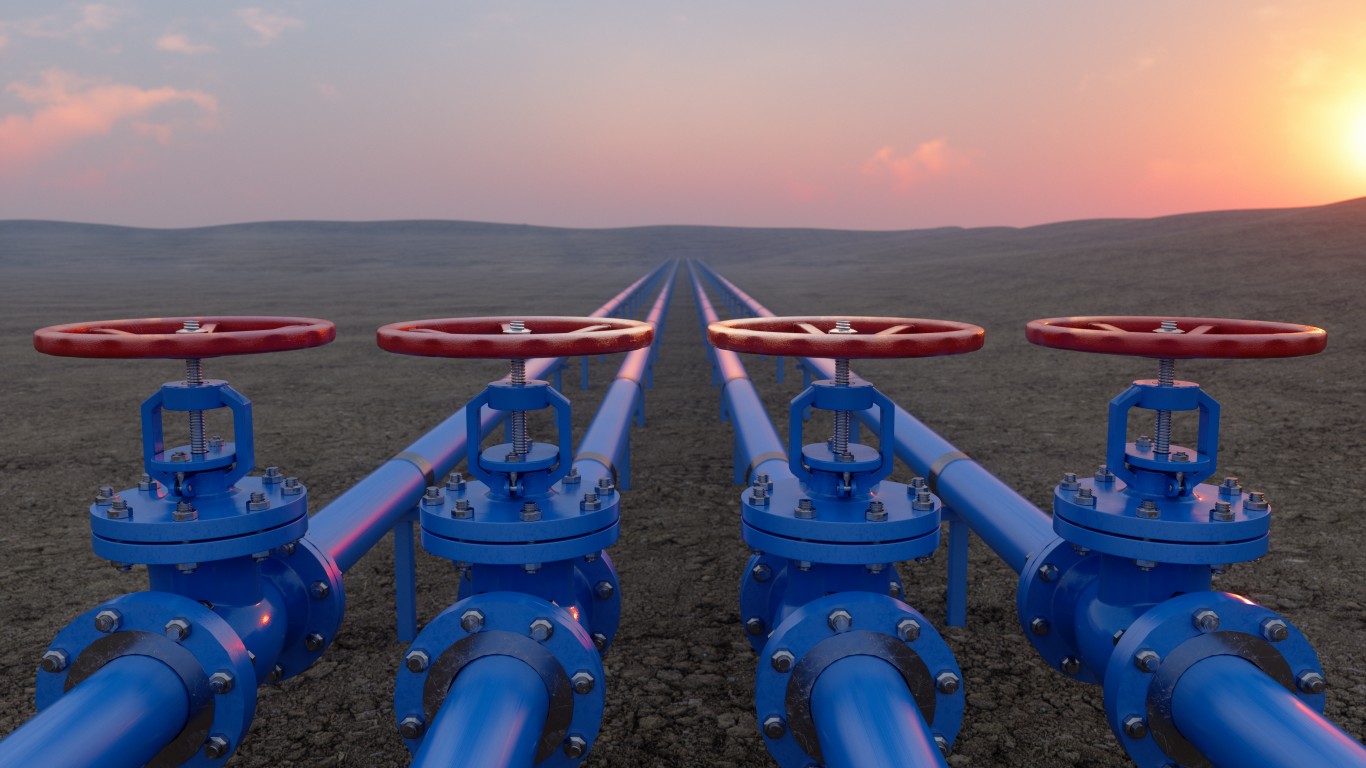
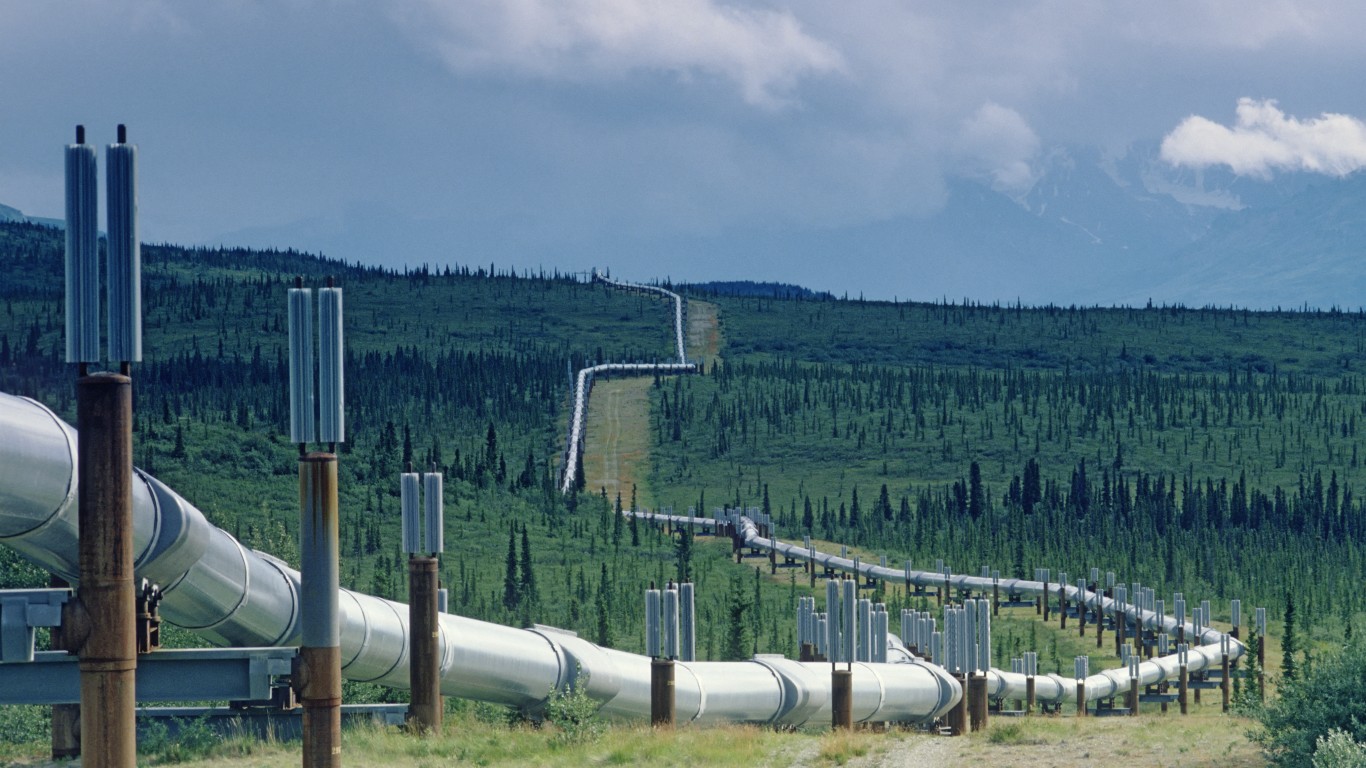
The Pacer American Energy Independence ETF (NYSEARCA:USAI) takes a different route. It owns the pipes, terminals, and processing plants that move hydrocarbons from wellhead to customer, businesses paid by the barrel or cubic foot regardless of commodity prices. Pacer built the fund around U.S. and Canadian midstream companies that generate most of their cash flow from infrastructure rather than drilling, which is the cleanest way to describe the toll-road thesis.
Why The Toll Booth Beats The Oil Well
Pipelines collect fees on volume. When throughput is steady, cash comes in steady. That matters more now than in years. WTI crude jumped from about $60 a barrel in January 2026 to over $100 today, the kind of move that historically rewards midstream operators because higher prices pull more barrels through the system and refill storage that emptied during the cheap-oil stretch of 2025.
The catalyst was geopolitical. The 2026 Iran conflict, the Strait of Hormuz closure, the ceasefire that fell apart after Islamabad talks, and the subsequent U.S. naval posture toward Iranian shipping all combined to put a real risk premium back into crude. North American midstream is the obvious beneficiary because every barrel that cannot move through Hormuz needs to move through a Permian pipeline or Canadian export terminal.
The Role In A Portfolio
USAI fits the income sleeve with its 4%-plus yield. It substitutes for what an investor might otherwise allocate to high-yield bonds, REITs, or individual MLPs with their messy K-1 tax forms. The fund wraps the MLP and midstream C-corp universe inside a 1099-friendly ETF structure, charges a 0.75% expense ratio, and pays monthly.
The return engine has two pieces. The first is distributable cash flow from pipeline operators, which behaves more like a regulated utility than a wildcatter. The second is modest commodity beta from volume-linked contracts and equity re-rating when oil rallies. You give up explosive upside of upstream producers in exchange for monthly payments whether crude is at $60 or $120.
Does The Math Work
This year, yes. USAI is up nearly 26% year to date and roughly 28% over the past twelve months, with a five-year total of about 165%. Layered on top of that, the monthly distribution stepped up from $0.12 to $0.16 in January 2026, a 33% raise that puts the annualized run rate near $1.92 per share.
That is the cleanest evidence the strategy works. Income investors got a raise from pipeline holdings while price also moved.
A February 2026 Intellectia AI report flagged the dividend hike directly, and a March piece noted short interest in USAI jumped almost 140%, which tells you traders started looking for a top as fundamentals were turning.
The honest comparison is to the broad market. A midstream income fund generally lags the S&P 500 in years dominated by big tech and leads in years dominated by energy and inflation. 2026 is shaping up as the second kind of year, but anyone allocating to USAI should expect long stretches where a plain index fund quietly does better on total return.
What You Are Actually Signing Up For
Three tradeoffs matter.
- Concentration in a narrow industry. This is North American pipelines and processing, full stop. A regulatory shift on permitting, a pipeline accident triggering sector-wide review, or sustained drilling collapse would hit every holding at once.
- Oil-price sensitivity is real, just smaller. The toll-road framing is mostly true, but volumes still depend on producers being willing to drill. A round trip from $91 back toward the $58 lows seen in late 2025 would compress both distributions and the equity multiple.
- Tax mechanics are cleaner than direct MLPs but not free. The fund structure avoids K-1s, but distributions can mix ordinary income with return of capital, and the ETF itself accepts a corporate-level tax drag for that simplicity.
USAI fits best as a 5-10% income sleeve for investors wanting energy exposure without owning a single barrel of oil. The main risk is that pipelines paying you today are still tied to a commodity cycle that can turn fast.













 Top Gaining Stocks
 Top Losing Stocks