



Jeffrey Gundlach, the DoubleLine Capital CEO known as the “Bond King,” has spent recent months hammering one message across his webcasts, CNBC appearances, and social posts: U.S. federal debt is on an unsustainable trajectory, some form of fiscal reckoning or debt restructuring is a credible tail risk, and the dollar is structurally vulnerable. He has paired that view with calls for higher gold allocations and increased non-U.S. equity exposure as portfolio insurance against dollar debasement.
Gundlach has not specifically endorsed any of the four securities below. But for retirement-focused investors who want to position around his macro thesis, these are thesis-aligned vehicles worth a look. The macro backdrop supports the urgency: M2 money supply hit $22.69 trillion in March 2026, sitting at the 90.9th percentile of recent history, while the 10-year Treasury yield stands at 4.36%, keeping refinancing pressure on Washington and corporate borrowers alike.
Equity Leverage to Gold and Copper
Barrick Mining (NYSE: B) offers operating leverage to bullion. As a global gold and copper producer, every dollar of metal price appreciation flows disproportionately into margins. The shares are down 5.4% year to date but up 115.7% over the past year, with a forward P/E of 12 and a dividend yield near 4.0%. The copper exposure adds a second leg, since copper benefits from infrastructure cycles even when gold cools.
Direct Bullion Exposure
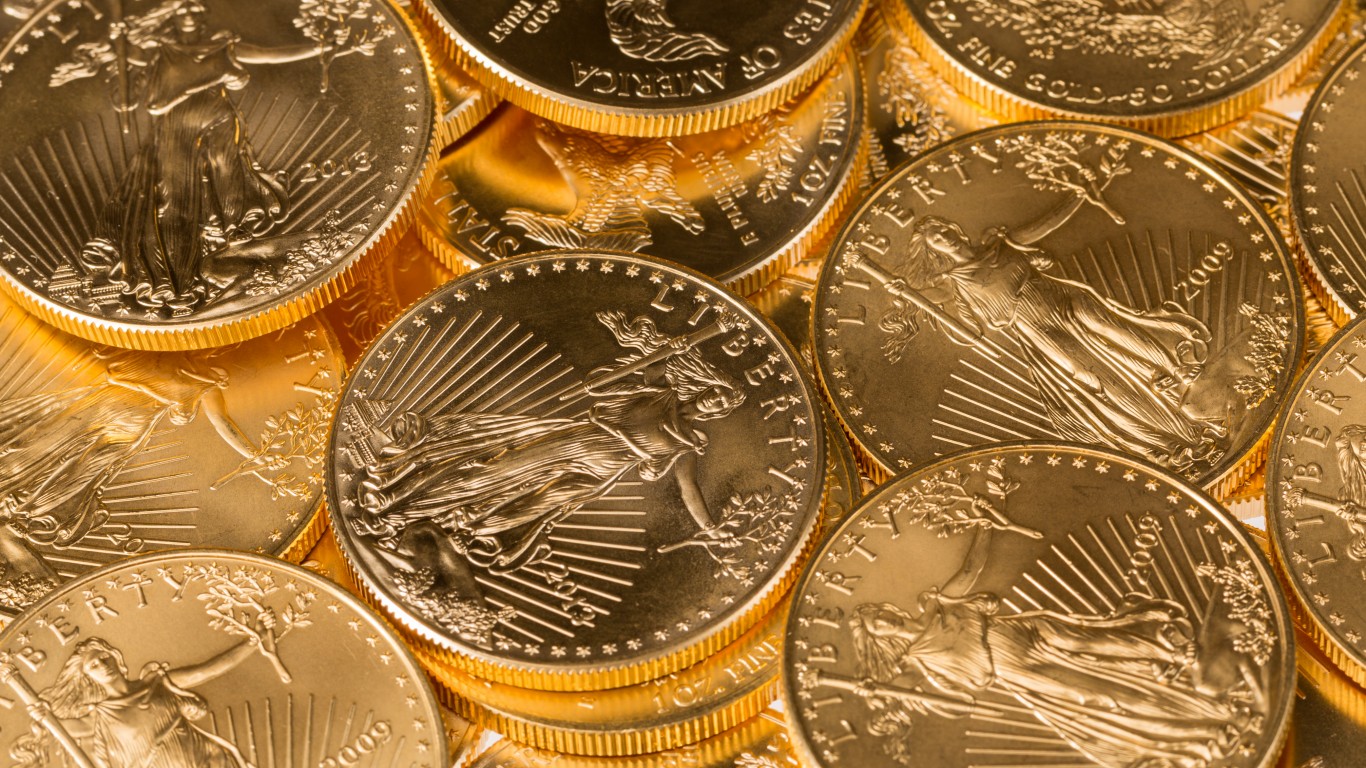
SPDR Gold Shares (NYSEARCA: GLD | GLD Price Prediction) is the cleanest, most liquid hedge against currency debasement. It holds physical gold, charges a 0.40% expense ratio, and carries $157 billion in net assets, making it the default vehicle for institutional and retail gold allocations. The fund is up 8.9% year to date and 38.9% over the past year. It delivers pure bullion exposure with no mining or operational variables.
U.S. Dollar Weakness Beneficiary
Taiwan Semiconductor Manufacturing (NYSE: TSM) is an international equity that historically benefits from a softer dollar. The foundry posted 46.5% profit margins and 58.1% operating margins with 35.1% revenue growth last quarter, and management guides full-year 2026 revenue growth above 30% in USD terms. Shares trade at a forward P/E of 27. With the EUR/USD rate at 1.18 (meaning one euro equals $1.18, or the dollar is worth €0.85), further USD weakness translates directly into stronger reported earnings for foreign-domiciled blue chips.
Broad Emerging Markets Exposure
iShares MSCI Emerging Markets ETF (NYSEARCA: EEM) historically outperforms during dollar weakness. The fund spans Taiwan (24.63%), China (22.86%), Korea (18.54%), and India (11.89%), with Taiwan Semiconductor as its largest holding at 14.4%. EEM is up 21.3% year to date and 49.2% over 12 months.
The Honest Risk Frame
Gundlach has been early—and at times wrong—on prior macro calls. A formal U.S. debt restructure remains a tail risk rather than a base case. Following any single strategist’s worldview concentrates risk. The yield curve spread stands at 0.49%, which is still positive and suggests that markets are not yet pricing in acute distress. For retirement investors, these four vehicles offer ways to gain thesis exposure without concentrating a portfolio on one strategist’s worldview.












 Top Gaining Stocks
 Top Losing Stocks