


 In contrast to data about improved jobs situations in the United States, Germany and China, much of the balance of the world remains mired in high unemployment. The recession has not ended at all in some nations, at least based on jobs data. The situation continues to worsen in other regions, and, unfortunately, no solutions to the trouble seem available for the poorest nations. The structure of the worldwide economy has crushed the economic prospects of some regions.
According to the International Labour Organization’s (ILO) “Global Employment Trends 2013“:
The year 2011 saw a tapering off of the recovery, followed by a dip in both growth and employment in 2012. Unemployment increased by a further 4 million over the course of 2012.
And:
In the fifth year after the outbreak of the global financial crisis, global growth has decelerated and unemployment has started to increase again, leaving an accumulated total of some 197 million people without a job in 2012. Moreover, some 39 million people have dropped out of the labour market as job prospects proved unattainable, opening a 67 million global jobs gap since 2007. Despite a moderate pick-up in output growth expected for 2013–14, the unemployment rate is set to increase again and the number of unemployed worldwide is projected to rise by 5.1 million in 2013, to more than 202 million in 2013 and by another 3 million in 2014.
The heart of the problem has shifted from developed economies to East Asia, South Asia, and Sub-Saharan Africa — areas of the world where access to stimulus capital is nonexistent. In other words, nations with the opportunity to help themselves, like the United States, did. But there is no way for underdeveloped nations to act similarly.
A deeper look at the report demonstrates why some of the most impoverished parts of the world have little defense if economic fortunes turn against them:
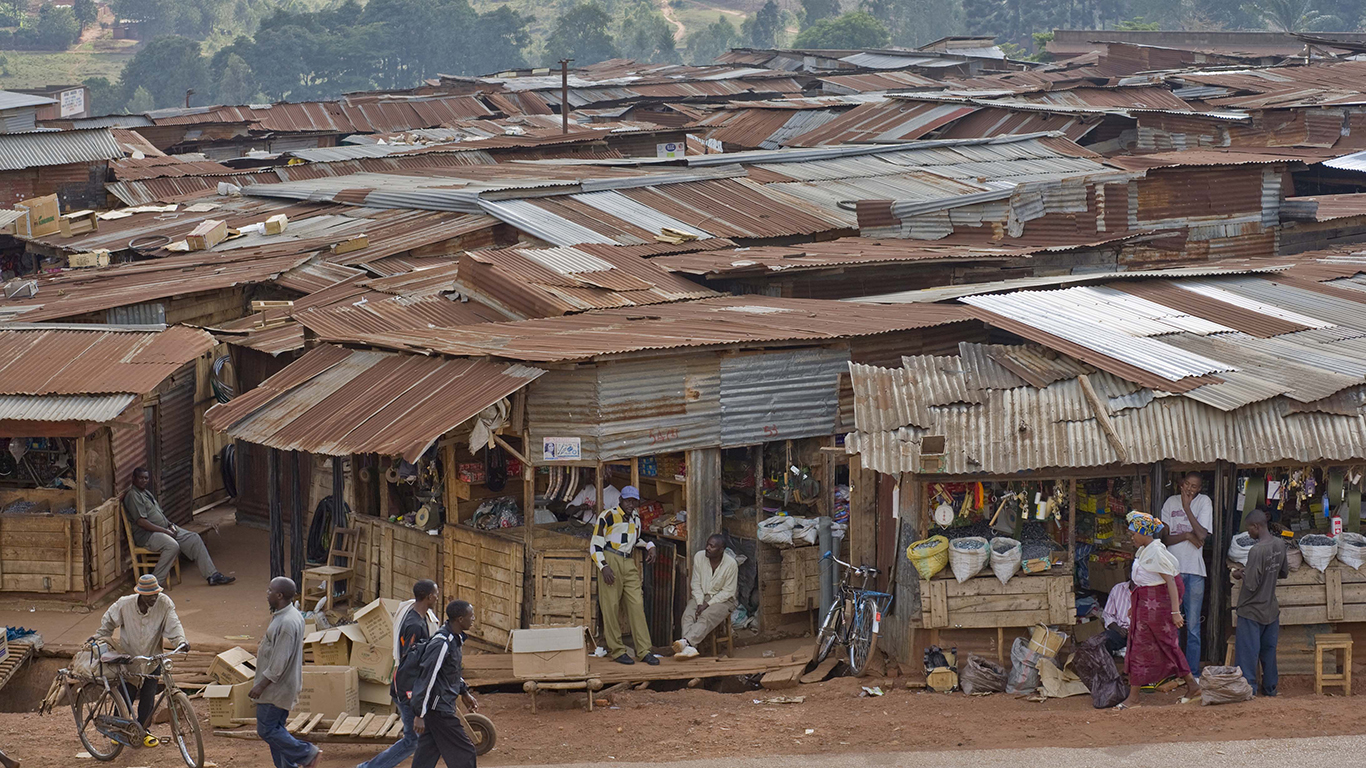
In summary, the basic growth story in Sub-Saharan Africa is one of low but rising labour productivity and a slow but steady structural shift of labour from agriculture to services, but without an expansion of the industrial sector. Consistent with this, the basic jobs story is one of persistently high levels of vulnerable employment that declined only modestly over the past two decades, despite high growth. In 2012, there were 247 million workers in vulnerable employment in Sub-Saharan Africa, 62 million more than in 2000 and at least 100 million more than in 1991.
Weather, lack of advanced farm techniques and tools, and governments that are inefficient, corrupt or bankrupt will not or cannot place a safety net under the huge numbers of people still in the agricultural sector. And without manufacturing, there is no new and traditionally strong leg for these economies to lean on. There is no evidence now that the huge manufacturing sectors that arose in Asia over the past 50 years will have a resurgence in Africa. Asia and regions like Mexico already have the infrastructure to support factory activity and export transportation. They also already have semi-skilled workforces.
For those out of work in regions like Sub-Saharan Africa, the hope of change is near zero.






 Top Gaining Stocks
 Top Losing Stocks