


The clean energy sector is big business. Investment bank giant Goldman Sachs plans to finance $750 billion in companies and sectors that are part of the growth in clean energy between 2020 and 2030. Even given Goldman’s size, this is a modest part of the growth of the clean energy world.
The growth of clean energy relies on the elimination, or at least reduction, of several parts of the economy that clearly hurt the environment. Among these are livestock manure, automobiles and the burning of fossil fuels for energy. The evolution toward greener products and services already has started among some of these. The electric car may be the best example.
It would seem that the clean energy sector would produce millions of jobs each year as the reduction of carbon emissions becomes more important to save the environment. In most cases that is true, but there are some exceptions. The renewable energy and clean fuel sectors saw significant job growth in the second half of 2020, though that growth was still negative by the end of the year, when compared to 2017.
Not all sectors suffered equally, and some actually did very well, continuing or expanding growth even through the pandemic. These sectors are providing the fastest-growing level of energy jobs. Though the number of clean vehicle jobs fell by 18.6% in the first months of 2020, they grew 26.2% in the second half, recording a 17.7% growth from 2017 through 2020. The grid and storage sector also managed to erase pandemic declines and show job growth from 2017.
[nativounit]
Job changes by subsector were even more nuanced, though they generally reflected the sector overall. To find the fastest-shrinking clean energy jobs, 24/7 Wall St. reviewed E2’s Clean Jobs America 2021 report. The 21 subsectors are ranked by job growth in the three years from 2017 through 2020.
The level of future employment within the sector will necessarily depend on the policies the federal government is able to enact in the coming years. Strong clean energy policies that include funding and other incentives will serve to create jobs in every state, offer savings to consumers based on energy efficiency, improve and protect the electric grid, reduce pollution and play a needed role in the reduction of greenhouse gases that are driving climate change.
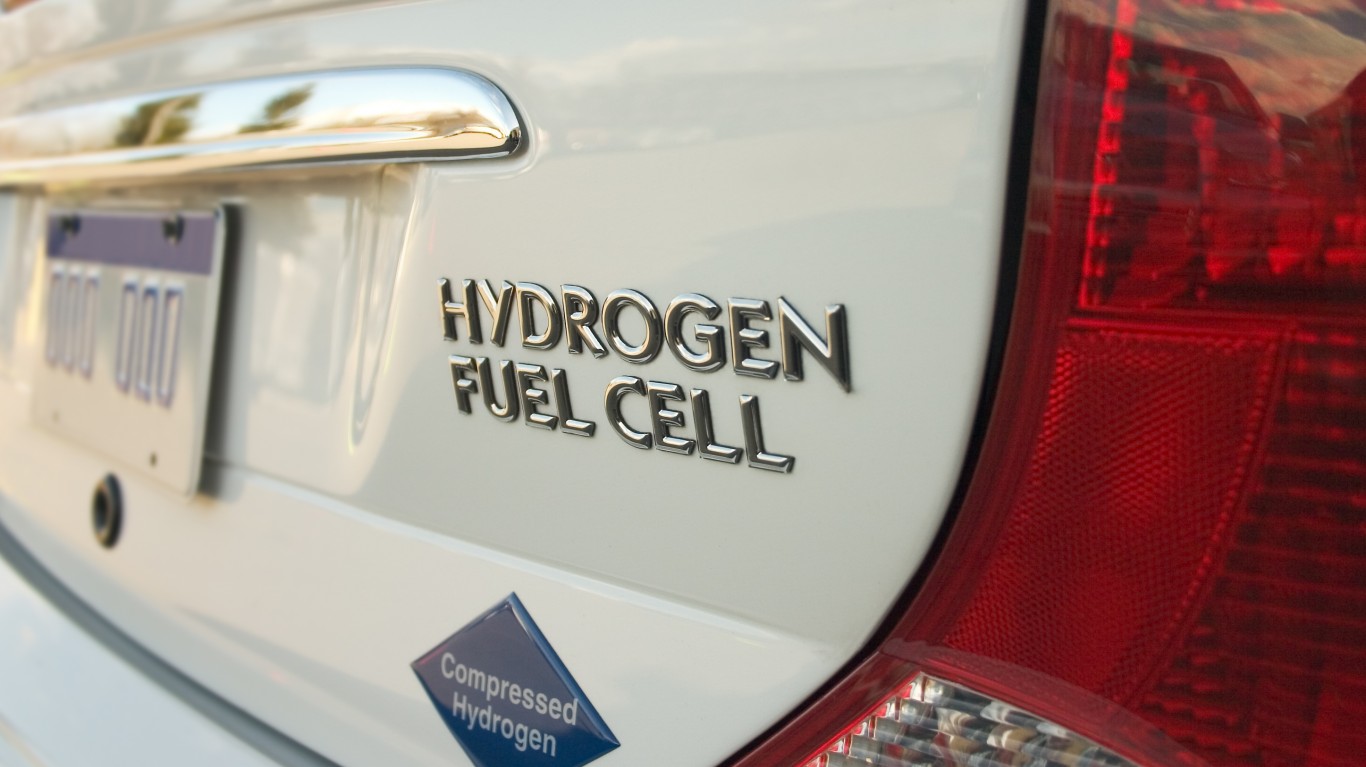
Hydrogen and fuel-cell vehicles are the part of the clean energy business losing the most jobs. Here are the details:
- Clean energy jobs growth 2017-2020: −18.63%
- Clean energy jobs growth 2017-2019: −12.83% (the lowest)
- Employment 2017: 12,338 (fourth lowest)
- Employment 2019: 10,755 (second lowest)
- Employment 2020: 10,040 (second lowest)
Even before the pandemic, there were relatively few jobs supporting the development of fuel cell cars and the hydrogen needed to power them. Still, fuel cell technology holds promise for transforming the energy picture in the future. Because of its efficiency and flexibility, it could be used in a wide variety of applications beyond clean cars, from portable electronics to distributed electricity generation. Experts believe that predicted growth in this industry will mean “a vast number” of new jobs.
Additional data on job growth in 2017 to 2019 and employment in 2017, 2019 and 2020 also came from E2, a nonpartisan group advocating for environmental policies. The analysis is based on preliminary employment data from the 2021 U.S. Energy and Employment Report. This report uses U.S. Bureau of Labor Statistics Quarterly Census of Employment and Wages data and a supplemental survey.
Clean energy jobs span economic sectors and include jobs in renewable energy, solar and wind, storage and grid, energy efficiency, clean fuels and clean vehicles. E2 does not include jobs in corn ethanol, woody biomass, large hydropower and nuclear.
Click here to see all the fastest growing (and shrinking) clean energy jobs.
[wallst_email_signup]







 Top Gaining Stocks
 Top Losing Stocks