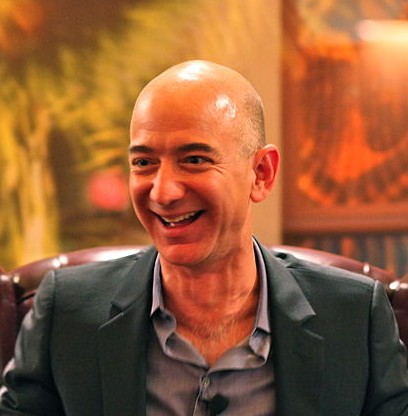
The Real Challenge for Bezos: Do People Want to Read the Post?

Photo of Douglas A. McIntyre
By Douglas A. McIntyre Published
This post may contain links from our sponsors and affiliates, and Flywheel Publishing may receive compensation for actions taken through them.

The flagship of New York Times Co. (NYSE: NYT) and The Wall Street Journal each ran lengthy articles about how Jeff Bezos could transform the flagship of the Washington Post Co. (NYSE: WPO) into a success by using his experience with e-commerce, digital marketing and data mining. None of these will help the famous paper, a fact that has been lost in the speculation about how it may be turned around.

The fact of the matter is that the best sign of the problems at the Post is the massive drop in its circulation. Depending on which measure is used, the circulation has fallen by a third or more in the past decade. By that measure, the paper is slightly larger than the Chicago Tribune or Chicago Sun-Times. And Washington is a one-paper town, without the competition that the two Chicago papers have with one another.

Bezos cannot work the magic that has helped him build Amazon.com Inc. (NASDAQ: AMZN) in light of the number of competitors the Washington Post has, because technology cannot entirely trump consumer habits. Ultimately, the paper is overwhelmed with competition that it has spent years battling, to a greater and greater extent.

In the world of national politics, Politico usually is mentioned as what has done the Post the most damage in this field. The analysis is accurate. Politico has an editorial staff that numbers more than 100. Politico also has diversified its coverage enough to compete with the Post in several arenas outside political coverage.

The Washington Post’s local competition has grown because it is so inexpensive to start Web properties. Local television stations could only challenge the Post when they had news on the air. Otherwise, their programs came from national networks, in the daytime, prime time and late night periods. Now, the four network affiliate stations run local news all day long at their websites, which they can promote on TV. Just a decade ago, these sites could not have existed.

The Post’s most powerful competitors are in the national and international news business. Not long ago, The New York Times, USA Today and The Wall Street Journal needed to distribute print editions of their products around Washington to effectively compete. Their online editions make that expensive mode of distribution obsolete. In addition, all the print media that cover national and international news through digital editions have to battle with huge television network-based sites, which include, at the very least, those of Fox, NBC and CNN.

No amount of data mining can combat the relentless move of content on the Internet, which has crippled the Washington Post locally and in the areas of national and international news. Bezos should know that as well as anyone.


Photo of Douglas A. McIntyre
About the Author Douglas A. McIntyre →

Douglas A. McIntyre is the co-founder, chief executive officer and editor in chief of 24/7 Wall St. and 24/7 Tempo. He has held these jobs since 2006.

McIntyre has written thousands of articles for 24/7 Wall St. He is an expert on corporate finance, the automotive industry, media companies and international finance. He has edited articles on national demographics, sports, personal income and travel.

His work has been quoted or mentioned in The New York Times, The Wall Street Journal, Los Angeles Times, The Washington Post, NBC News, Time, The New Yorker, HuffPost USA Today, Business Insider, Yahoo, AOL, MarketWatch, The Atlantic, Bloomberg, New York Post, Chicago Tribune, Forbes, The Guardian and many other major publications. McIntyre has been a guest on CNBC, the BBC and television and radio stations across the country.

A magna cum laude graduate of Harvard College, McIntyre also was president of The Harvard Advocate. Founded in 1866, the Advocate is the oldest college publication in the United States.

TheStreet.com, Comps.com and Edgar Online are some of the public companies for which McIntyre served on the board of directors. He was a Vicinity Corporation board member when the company was sold to Microsoft in 2002. He served on the audit committees of some of these companies.

McIntyre has been the CEO of FutureSource, a provider of trading terminals and news to commodities and futures traders. He was president of Switchboard, the online phone directory company. He served as chairman and CEO of On2 Technologies, the video compression company that provided video compression software for Adobe’s Flash. Google bought On2 in 2009.

Continue Reading

Top Gaining Stocks

CBOE Vol: 1,568,143
PSKY Vol: 12,285,993
STX Vol: 7,378,346
ORCL Vol: 26,317,675
DDOG Vol: 6,247,779

Top Losing Stocks

LKQ
LKQ Vol: 4,367,433
CLX Vol: 13,260,523
SYK Vol: 4,519,455
MHK Vol: 1,859,865
AMGN Vol: 3,818,618