


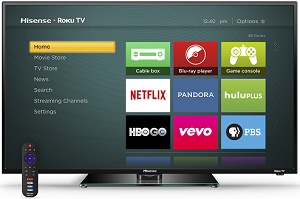
Along with the devices are the various subscription models. There are the usual cable and satellite providers; subscription video-on-demand from the cable and satellite companies; free ad-supported Internet video like YouTube; and subscription video like Netflix, Hulu Plus and Amazon Prime.
Research firm comScore collected data from over 1,100 respondents to an online questionnaire in late August. Because the survey was conducted online, the reported digital viewing behaviors may be overstated.
In general the younger a viewer is, the more time that viewer spends watching video on something other than a traditional TV. For millennials (ages 18 through 34), a full third watch an original TV series on an Internet-connected device, double the rate of the 35- to 54-year-old group and more than triple the rate of viewers old than 55.
ALSO READ: Did Subscription Internet Video Competition Just Get a Death Blow?
As for time-shifting, more than half of all those surveyed say schedule flexibility and convenience are the main reasons for watching TV content over the Internet. Less than 40% say a main reason is that time-shifting allows them to skip commercials.
Consumers with subscriptions to a paid digital video service like Netflix or Amazon Prime are more likely to time-shift, regardless of their age. The survey indicated 55% of digital video subscribers versus 27% of non-subscribers who time-shift. An interesting note here is that by far the most popular method for binge-watching a TV series is on a TV set with a DVR attached (43%), and the second-most popular way (19%) is by using the video-on-demand service from a pay-TV provider. Only 12% of respondents binge watch on an Internet-connected device.
Some 42% of all respondents subscribe to a digital video service, with millennials leading the pack with 61%. Netflix Inc. (NASDAQ: NFLX) posted the largest percentage of subscribers — 32% of all viewers — compared with 19% for Amazon.com Inc.’s (NASDAQ: AMZN) Amazon Instant Video and 9% for Hulu Plus. Of the Netflix subscribers, 44% prefer to watch on an Internet-connected TV, 27% prefer a desktop or laptop computer, 21% prefer a Blu-Ray disc or gaming console and just 7% prefer a mobile device.
And why do people subscribe? The survey showed that 58% subscribed to pay-TV for news and 51% subscribed to watch prime-time shows. Live sports was the reason for 50% of subscribers to pay up, while live events garnered 24%.
Given the high cost of sports programming to the broadcast and cable networks, the number of subscribers who cite live sports as a primary reason for subscribing seems low. That is likely due to the way pay-TV subscription packages are structured, where virtually everyone pays something to offset the cost of the various sports packages.









 Top Gaining Stocks
 Top Losing Stocks