


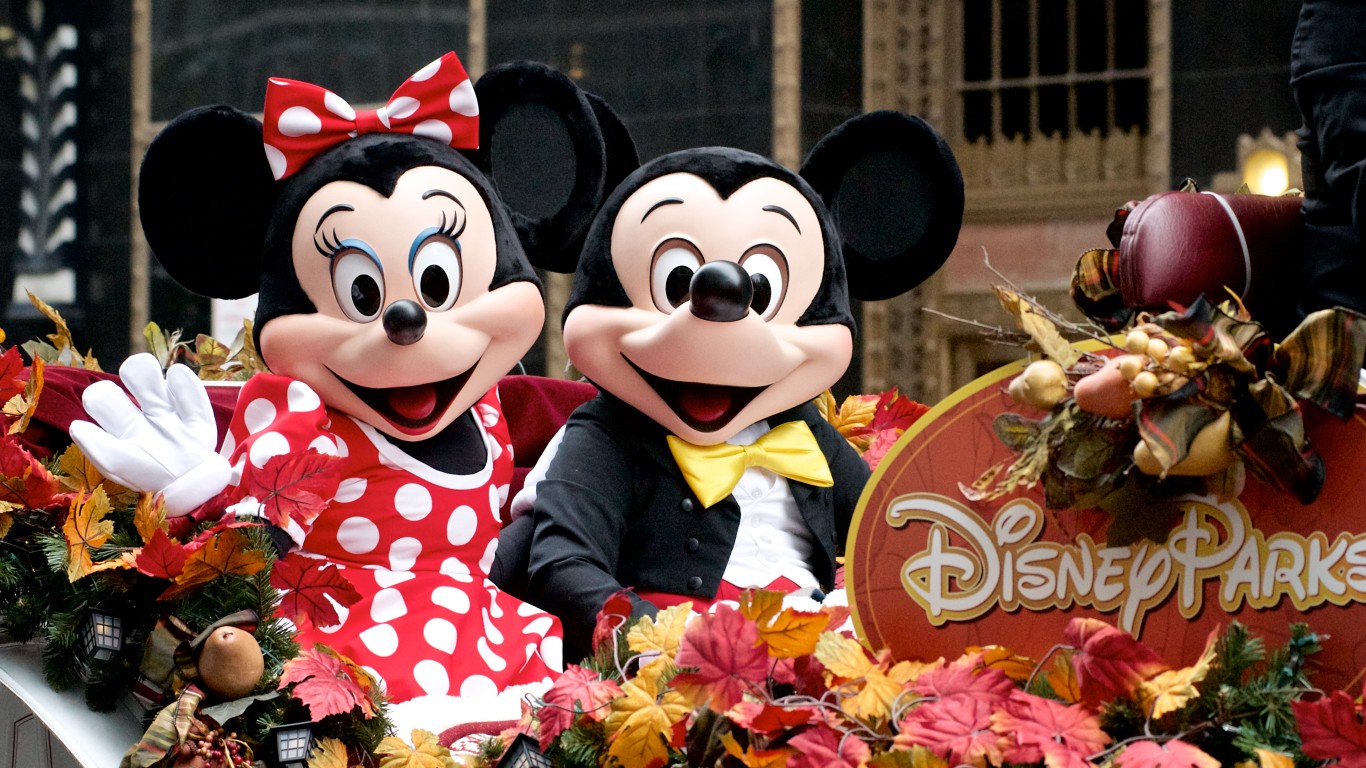
What does the fight to control a large American company cost? According to The Wall Street Journal, about $70 billion has been spent in a battle to control Disney (NYSE: DIS). This includes the costs of attorneys, proxy solicitation firms, and marketing work to take the case to investors. Disney has a market cap of over $200 billion. Raider Nelson Peltz, who owns about $2.5 billion shares through his Trian Partners company, could gain hundreds of millions of dollars if he can get the board seats he is fighting for. The Disney board is trying to stop him.
Peltz wants two board seats at Disney. One is for himself, and the other for former Disney CFO James “Jay” Rasulo. Peltz made the case for the seats in a recent statement, “As Disney’s largest active shareholder, we can no longer sit idly by as the incumbent directors and their hand-picked replacements stand in the way of necessary change.” These are the bullish and bearish views of Disney’s share value.
Disney has appointed two new directors to thwart Peltz. One is James P. Gorman, Chairman and Chief Executive Officer of Morgan Stanley. The other is Sir Jeremy Darroch, a former Group Chief Executive of Sky. Darroch’s appointment is effective January 9, 2024, and Gorman’s is effective February 5, 2024. Each will be a Disney director nominee on the proxy statement for the 2024 Annual Meeting of Shareholders.
The reason for the battle is simple. Bob Iger, who returned to Disney as CEO in November 2022, came back to turn the entertainment company around. He served as CEO from 2005 until late 2021 and was regarded during most of that period as among the best chief executives in the country.
Disasters plagued Iger’s return to Disney. The streaming service Disney+, created during his first term as CEO, lost billions of dollars. It was probably underpriced. Subscribers reached over 150 million, but with a low dollar yield from these subscribers, it was a financial drag. Results from Disney’s studios slid after years at or near the top of the movie industry: slow advertising sales, both traditional and digital, hurt media properties like ABC.
Despite a recent recovery in Disney shares because of Peltz’s effect and a strong quarter announced recently, the stock is down 27% in the last two years, while the S&P 500 is up 14%. In October, investors were so pessimistic that the shares had dropped 46% from where they had traded two years ago.
Disney’s most recent earnings buoyed the stock. So did a plan to invest $1.5 billion in Epic Games. Disney also said it would lift its dividend by 50%.
The rally has not stopped the Peltz effort. The $70 million proxy fight, which may determine who controls Disney, will continue.







 Top Gaining Stocks
 Top Losing Stocks