


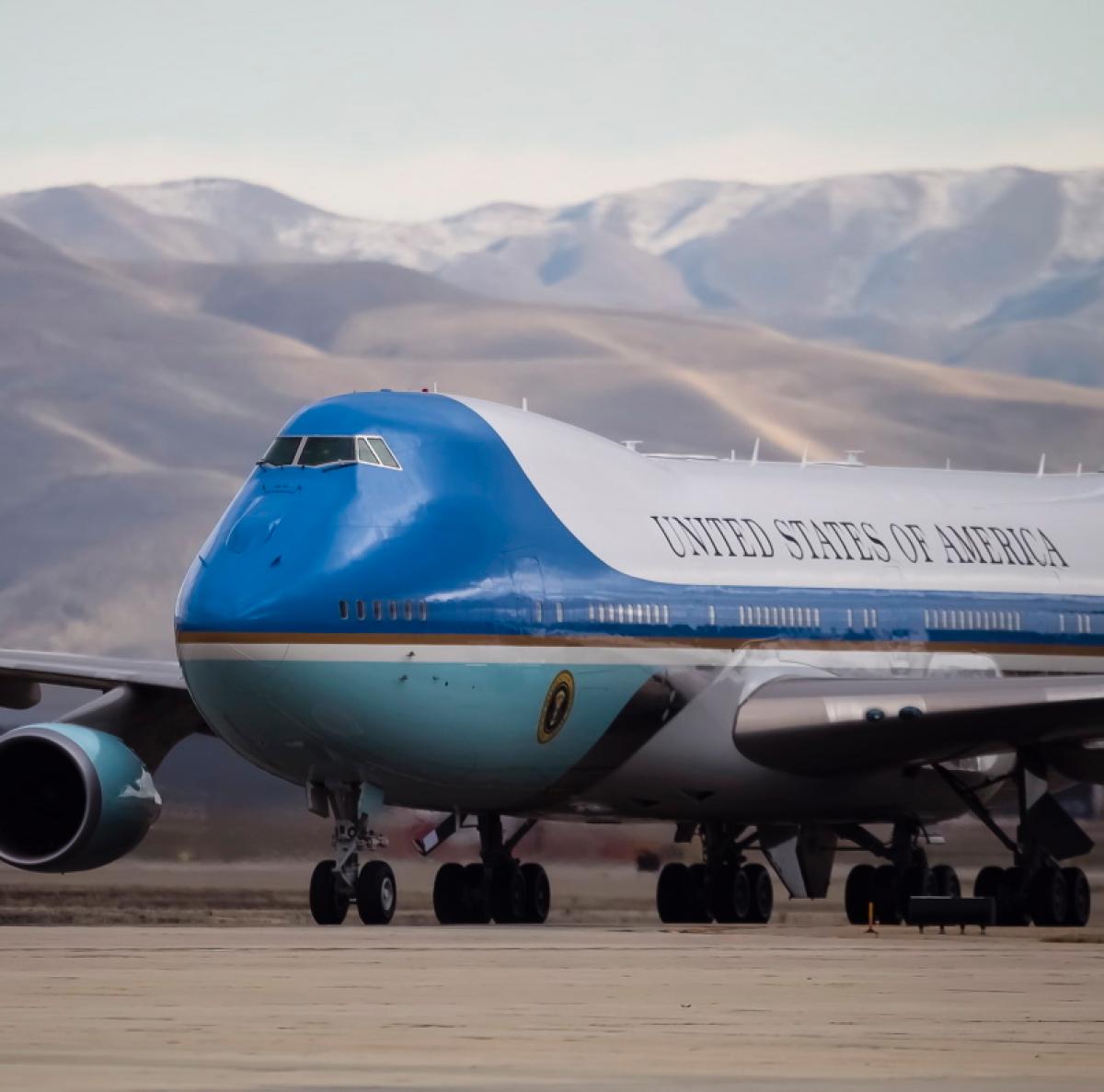
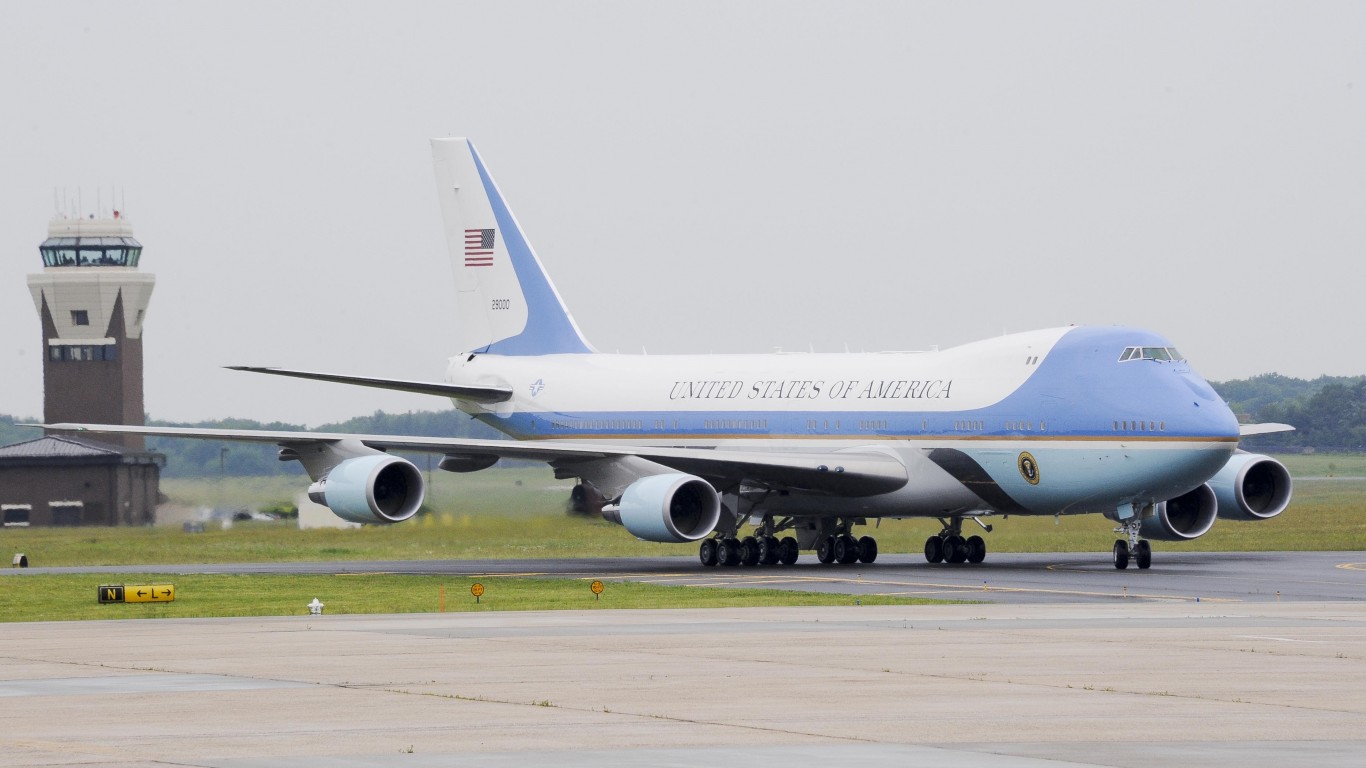
When the White House reported Tuesday that President Trump and Boeing Co. (NYSE: BA) CEO Dennis Muilenburg had reached an agreement on the price for new Boeing planes that will be designated Air Force One, the announced savings to taxpayers was given as $1.4 billion. The purchase price and modifications needed to customize the two 747-8s was reported to be $3.9 billion.
Marcus Weisgerber at industry publication Defense One did the math. In December 2016, President-Elect Trump fired off a series of tweets about the high cost of Air Force One, citing a price of $4.4 billion. If the cost that the president and Muilenburg agreed to was, in fact, $3.9 billion, for a savings of $1.4 billion, that implies that the original cost of the program was $5.3 billion, not $4.4 billion. Math has never been a big concern of politicians, so we’ll move on.
The U.S. Air Force, the government entity responsible for issuing the contract and paying for Air Force One, has had no comment about the program. All questions have been referred to the White House. In its own tweet about the deal, Boeing only said that it was an “outstanding value for taxpayers.”
[nativounit]
Prior to the negotiations between the president and Muilenburg, the contract discussions had been stuck on the issue of whether the final contract would be a fixed-price deal. But there are fixed-price deals and there are fixed-price deals.
The Air Force, according to Weisgerber, wanted a “firm, fixed-price” contract that would have committed Boeing to eat any cost overruns. This is the same contract type that has cost Boeing around $2 billion so far on its new Air Force KC-46A tanker.
Boeing was not interested, but was willing to sign only a fixed-price contract that would leave the company some leeway to accommodate the inevitable delays and complications that will arise as the new planes are built. Sources told Defense One that “it’s unlikely Boeing would agree” to a firm, fixed-price deal.
So what have U.S. taxpayers got? An outstanding value or a bill for Air Force One that has no apparent limit? Boeing — and Trump — likely figure that when the plans are delivered in 2024 or 2025, everyone will have forgotten about all these petty details. They’re probably right.
[recirclink id=445892]
[wallst_email_link]





 Top Gaining Stocks
 Top Losing Stocks