


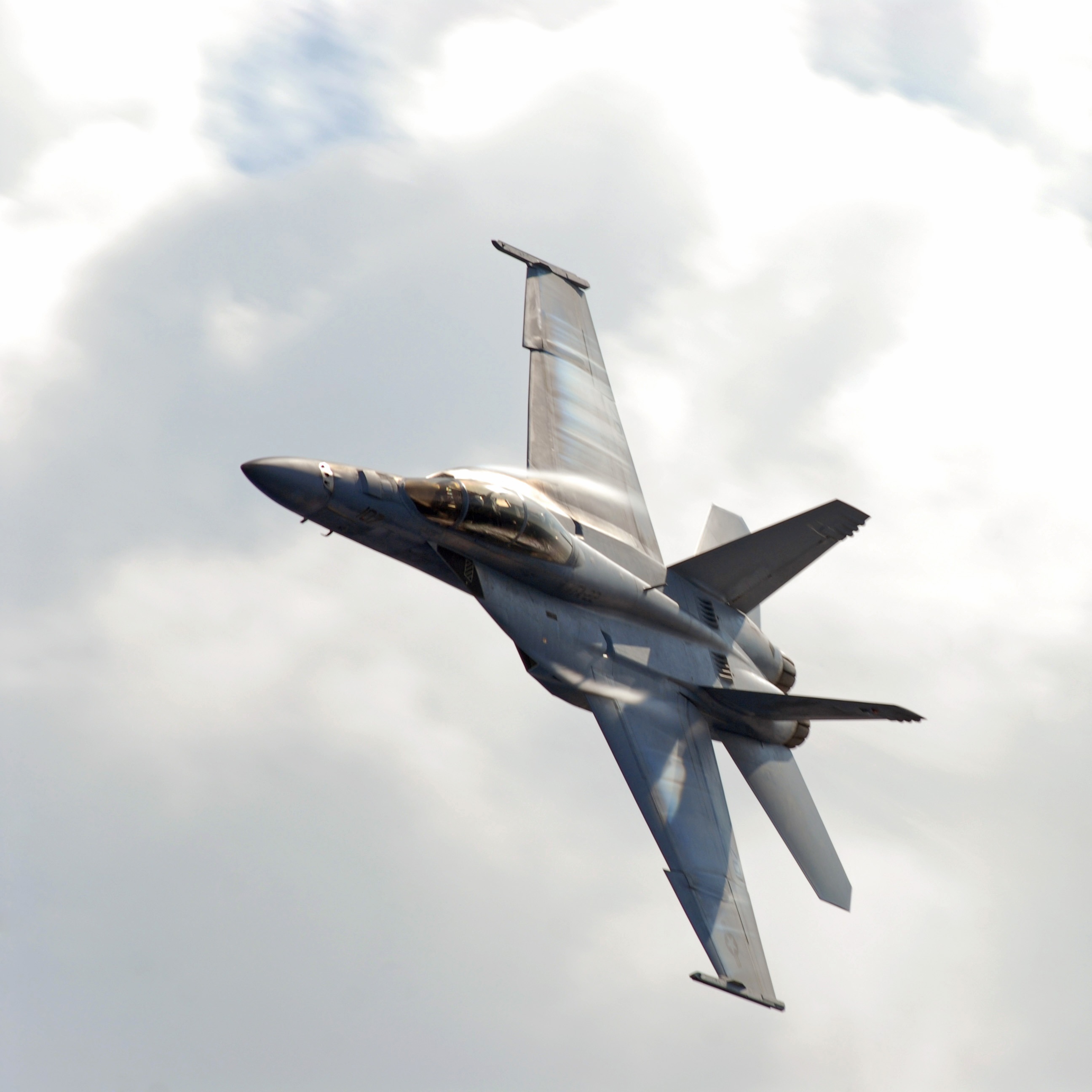
The CEOs of the world’s two largest defense contractors met with President-elect Donald Trump on Wednesday and, while first reports of the meetings were pretty ordinary, Trump decided to raise the stakes late Thursday.
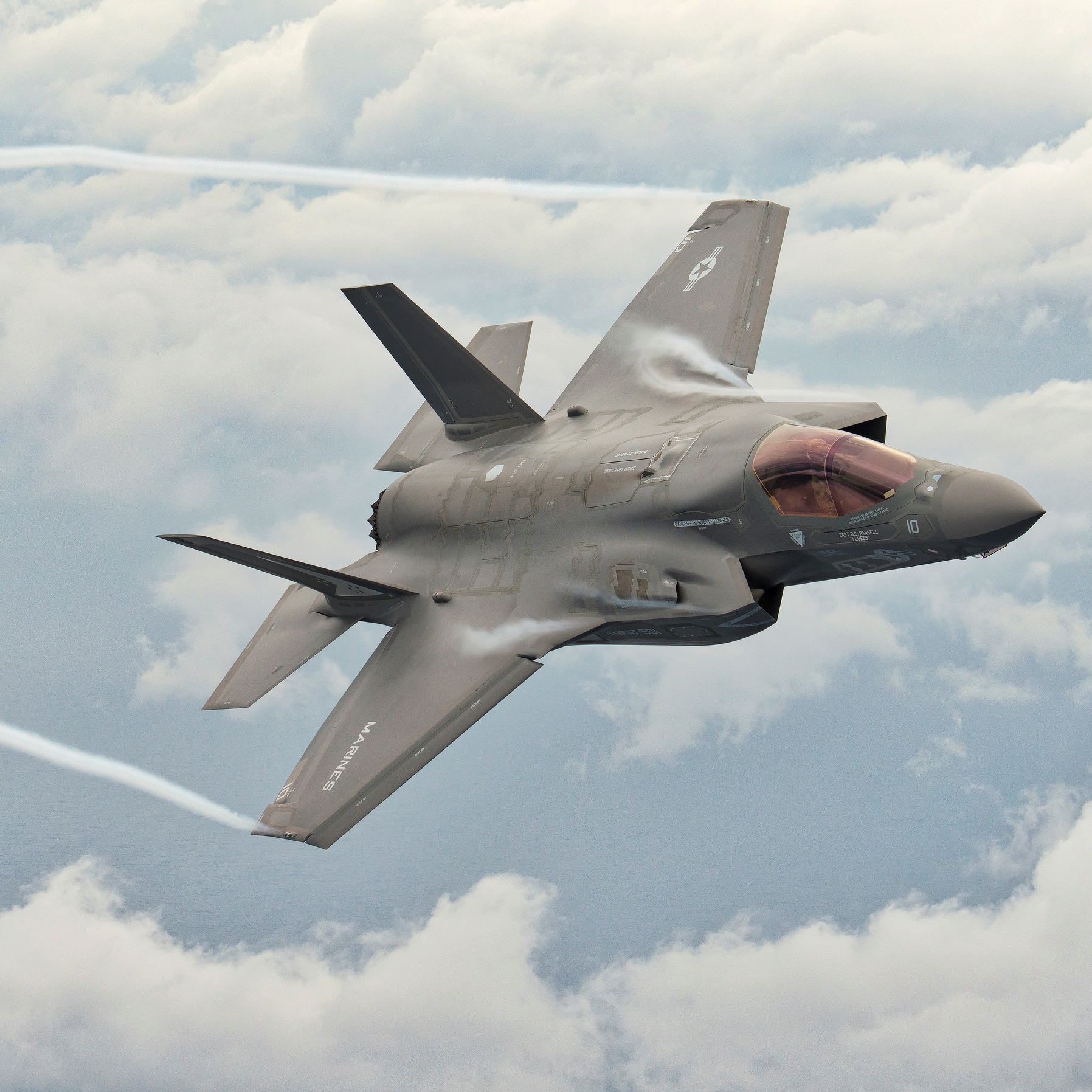
Trump had already tweeted out his displeasure at the cost and cost overruns of the Lockheed Martin Corp.’s (NYSE: LMT) F-35 Joint Strike Fighter. The tweet sent Lockheed’s stock down 3%.
Then on Thursday the president-elect took another shot at Lockheed:
Lockheed’s shares traded down about 2% in Thursday’s after-hours session, and the company did not respond to Trump’s tweet.
Boeing Co. (NYSE: BA), however, sounded delighted in its tweeted response:
[nativounit]
The fact that Boeing F/A-18 Super Hornet is not comparable to the F-35 apparently is either not worth mentioning or simply one of those inconvenient facts.
The major difference between the two planes is stealth technology. The F-35 has it and the Super Hornet does not. There are other differences, as Marcus Weisgerber at Defense One points out:
Despite similarities, the two warplanes are not “comparable.” The F-35 is a stealth fighter, meaning it is built to avoid radar detection. To stay low-profile, the F-35 carries its bombs and missiles inside the jet, not outside on the wings like the Super Hornet. The F-35 also has an advanced computer system that processes data from a host of cameras and sensors.
The delays in deploying the F-35 have led to additional purchases of the Super Hornet as a stop-gap until the new plane is ready. And because the Boeing fighter is a known quantity, it can be built quickly and at about half the cost of an F-35.
Lockheed has already begun negotiating with the Pentagon over the next batch (called a “lot” in defense-speak) of 100 F-35s. The defense chiefs have made the company an offer they can’t refuse that sets the price of this lot at $107 million per plane. Lockheed even asked for an additional $530 million in early November to pay for delays and flight testing.
Lockheed shares traded down 1.6% in Friday’s premarket, at $248.80 in a 52-week range of $200.47 to $269.90. The consensus 12-month price target is $278.47.
Boeing’s stock traded up about 0.8%, at $158.26 in a 52-week range of $102.10 to $160.07. The consensus price target is $155.12.
[wallst_email_signup]







 Top Gaining Stocks
 Top Losing Stocks