



Only about 20% of Americans are expecting to receive any inheritance at all. This represents a decline compared to decades prior. However, among those who stand to inherit, there exists a bias labeled the “inheritance illusion”, where people overestimate the likelihood or amount of inheritance, which can lead to under-saving. Still, Cerulli Associates (2024) estimates that $84 trillion will transfer between generations by 2045, with $16 trillion going to charities rather than heirs.
What should you do if you are expecting a large inheritance? Is it wise or financially prudent to factor an inheritance into your financial plans? How much inheritance is typical? These used to be very common questions that are becoming increasingly rare these days. But if you find yourself with the potential of inheriting a vast sum of money, it can be a stressful and confusing time.
If it feels like nobody is getting an inheritance these days, you’re not wrong. According to repeated studies, the Boomer and Gen X generations are much less likely to leave money behind for family than any previous generation. They are more willing to spend all their money on anything (as long as it’s for themselves) before they die. That is in stark contrast to the Millennial and Gen Y cohorts who have seen the impact of rampant inequality and greed and are much more willing to share as much as they can with others before they pass on.
But if you happen to be one of the lucky ones with money in your future, what should you do? This was the question of one particular user in the r/inheritance subreddit community.
Key points:
- Inheritance plans can change at any time, and wills can be altered easily.
- Do not plan on receiving an inheritance, and don’t include it in your financial plans.
- Take this quiz to see if you’re on track to retire (Sponsored)
The Question
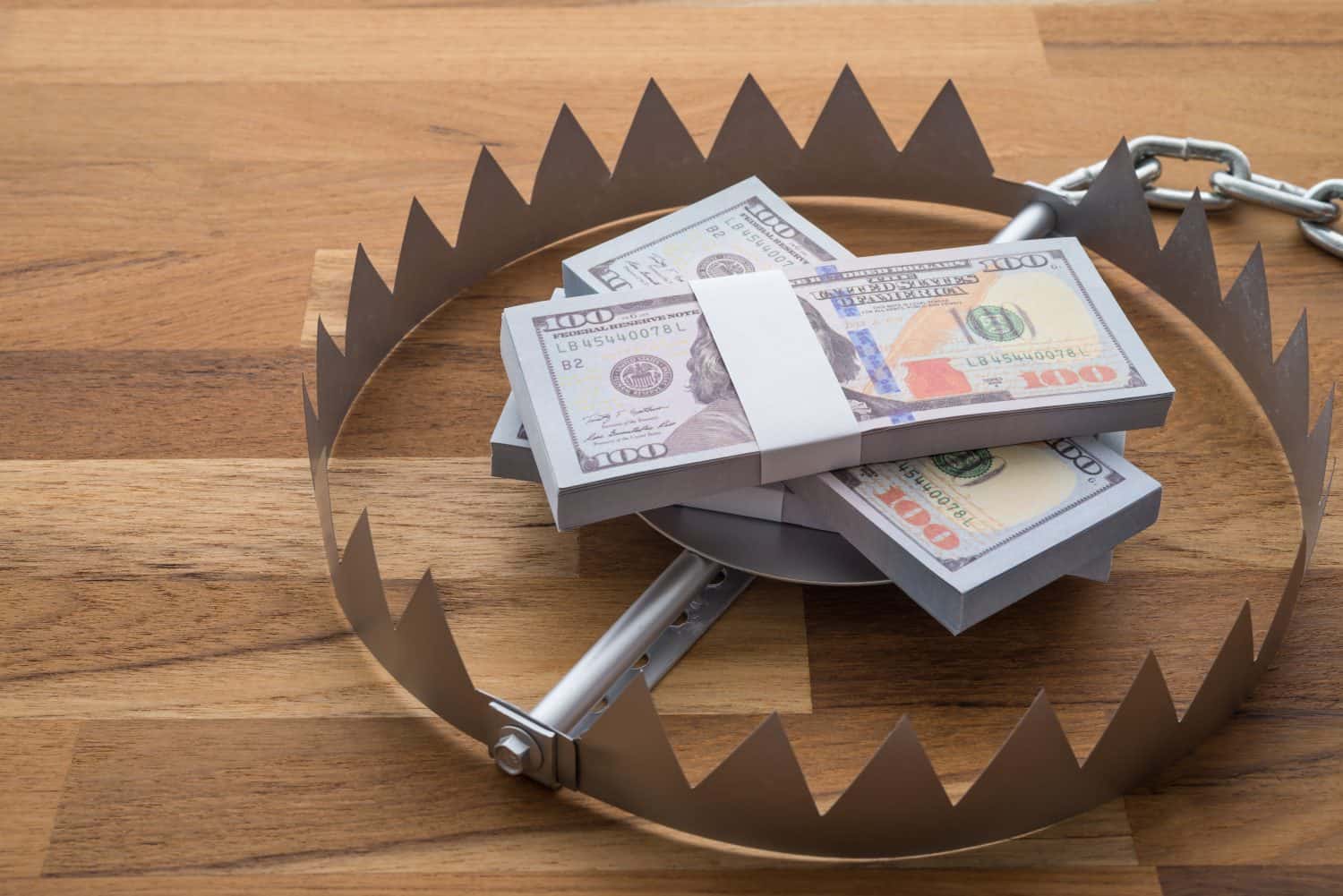
The trap of the promised inheritance: the Boomer and Gen X strategy of emotional manipulation by using inheritance to control behavior.
The post author gives little detail about their family or financial background other than the fact they have been saving money for retirement aggressively ever since they began working. This includes a diversified financial portfolio and maximized contributions.
Their father, at age 65, had recently divorced his wife and confided to them that the post author would receive an inheritance of around $5 million.
The post author took this as granted and was wondering if they still need to keep saving money so aggressively since they will have already exceeded the lifetime savings of most other people if they do end up getting this inheritance.
The Community Response

A photo of an empty wallet.
The overwhelming majority of responses to this question, no matter what their advice was, is one of incredulity and doubt. According to responders, it is common for men this age to divorce and get remarried soon after. They doubted the promised inheritance would be anything close to $5 million if the author received anything at all.
Many commenters confessed that they had been told the same thing by parents or other family, only to be disappointed when the person remarried, had new children, or ended up changing their mind.
With that said, most responders said that it is not a good idea to change your financial plans based on a potential inheritance. You have control over your savings and earnings and retirement, but you have no control over your inheritance. Until the money is in your hands, it’s safer not to assume it’s yours. Changing your financial plans to account for an inheritance only to not get any means you have messed up your savings, often without any way to fix it. It is definitely best to treat an inheritance as though it doesn’t exist, and if you do end up getting something, it’s a happy bonus.
In the end, there are far too many unknown variables and things outside the control of the author to expect to receive any amount of the promised $5. Making life choices based on unknowns is an easy way to end up in financial ruin.
Remember, inheritance is not a legal obligation, and even a will can be changed on a whim. If the money is in a trust, however, it might be safer from changes and you can probably expect at least some money.














 Top Gaining Stocks
 Top Losing Stocks