


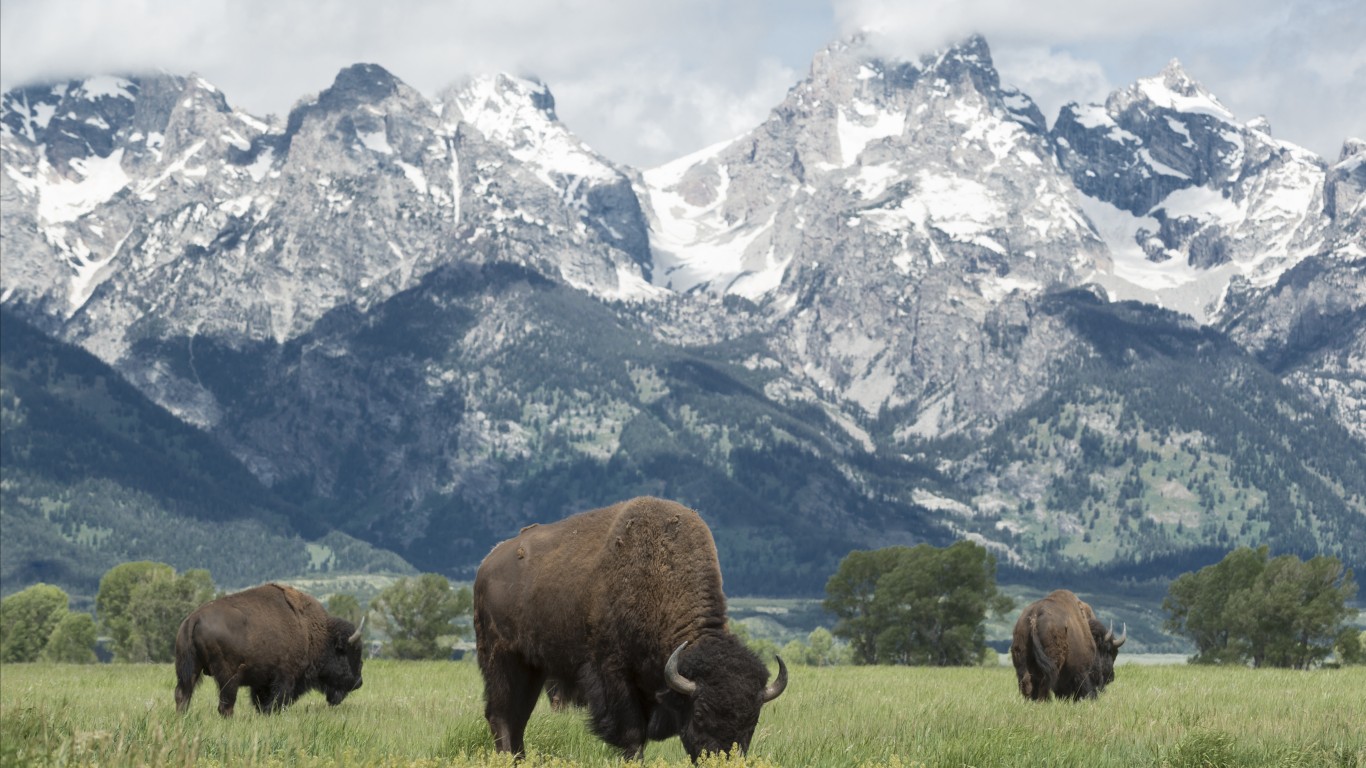
Rematriation is an Indigenous process of restoring balance to the world and reconnecting Indigenous communities to the natural land. One of the clearest paths towards rematriation in today’s society is returning buffalo (also known as bison) to ancestral lands. The Nature Conservancy, in partnership with the InterTribal Buffalo Council, Tanka Fund, and other Indigenous partners, has been working to fulfill this. Since 2020, the Nature Conservancy has transferred 1,800 buffalo to Indigenous lands. Over 600 buffalo have been returned to Indigenous communities in this year alone. This not only provides a valued source of food and resources, but allows Indigenous communities to invest in agriculture and land restoration as they build their herds.
The relationship between buffalo and Native Americans is a storied and multifaceted one, founded on love and respect. Native American tribes have long used multiple parts of the buffalo in their daily lives. But with so many different parts, from skin to intestines, what was made? Here, 24/7 Wall St. explores how Native Americans utilized different buffalo parts to feed, clothe, and protect their communities. To do so, we used various historical sources, as well as information from the National Park Service, InterTribal Buffalo Council, and National Museum of the American Indian. (If you’d like to hunt bison now, hunting will never be the same with these cartridges.)
Why We’re Covering This
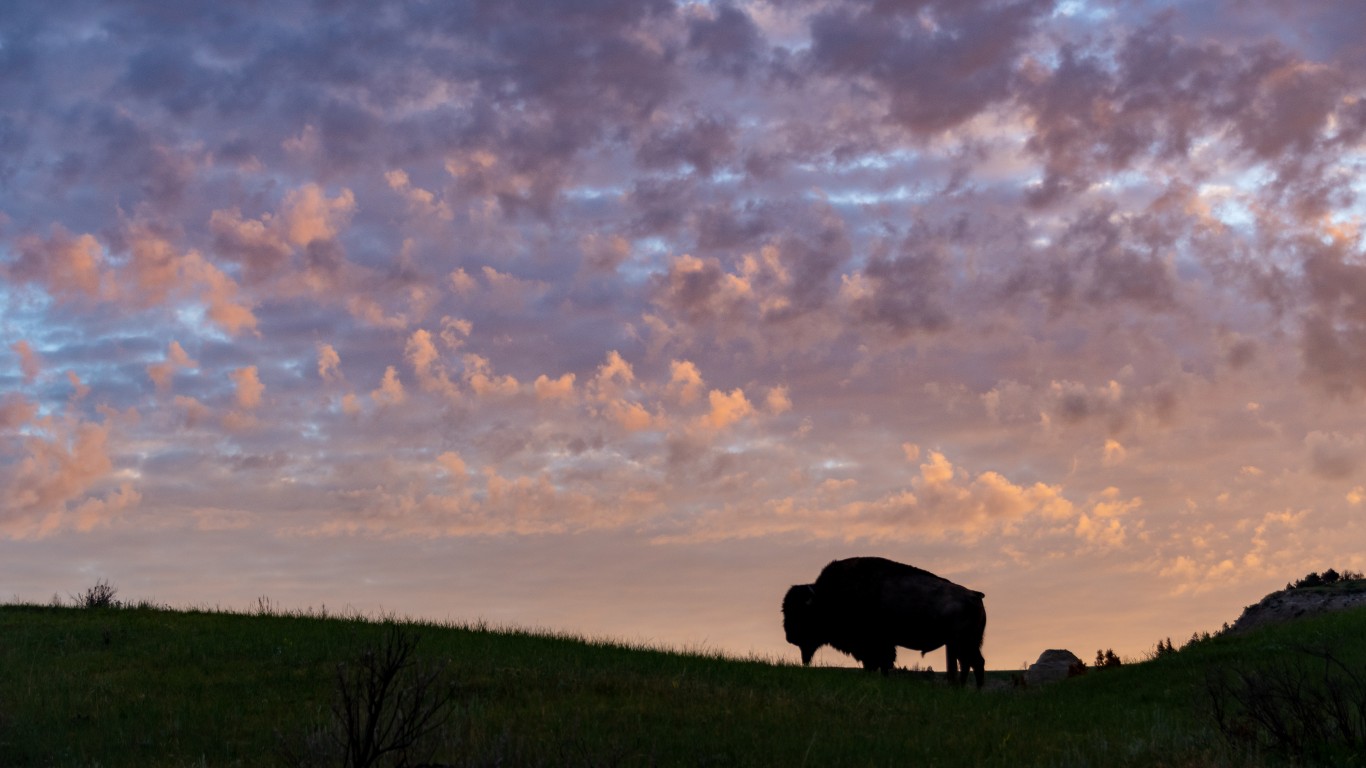
Native Americans have hunted the buffalo since prehistoric times, and before the introduction of the horse to North America, they hunted the massive animal on foot. Few things better capture the ingenuity of Native Americans than how they used, and continue to use, the buffalo — with not a single part wasted. This level of resourcefulness offers fantastic insights into sustainable living. But it also gives more insight into the spiritual and cultural beliefs of Native Americans, who view the buffalo as sacred and a key part of many traditions. By studying how Native American communities have used buffalo historically, and how they continue to use the animal and its byproducts today, we learn more about how to respect and maximize natural resources.
Meat
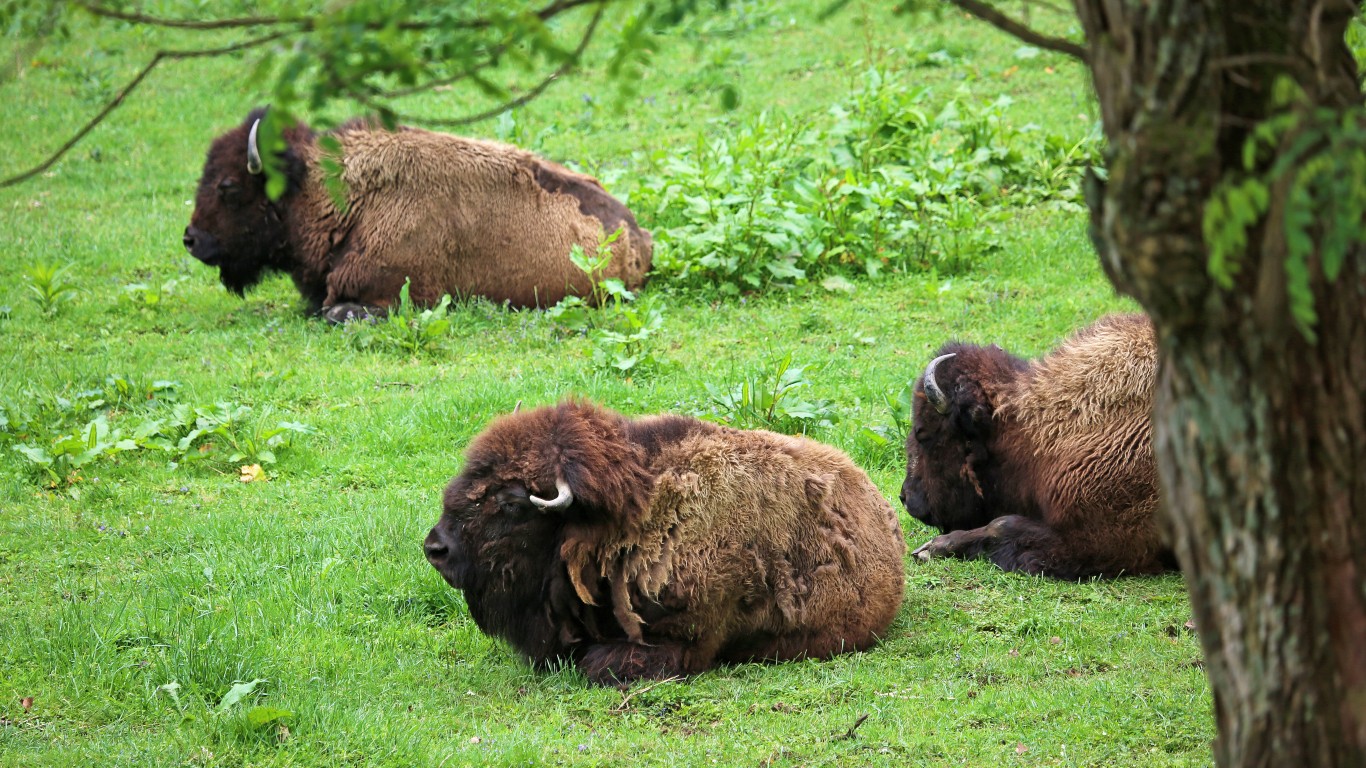
Buffalo.
Naturally, the most important part of the buffalo — the meat — was used to feed the family and tribe, and keep them alive. Buffalo are quite large animals, weighing up to 2,000 pounds. So there’s far too much meat for anybody to eat before it spoils. Native Americans preserved the food to be carried to their next living place. Other parts of the animal, outside of the meat, were also eaten. These included:
- Kidneys
- Heart
- Bone marrow
- Liver
- Tongue
- Intestines
Skin and Hide
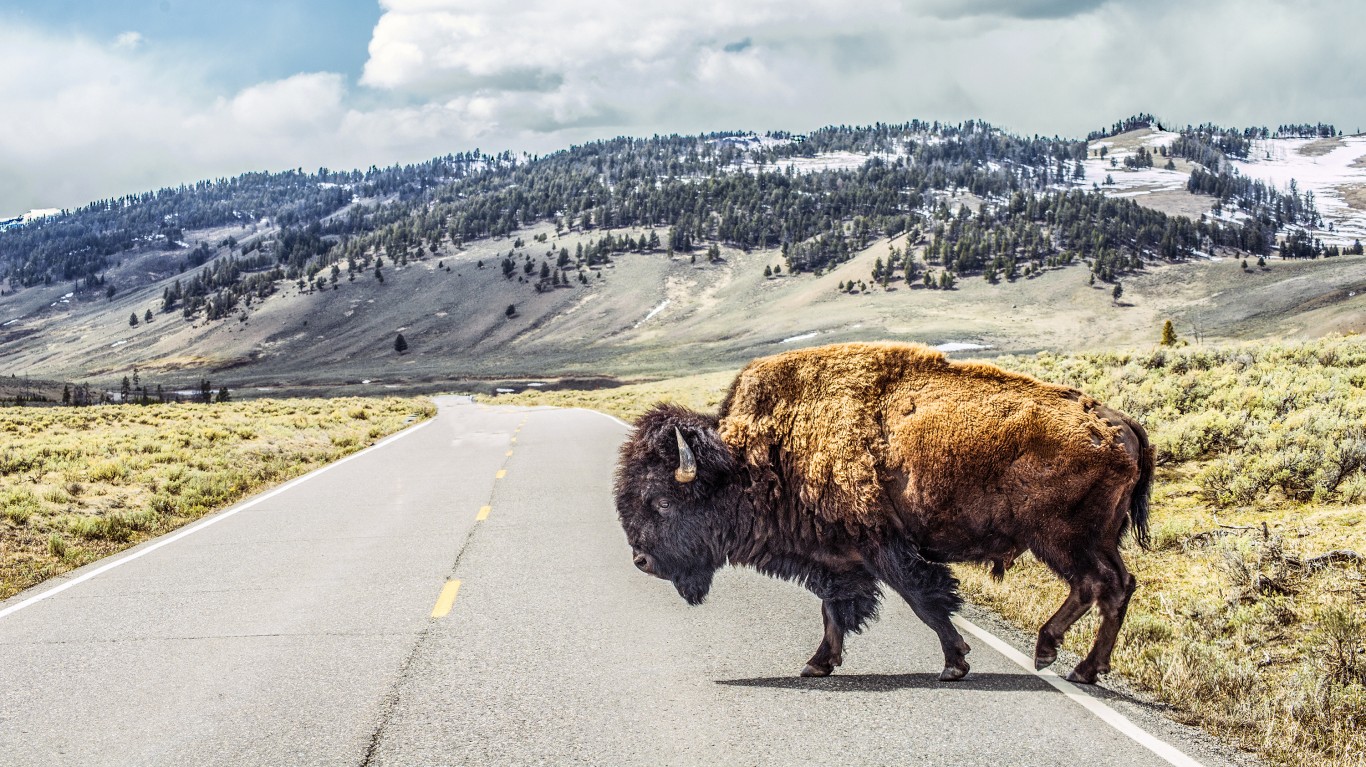
Buffalo in Wyoming.
Buffalo skin was used to create rawhide, tanned hides, and other materials. The cleaned hides were then used for hundreds of items, including (but very clearly not limited to):
- Tipi covers
- Clothing
- Strings
- Shoes
- Blankets
- Robes
- Bags
- Decorations
The brains of the buffalo were used to preserve the hide of the buffalo if it wasn’t going to be used immediately. The fat and oil from the brains softened the hide before it was smoked to keep bugs away.
Bones
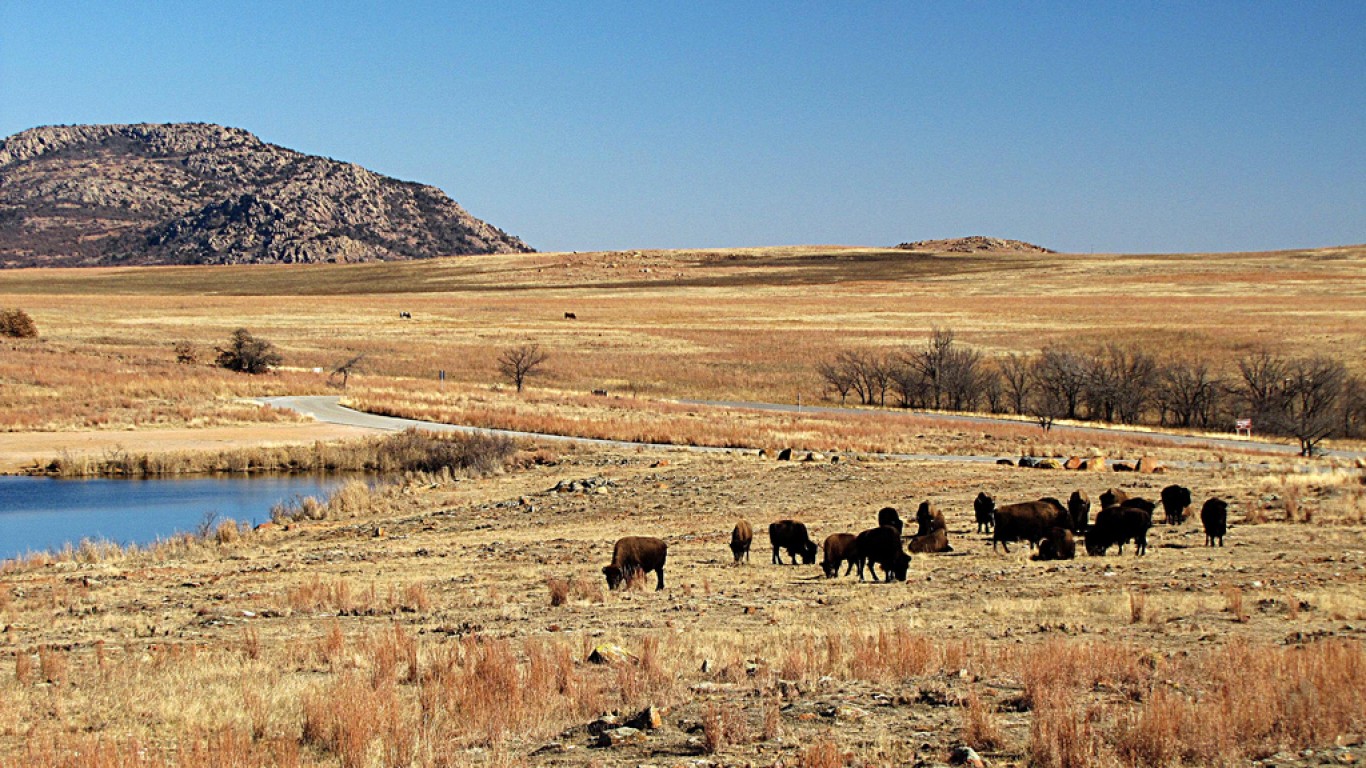
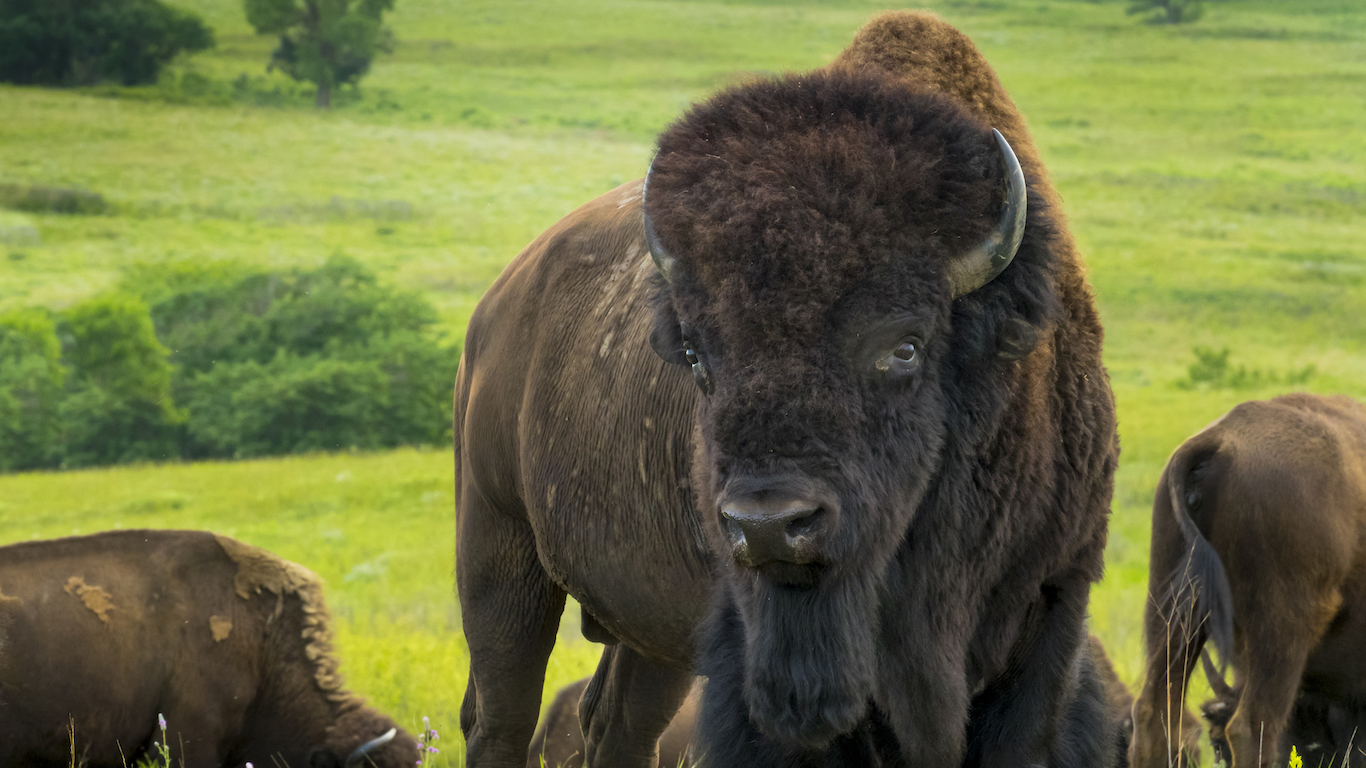
Buffalo in Oklahoma.
All the bones were used for different purposes based on their shape, strength, and symbolism. For example, large bones like shoulder blades and leg bones were used for tools like hoes and scrapers — the latter of which helped with the preparation of rawhide, weapons, and more. Broken bones would be sanded down smaller to make awls and needles. Buffalo horns were used for ladles, cups, and eventually powder horns when guns were introduced to America.
Buffalo teeth and toe bones were used for games played by both adults and children. Sometimes, they also ground the bones down into bone meal. Fun fact: this is a wonderful fertilizer for plants!
The skull of the buffalo held special spiritual significance and would often be given a place of honor in a gathering area or in a tipi. Other bones were used for personal decoration and clothing, or in religious ceremonies.
Stomachs
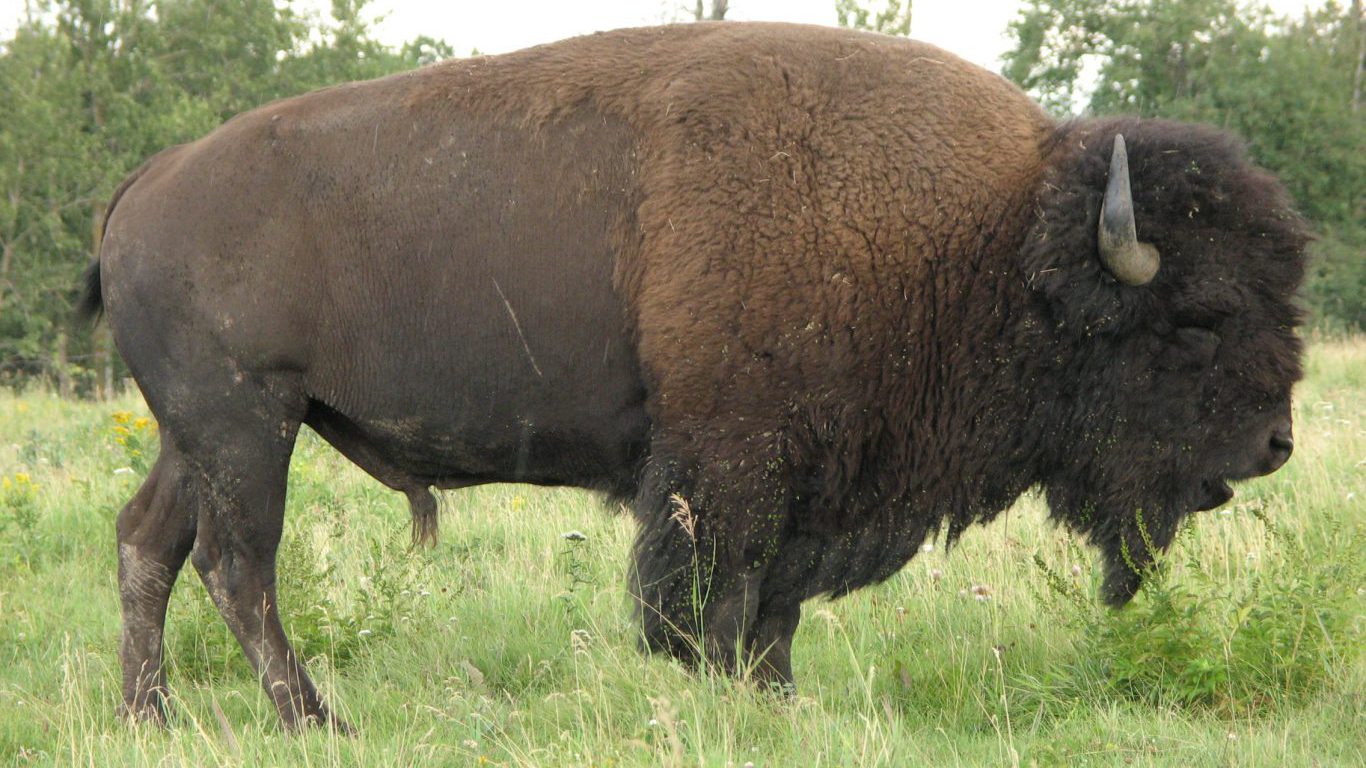
Buffalo in Kansas.
Buffalo stomachs were used to create the tipi cover and could also be used for an interesting task: to boil water. The cleaned stomach was placed in the bottom of a pit and held in place with stakes. Water was then poured into the stomach and rocks from a fire were placed in the water. Eventually, the water would boil and the stomach would keep it clean. When not used for boiling water, the stomach was used as a cup, pot, or bucket.
Everything Else
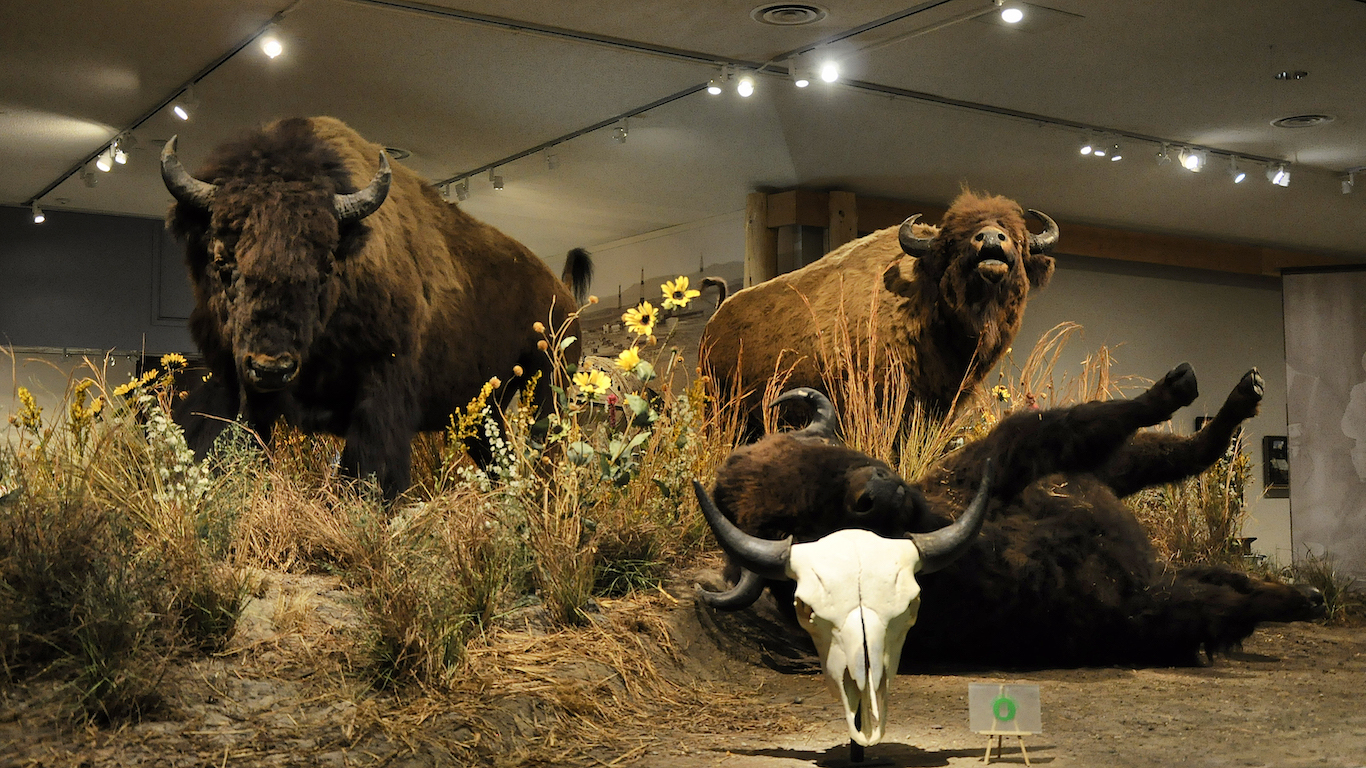
Buffalo in a museum.
Buffalo tails were used as fly swatters (which makes sense since that’s what they were used for when the buffalo was still alive), and the buffalo sinew was used as a string or cord to help tie things together. The hair of the buffalo was also used to make ropes or as decoration.
Buffalo fat was used as cooking oil or to make soap. And, while not generally harvested from the body of the buffalo itself, its excrement makes a fantastic fuel for fires.
Whatever the tribe couldn’t use immediately would be preserved to trade with other tribes or colonizers. Anything else that was left over, like hooves, was rendered down and used to make glue for various uses.
Contrary to popular belief, buffaloes are not used to make buffalo wings.












 Top Gaining Stocks
 Top Losing Stocks