How Can Dollar General Afford to Open 900 Stores?

Photo of Douglas A. McIntyre
By Douglas A. McIntyre Published
This post may contain links from our sponsors and affiliates, and Flywheel Publishing may receive compensation for actions taken through them.

In 2017, large brand name retailers have closed hundreds of stores, primarily because they have been overcome by a crowded field and the surge in e-commerce. However, Dollar General Corp. (NYSE: DG) will buck this trend and open 900 stores.

The announcement about the plan came as Dollar General posted third-quarter results for the period that ended November 3. The numbers were as improbably good as the store expansion disclosure. Revenue rose 11% to $1.8 billion, compared with the same period a year ago. Per-share earnings rose to $0.93 from $0.84. Same-store sales were up 4.3%. The company also pushed up its revenue and same-store sales forecasts for the fiscal year.

Todd Vasos, Dollar General’s chief executive officer, said, among other things:

We remain excited about the future for Dollar General. For fiscal 2018, we have plans to execute approximately 2,000 real estate projects comprised of 900 new stores, 1,000 store remodels and 100 store relocations. We continue to believe that investing in the business through our high-return new store growth is the best use of our capital to help drive long-term shareholder value.

[nativounit]

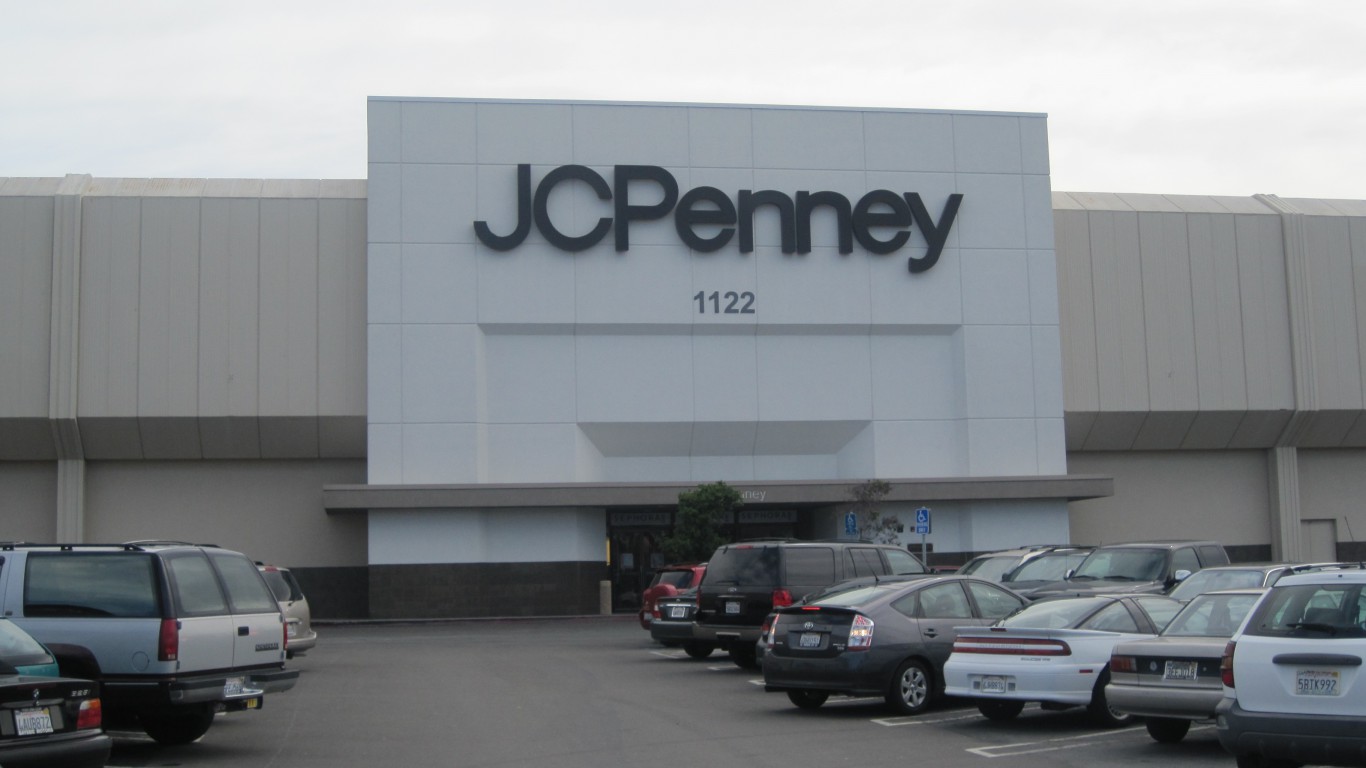
The improvement has not been lost on shareholders. Dollar General trades near $94 a share, in a range for the past 52-weeks of $96.60 and $65.97. Those shares are up 21% this year. In contrast, J.C. Penney shares are down 69% to $5.43.

The primary theory about the success of Dollar General is that its store locations are in rural and sprawling suburban areas that other retailers have either abandoned or never targeted. It keeps the costs of what its sells low, perhaps lower than Walmart. It can do this in part because it operates on a shoe-string, with very low expenses to operate each store. Vasos told The Wall Street Journal:

The economy is continuing to create more of our core customer.

We are putting stores today [in areas] that perhaps five years ago were just on the cusp of probably not being our demographic, and it has now turned to being our demographic.

That demographic is lower income people in remote locations.

Oddly, the areas Dollar General dominates are probably crowded for other retailers. Companies like J.C. Penney cannot afford to increase store counts in such thinly populated areas. They have neither the capital nor the cost structure to do so. For Walmart, the populations are probably too small to drive enough traffic to its massive supercenters.

Dollar General has been successful because it is in places the other retailers ain’t.

[wallst_email_signup]

Photo of Douglas A. McIntyre
About the Author Douglas A. McIntyre →

Douglas A. McIntyre is the co-founder, chief executive officer and editor in chief of 24/7 Wall St. and 24/7 Tempo. He has held these jobs since 2006.

McIntyre has written thousands of articles for 24/7 Wall St. He is an expert on corporate finance, the automotive industry, media companies and international finance. He has edited articles on national demographics, sports, personal income and travel.

His work has been quoted or mentioned in The New York Times, The Wall Street Journal, Los Angeles Times, The Washington Post, NBC News, Time, The New Yorker, HuffPost USA Today, Business Insider, Yahoo, AOL, MarketWatch, The Atlantic, Bloomberg, New York Post, Chicago Tribune, Forbes, The Guardian and many other major publications. McIntyre has been a guest on CNBC, the BBC and television and radio stations across the country.

A magna cum laude graduate of Harvard College, McIntyre also was president of The Harvard Advocate. Founded in 1866, the Advocate is the oldest college publication in the United States.

TheStreet.com, Comps.com and Edgar Online are some of the public companies for which McIntyre served on the board of directors. He was a Vicinity Corporation board member when the company was sold to Microsoft in 2002. He served on the audit committees of some of these companies.

McIntyre has been the CEO of FutureSource, a provider of trading terminals and news to commodities and futures traders. He was president of Switchboard, the online phone directory company. He served as chairman and CEO of On2 Technologies, the video compression company that provided video compression software for Adobe’s Flash. Google bought On2 in 2009.

Featured Reads

Our top personal finance-related articles today. Your wallet will thank you later.

Continue Reading

Top Gaining Stocks

CBOE Vol: 1,568,143
PSKY Vol: 12,285,993
STX Vol: 7,378,346
ORCL Vol: 26,317,675
DDOG Vol: 6,247,779

Top Losing Stocks

LKQ
LKQ Vol: 4,367,433
CLX Vol: 13,260,523
SYK Vol: 4,519,455
MHK Vol: 1,859,865
AMGN Vol: 3,818,618