



Amazon (NASDAQ: AMZN | AMZN Price Prediction) was founded in 1994. It went public in 1997. Like most online businesses, it was boosted by the dawn of broadband. Broadband penetration reached 40%-50% in 2005/2006. It was about that time when retailers said Amazon had started to destroy their brick-and-mortar business. Business Insider wrote in 2007, ‘The ‘Amazon effect’ began the retail apocalypse, as sales slumped and stores closed at retailers like Sears and Toys R Us.’
Which retailers were destroyed by Amazon? Several researchers and retailers have tried to answer the question. Each has a slightly different list. Certainly, the Business Insider list is correct. AARP added A&P, Big Lots, Blockbuster, Borders, Fotomat, Gadzooks, Gimbels, Hecht’s, Henri Bendel, Joann, Levitz Furniture, Party City, RadioShack, The Limited, The Sharper Image, Tower Records, and Woolworths. It is worth noting that, despite their size, these are niche retailers.
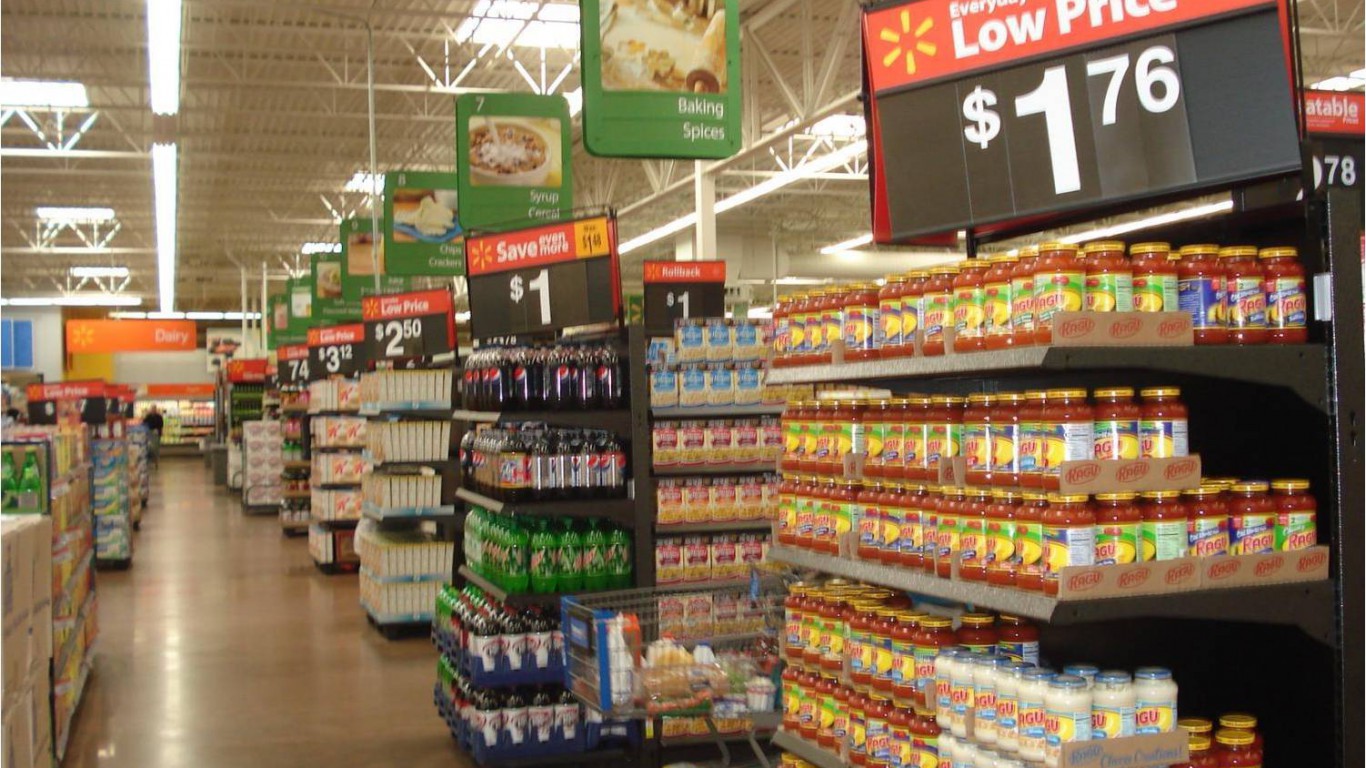
A better question might be which retailers were not destroyed. These are primarily stores that offer substantial discounts, big-box retailers, and home improvement stores. The first survived because of price, whereas the second survived due to inventory and the number of locations.
TJX (NYSE: TJX), Dollar Tree (NASDAQ: DLTR), Dollar General, and BJ’s fall into the deep discount category. Amazon and its third-party retailers may not be able to make money if they attempt to match these prices.
The group that enjoys robust success is the big-box retailers. This group includes Costco (NASDAQ: COST), Target (NYSE: TGT), and Walmart (NYSE: WMT). By revenue, Walmart ranks first among retailers. Costco ranks third, and Target eighth. Each has a broader range of inventory than niche stores do.
The final two retailers that avoided the Amazon Effect were Lowe’s (NYSE: LOW) and Home Depot (NYSE: HD). Their success largely depends on the fact that much of what they sell cannot reasonably be delivered through Amazon’s traditional channels. Many of these items are too large.
It may be that the “Amazon effect” is over. Those store chains that survive appear to have effective formulas.









 Top Gaining Stocks
 Top Losing Stocks