


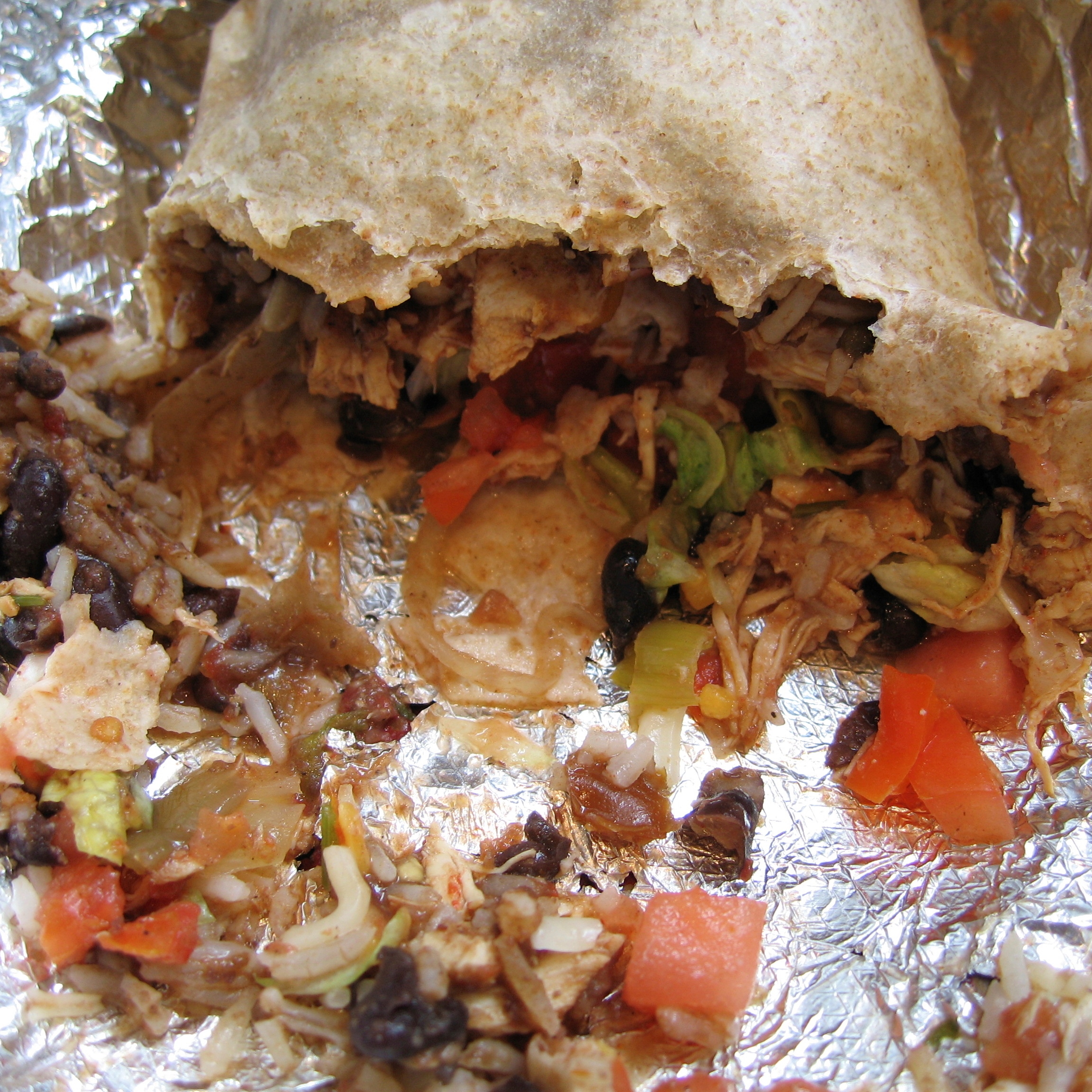
Chipotle Mexican Grill Inc. (NYSE: CMG) had a rough final quarter of 2015, dogged by a flurry of health scares. The company has fallen from October highs around $759 a share to January 2016 lows of just over $400 – a 47% decline across the period. Over the succeeding months though, the high-end fast-food retailer has staged something of a recovery. From the lows it has picked up 40% to trade back over $530 a share.
That is, until this week. On March 8, news broke that the company had closed a Boston area store on the back of one confirmed case, and perhaps a few suspected cases, of employees picking up norovirus.
It’s obviously not a great time to be a Chipotle shareholder, being beaten down by successive health scares that have ravaged the stock. Going forward, however, the question is whether Chipotle can stage a recovery again, or is this latest outbreak too much for investors to bear?
It would be easy to jump to the worst case scenario and assume the latter. Chipotle has built its brand based on a reputation for quality ingredients and healthy food. Repeated health scares are quickly tarnishing this reputation, and for a company like Chipotle to command the premium prices it does, public perception of its brand must be maintained.
[recirclink id=318518]
That said, the early 2016 recovery, partly the result of a major marketing push, demonstrated that consumers are still willing to overlook these sorts of incidents if the product they receive remains, on the whole, premium quality, or at least of a consistent quality.
History affirms this. In 2014, a scandal involving the alleged processing and serving of expired meat hit Yum! Brands Inc.’s (NYSE: YUM) KFC stores and McDonald’s Corp. (NYSE: MCD) stores in Asia. Both companies suffered a dip in sales in the associated regions but recovered within a quarter or two.
Sticking with KFC, a girl in Australia picked up salmonella from one if the chain’s chicken products in 2012, and the company ended up paying $8 million in damages to the family. As the news of the settlement hit, Yum lost 13% of its market cap. It took until the end of the year to close the gap, but close the gap it did.
Looking way back to 1993, a Jack in the Box Inc. (NASDAQ: JACK) outbreak of E. coli left 600 ill and four dead. This was less than a year after the company went public. Shares sold off, but across the next two decades, the burger retailer grew more than 1,800% and stands today as one of the largest fast-food outlets in the United States.
There is, of course, the Chi-Chi’s hepatitis A case, which left three dead in 2003 and led to the eventual liquidation of the company in 2004, but as the other examples show, this is the exception.
What it really comes down to is growth. Chipotle has an excellent growth record over the past three years. Revenues expanded from $3.2 billion in 2013 to $4.5 billion in 2015, despite the health issues that hit press at the end of last year. The bottom line followed suit: $327 million in 2013, $445 million in 2014 and $475 million in 2015.
In short, the situation looks to have been quickly contained, which might even play out in the company’s favor, depending on which angle it takes on the situation. While this latest outbreak might tack further sales contraction on to the tough final quarter of 2015 and drag it out into the first and second quarter of this year, if Chipotle can maintain its underlying growth, this setback will be temporary.
By Matt Winkler






 Top Gaining Stocks
 Top Losing Stocks