


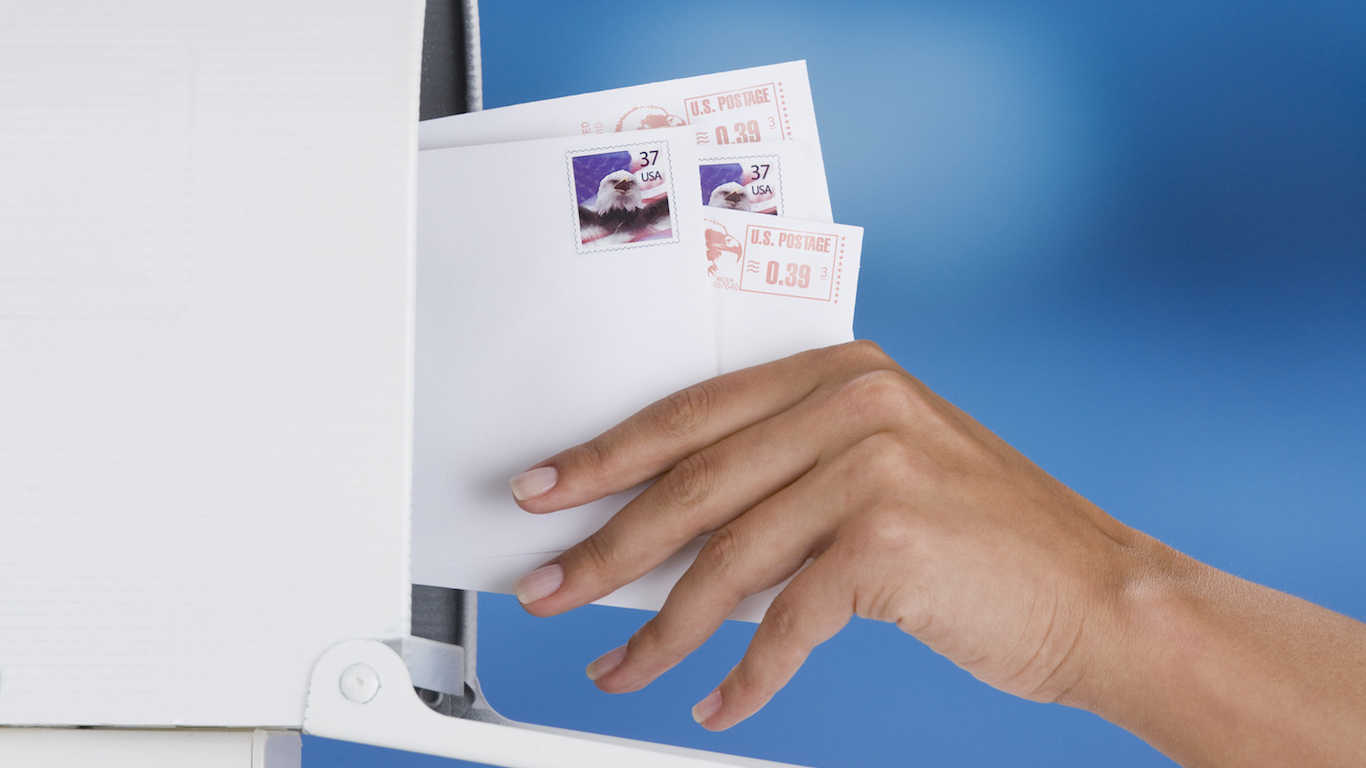
A letter without a ZIP code may not reach its intended destination. That is because of the way addresses are read by automated postal systems. Rules that are taken for granted when people send mail are actually unusually strict to increase post office efficiency.
Processing machines read addresses from the bottom up. The first line the machine “sees” has a ZIP code, city and state. If one or more of these is incorrect, the street address is not enough to solve the problem. Violate these rules, the U.S. Post Service (USPS) warns, and “your mailpiece could be delayed or misrouted.” Information written below the city, state and ZIP code line could cause similar problems.
The ZIP code rules are even more complicated where the address, state and code are placed, in terms of how they are written. The USPS says there has to be one space between the city and the state. There have to be two spaces between the state and ZIP code. Punctuation is discouraged. So are labels that are not put on straight. The warning reads, “Mail processing machines have trouble reading crooked or slanted information.”
Finally, people are encouraged to use what the USPS calls ZIP+4 a designation, which makes an address even easier to find.
[nativounit]
The USPS has nearly 42,000 ZIP codes. The ZIP code system went into effect in 1963. The easternmost ZIP codes in New England start with a 0. In some western areas, they rise to the level where they begin with a 9. The second two numbers route letters and packages to postal regions. The final two route letters to specific post offices. The ZIP+4 system was added in 1983 and allows the USPS to sort by building or specific businesses.
The size and scale of the USPS make the ZIP system essential, along with automated sorting machines. Total mail volume hit 146.4 billion pieces in 2018. Letters and packages are delivered to a total of 158.6 million locations. There are 31,324 Postal Service-managed retail post offices. The number of career employees who are part of the USPS reached 497,157 last year. If it were a private company, the USPS would be among the largest employers in every state.
The USPS expects its deliveries to rise in the near future. Presumably, that means automated delivery will become more essential, and that is driven in part by the ZIP code rules. The problem may be even more complex in America’s 25 fastest growing cities.
[recirclink id=542107]
[wallst_email_signup]







 Top Gaining Stocks
 Top Losing Stocks