


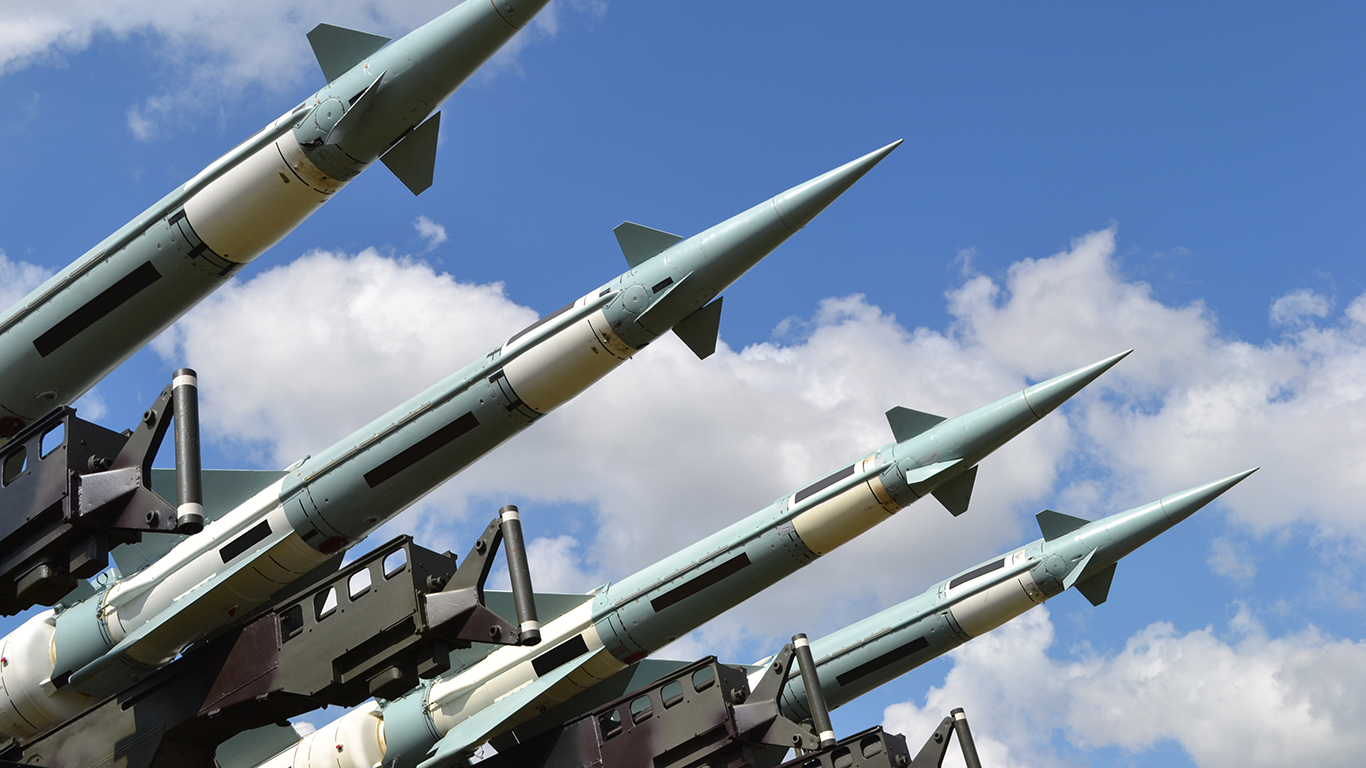
A new report says that in a conflict between China and the United States in Asia, American forces may quickly be crushed. Among the reasons are U.S. weapons systems that have aged and a military force stretched thin by commitments in the Middle East.
The University of Sydney United States Studies Centre issued a report titled “Averting Crisis: American strategy, military spending and collective defence in the Indo-Pacific.” The report gave four significant reasons for a potentially catastrophic military situation in the region.
First among the problems is that the United States no longer has “military supremacy” in Asia. The “2018 National Defense Strategy” is aimed at fighting one significant conflict and not several smaller ones. The United States also has decided to use much of its military in other parts of the world. Additionally, China has adequate forces in the region to attack a U.S. military force that would not have time to counter it.
Second, the U.S. military budget is unlikely to rise much in the foreseeable future. Much of this is due to a polarized political system, particularly in Congress. Another reason is caps on federal spending due to massive deficits. Some of the problems are due to the costs of weapons systems, which are growing faster than inflation.
[nativounit]
Third, America has an “atrophying force” undermining its military readiness. A string of naval accidents in Asia is evidence of this. Weapons used by the U.S. Air Force, Navy, Army and Marine Corps are aging. Some major weapons systems used in the region were built in the 1980s. Many of the more modern systems have been deployed to the Middle East. While new weapons systems are being put into the field, many others have been canceled. Nevertheless, some military forces in the Pacific region, particularly the Marines, have begun to swing their attention towards “sea control.”
Finally, Australia has not formed a major formal military with the United States. This also would include the limited military capabilities of Japan. It would consist of a drawdown of Australian forces in the Middle East. A plan would also mean more land-based missiles on Australian soil. Additionally, it would suggest stockpiling weapons systems in Australia. Of course, the research paper was written by experts at an Australian university, which may tilt some analysis in the direction of a U.S. alliance with the country.
The analysis is optimistic to the extent that the United States still has a powerful military force in the region. The United States may decide that the Pacific is a critical enough area to redeploy a large part of the military from the Middle East to the Pacific. And the Congress may decide to come to grips with the problems of underfunded parts of the U.S. military and increase or reorient how America spends its military budget. These are the countries spending the most on war.
[recirclink id=569495]
[wallst_email_signup]












 Top Gaining Stocks
 Top Losing Stocks