


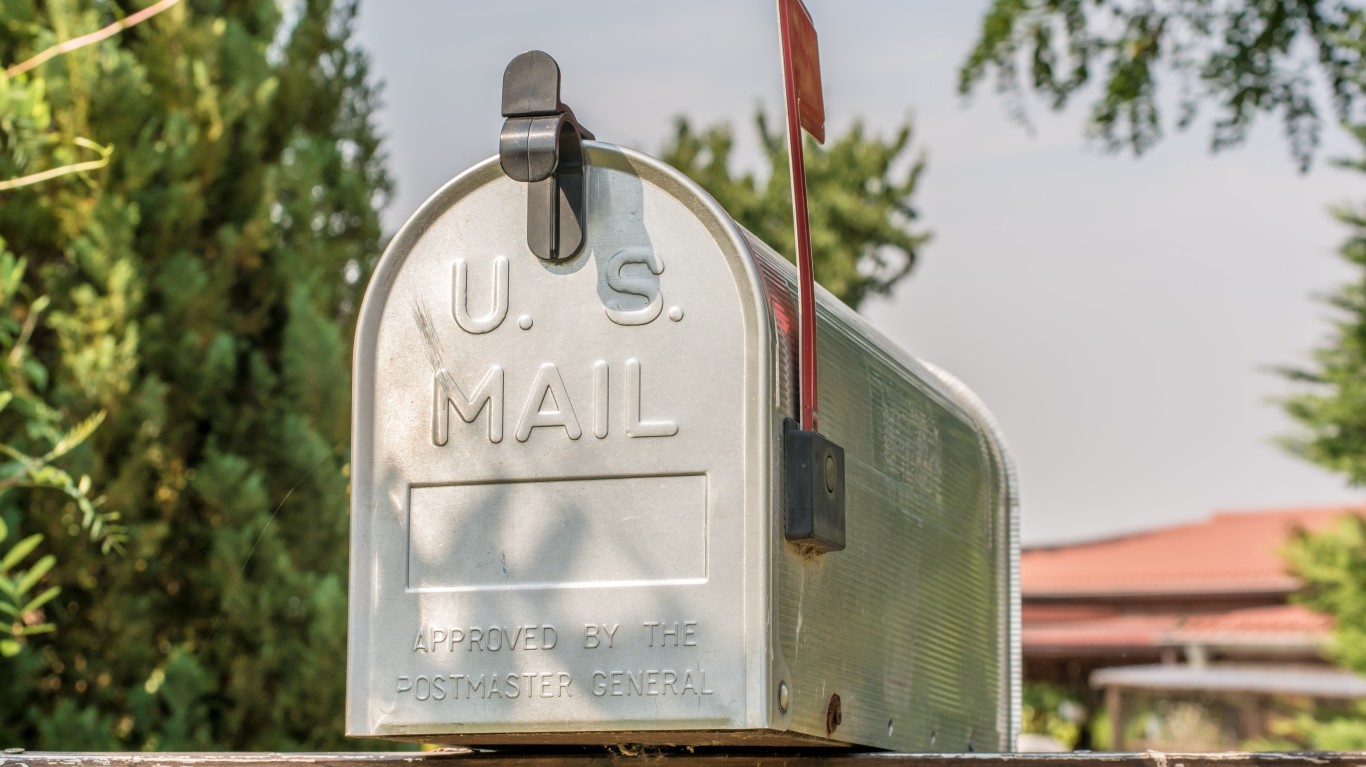
The U.S. Postal Service (USPS) regularly reports on how well it delivers the mail on time. The most recent report demonstrates that the service continues to have delivery issues.
In the first week of USPS’s fiscal year, October 1 to October 7, the average delivery time for First-Class Mail and other mail pieces and packages was 2.4 days. The on-time delivery rate of First-Class Mail was 92.3%, which was no better than the figure for the latter portion of its fiscal fourth quarter. As CNET reported, this is a downgrade from past targets: “The new service standards for first-class mail and packages, which started Oct. 1, lengthen the delivery time for about 30% of its volume. That means that letters, parcels and magazine subscriptions traveling longer distances could take up to five days to arrive, instead of two or three days.”
The USPS has a tremendous infrastructure to do better. To help reach the revised goal, it has added more full-time people. The USPS says 100,000 people have been converted to full-time since January 2021.
The USPS has a staggering 34,223 offices. 24/7 Wall St. recently wrote: “One absurd part of USPS operations is that it has over 34,000 offices. Once again, much of the communication among Americans and the delivery of documents is done electronically. People do not need a physical post office as much as they did in the past.”
[nativounit]
Ideally, the USPS would encourage people to move from physical delivery of mail and packages to electronic mail. It is substantially more effective and much less expensive. One could argue this would make the USPS much smaller, which should be its primary goal. People also should be encouraged to pay all their bills online.
[wallst_email_signup]
The other practice the USPS should encourage is using FedEx and UPS. It is another way the USPS can be made much smaller. This, in turn, would cut the agency’s number of workers and allow it to cut both expensive offices and its massive fleet of trucks.
[recirclink id=1172911]
Yet another way the USPS could decrease costs is to eliminate the practice of six-day-a-week delivery. It is hard to show that Americans need mail to be delivered more than twice a week.
The USPS continues to meet its own delivery goals. It should not try to. A much better goal is for the agency to shrink itself quickly.







 Top Gaining Stocks
 Top Losing Stocks