


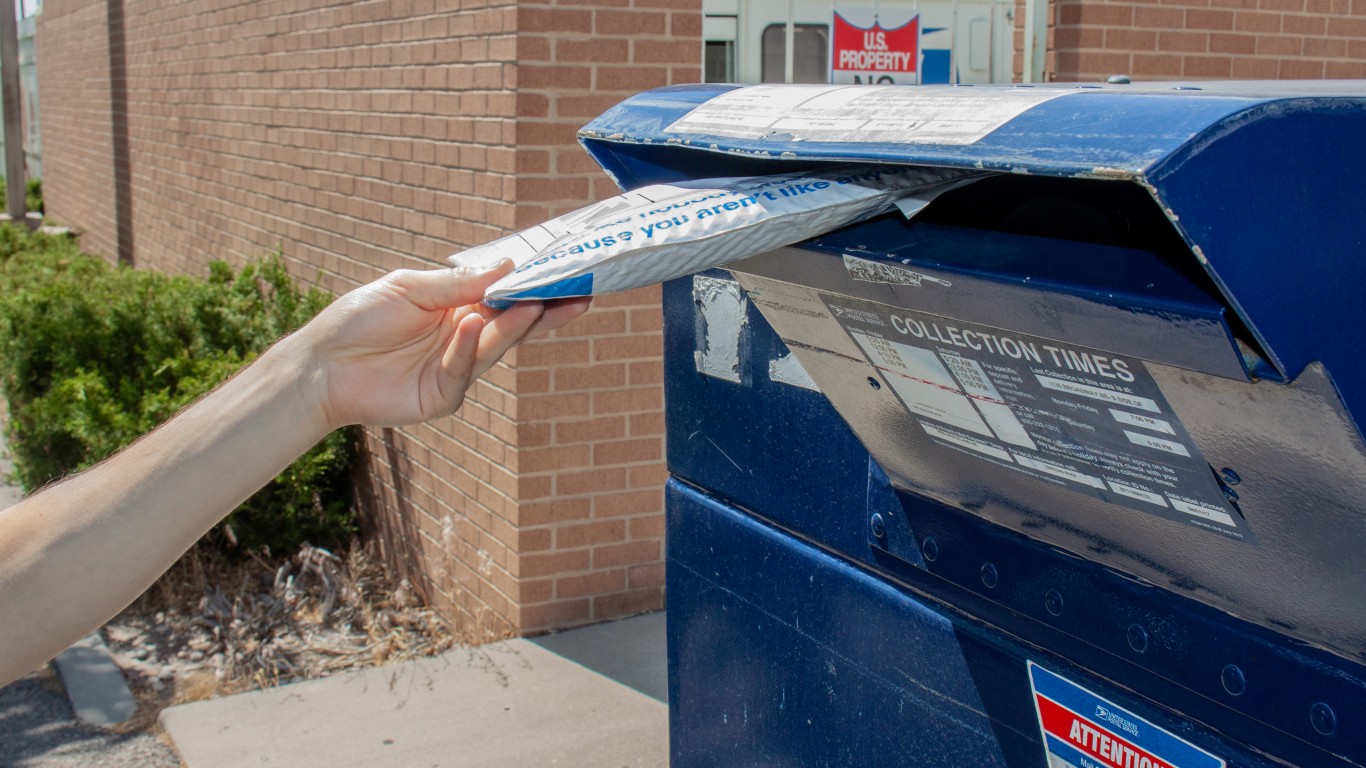
According to Wired, “The USPS carries out warrantless surveillance on thousands of parcels every year.” Several senators are upset and have started an investigation. The question is what the Postal Service gains. It only opens itself to another series of attacks regarding bad practices.
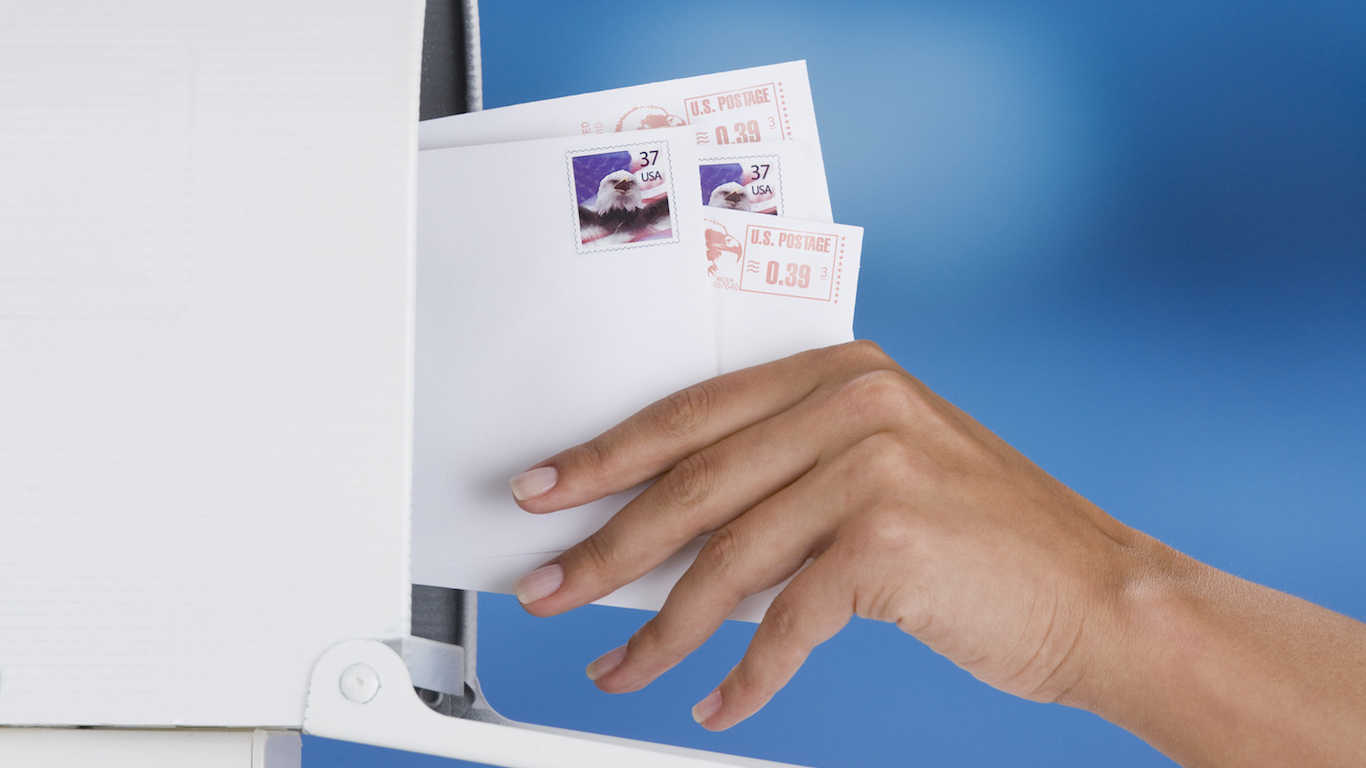
Americans suffer at the hands of the Postal System daily. Most problems have to do with issues that affect much larger parts of the population than spying does. The most recent of these is that the Postal Service raised the price of a First Class stamp to 66 cents from 63 cents.
[nativounit]
That is a 32% increase in less than four years. It is another sign that the USPS is bloated and needs more money to underwrite a business that America does not need anymore–at least at its current scale. (These are the states that have closed the most post offices.)
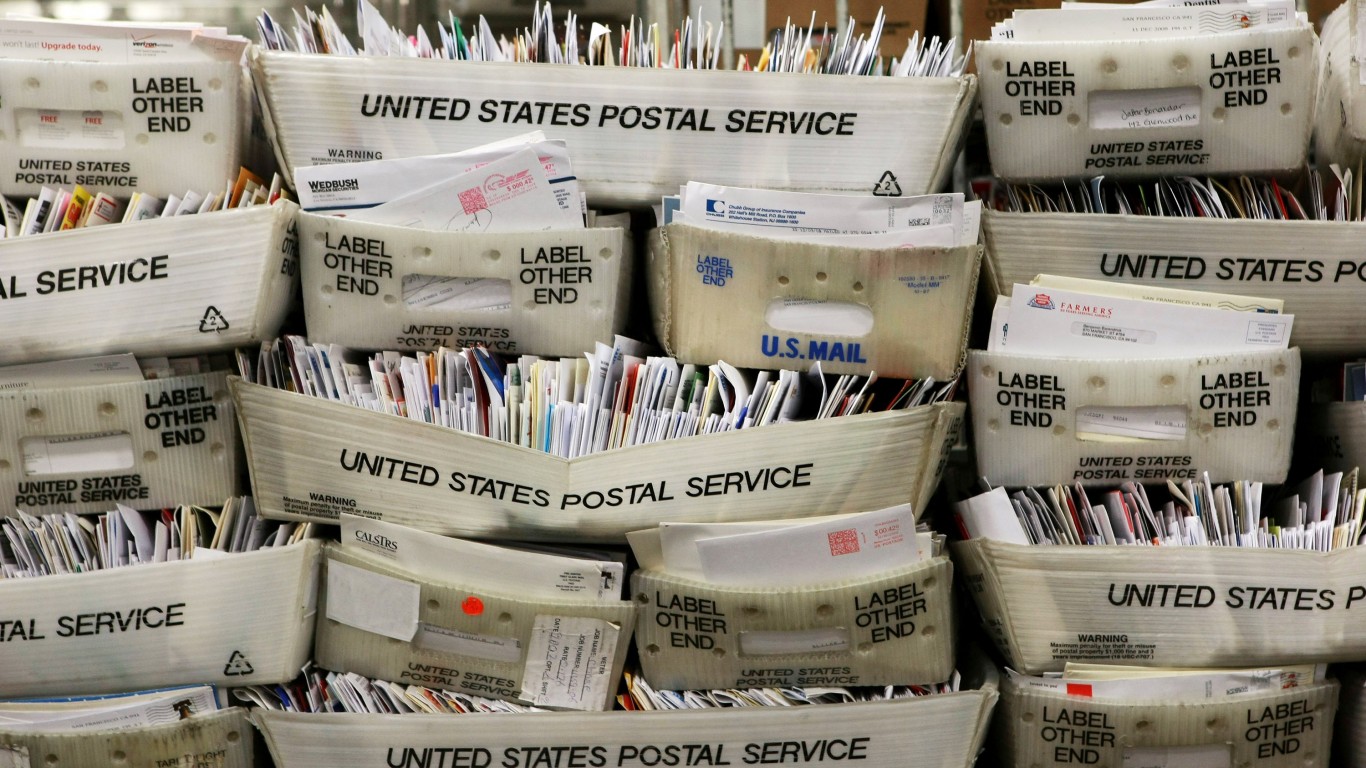
According to the watchdog KeepUSPosted, data shows, “In 2022, USPS handled 127.3 billion pieces of mail compared to the high of 213.1 billion in 2006.” The USPS has not shrunken to match this drop-off.
The USPS said the price increase is needed to “provide it with much-needed revenue.” The other option is to cut costs, which would make much more sense, particularly for the public.
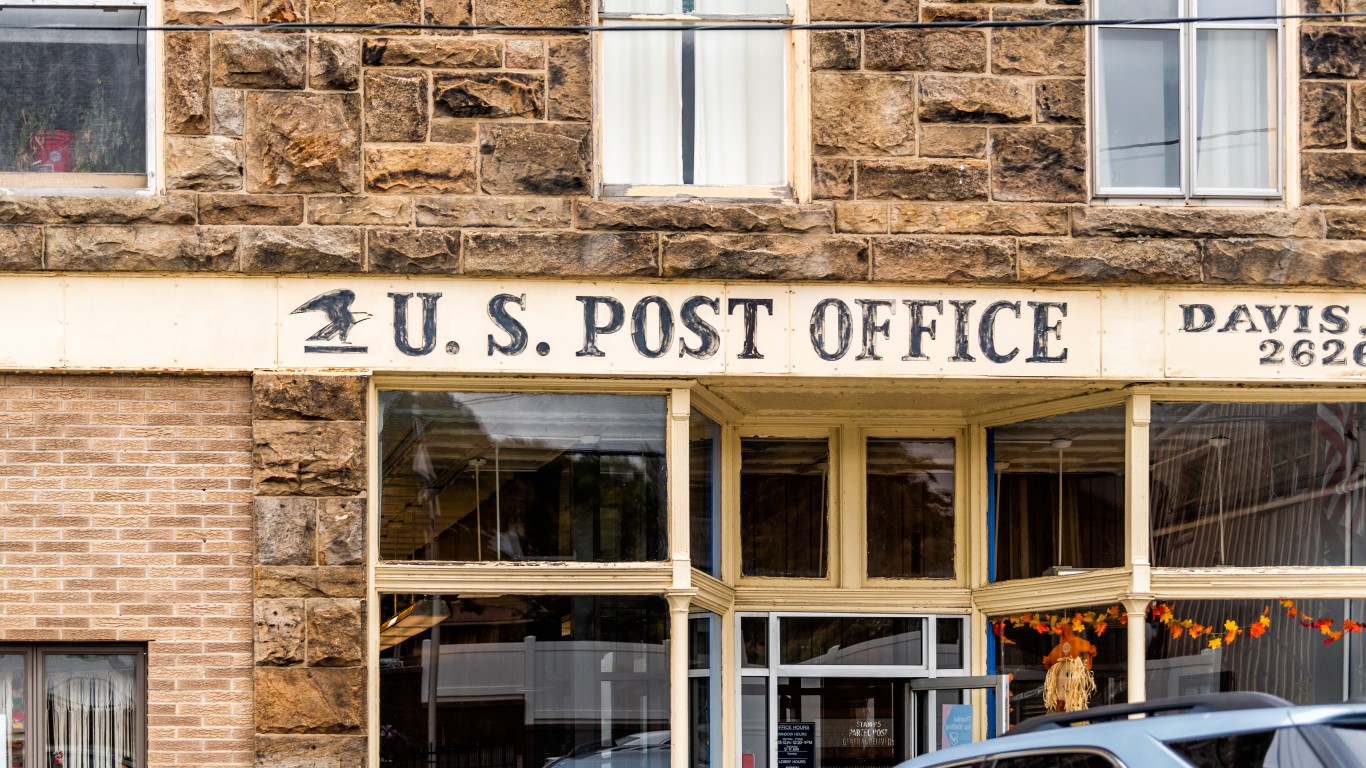
The USPS still has just over 516,000 full-time workers. That is up from 496,000 two years ago. The USPS has 32,000 locations, which is a ridiculously large figure. Small towns with 3,000 people have a post office. People could travel to the next town over, often easily. Carriers could deliver to the next town, too. (See the oldest post office in every state.)
The USPS seems to believe delivering mail six times a week is necessary. It is not, with email and electronic files as part of everyday American life. Bills that used to be delivered and paid by mail can virtually all be paid online. The primary reason for physical delivery is junk mail, magazines, and newspapers.
[wallst_email_signup]
The USPS continues to order new vehicles. The most recent batch included some electric vehicles. The USPS should reduce its fleet as trucks go out of service. The USPS should not need them in the future. (These are 10 astonishing fact about the Post Office.)
Most of what the USPS does today is unnecessary. Even the shipping of packages can be handled effectively by UPS and FedEx. A higher priced First-Class stamp is a temptation to waste more money.






 Top Gaining Stocks
 Top Losing Stocks