


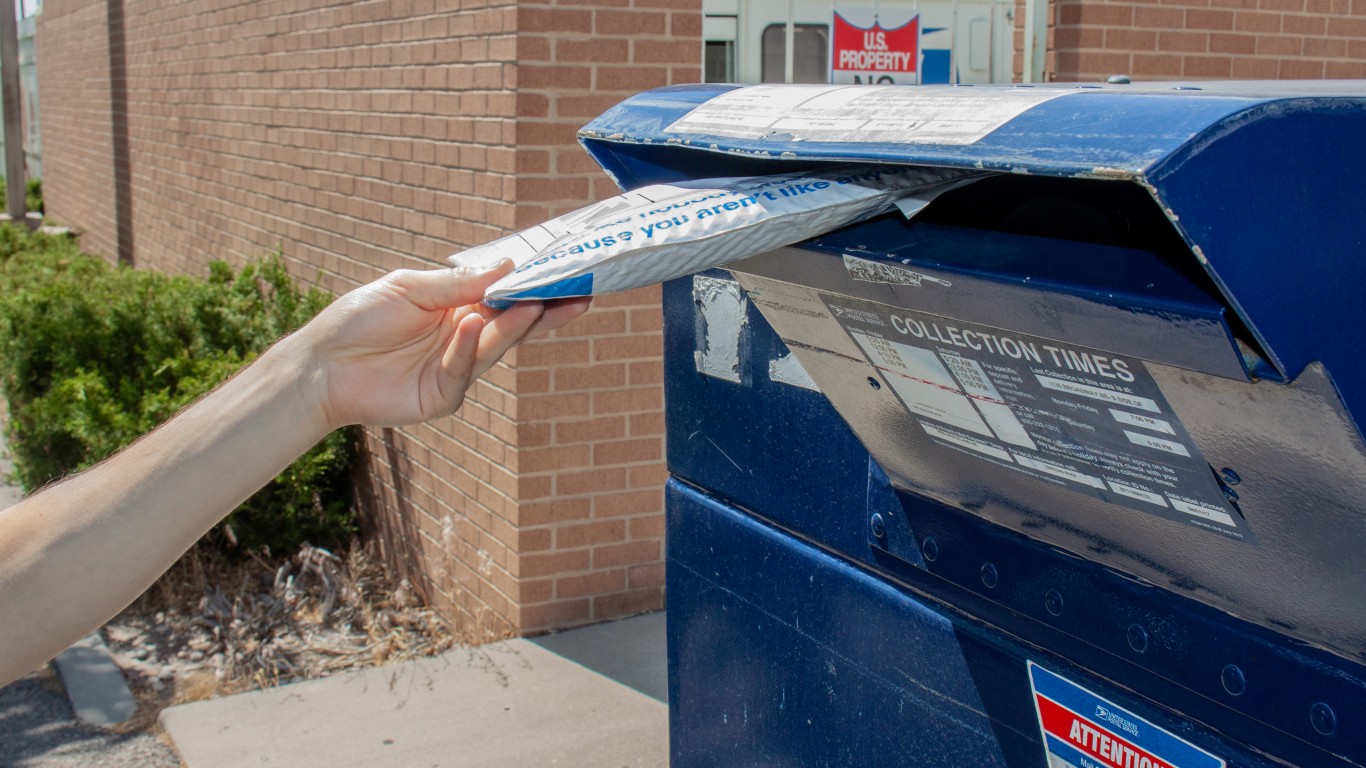
The U.S. Postal Service (USPS) has put out another of its regular bulletins about how fast it delivers the mail. Between October 1 and October 10, the average time to deliver a letter or package was 2.6 days. Averages are tricky and not a good indication of performance. Median numbers are better. However, without question, USPS is delivering things over many days, and perhaps a week or more. That is poor performance for an organization that has a post office in almost every town in America. It also begs the question why USPS needs to be so large.
[in-text-ad]
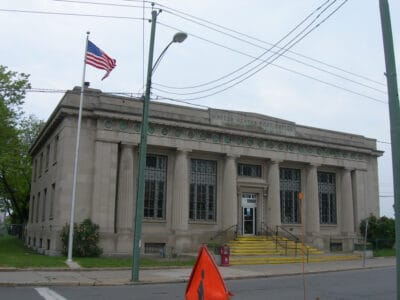
USPS takes perverse pride in the fact that it has over 630,000 employees, which makes it one of the largest employers in the country. That is about the size of the world’s largest car company, Volkswagen. USPS also brags that it has 34,000 locations. That is a testament to how oversized the agency is.
[nativounit]
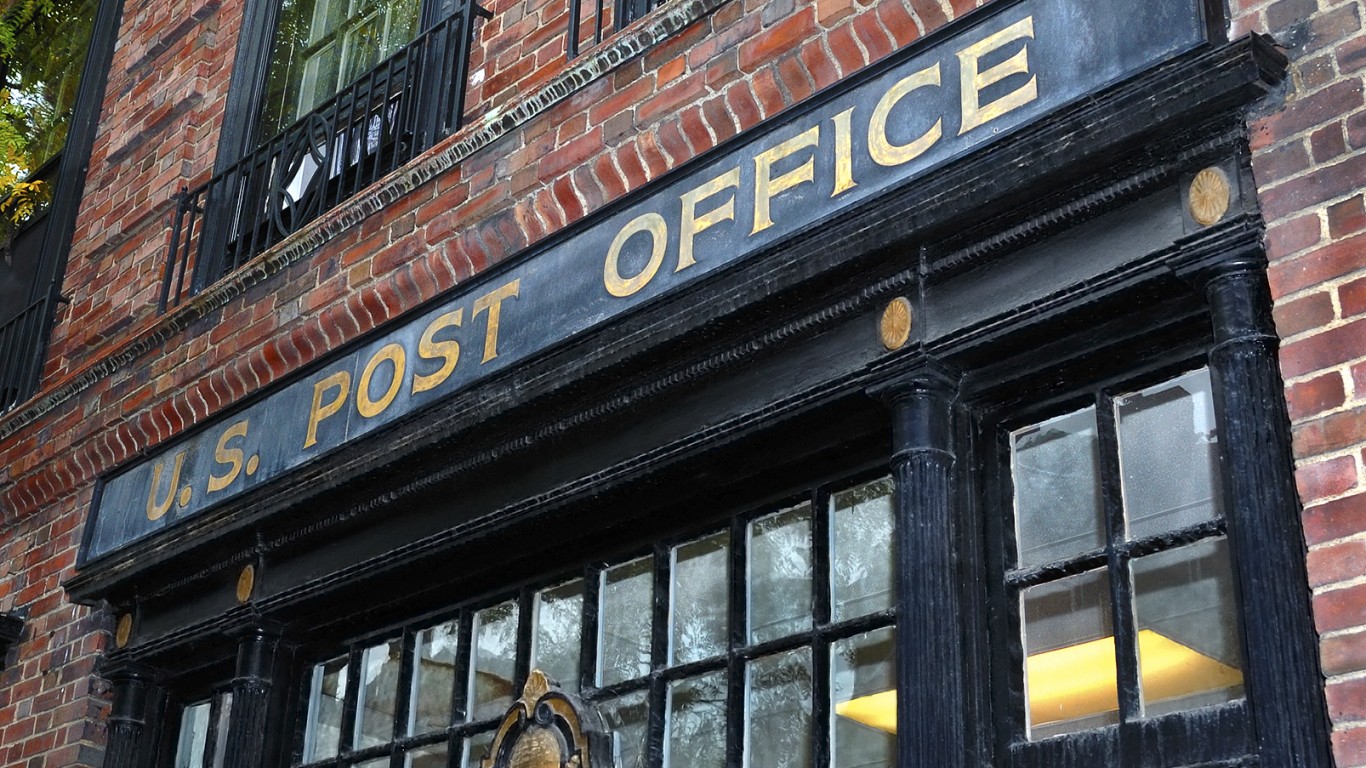
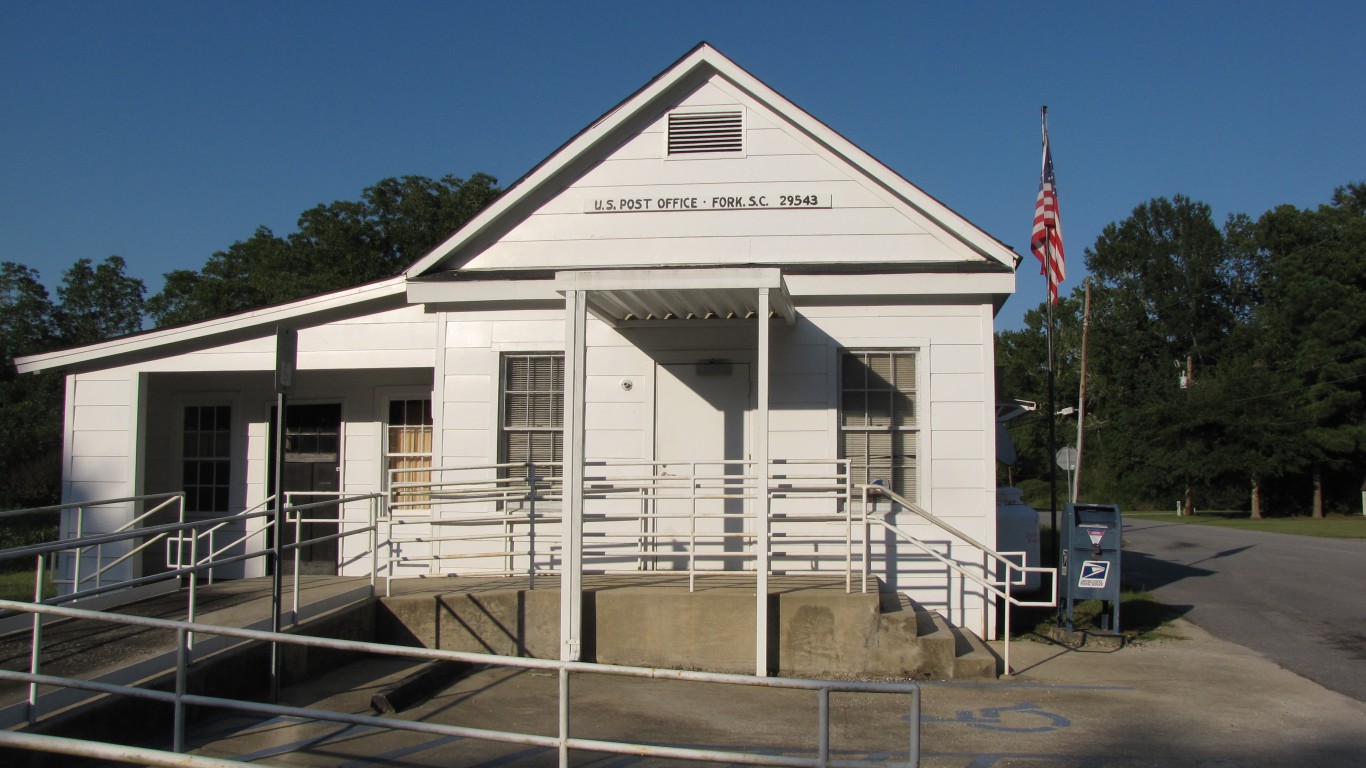
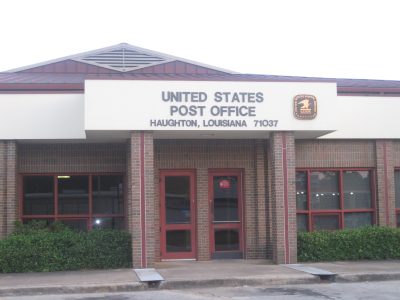
The amount USPS wastes, particularly because of its modest delivery times, is extraordinary. So are many of its practices. For example, no one needs to have mail delivered six days a week. Towns with a few thousand residents do not need a local post office. Perhaps they did at the start of the past century.
[wallst_email_signup]
There are a number of reasons USPS does not need to exist in its current form. In the 1980s, there was no email. Now, nearly every American has an email address, which they also can use to send large attachments. FedEx and UPS are viable alternatives for fast package delivery.
[recirclink id=1166925]
What can the government do to USPS? It can handle it like any other overstaffed business. Cut its size to fit the businesses it has to be in.
The Post Office Can Deliver Mail, Maybe

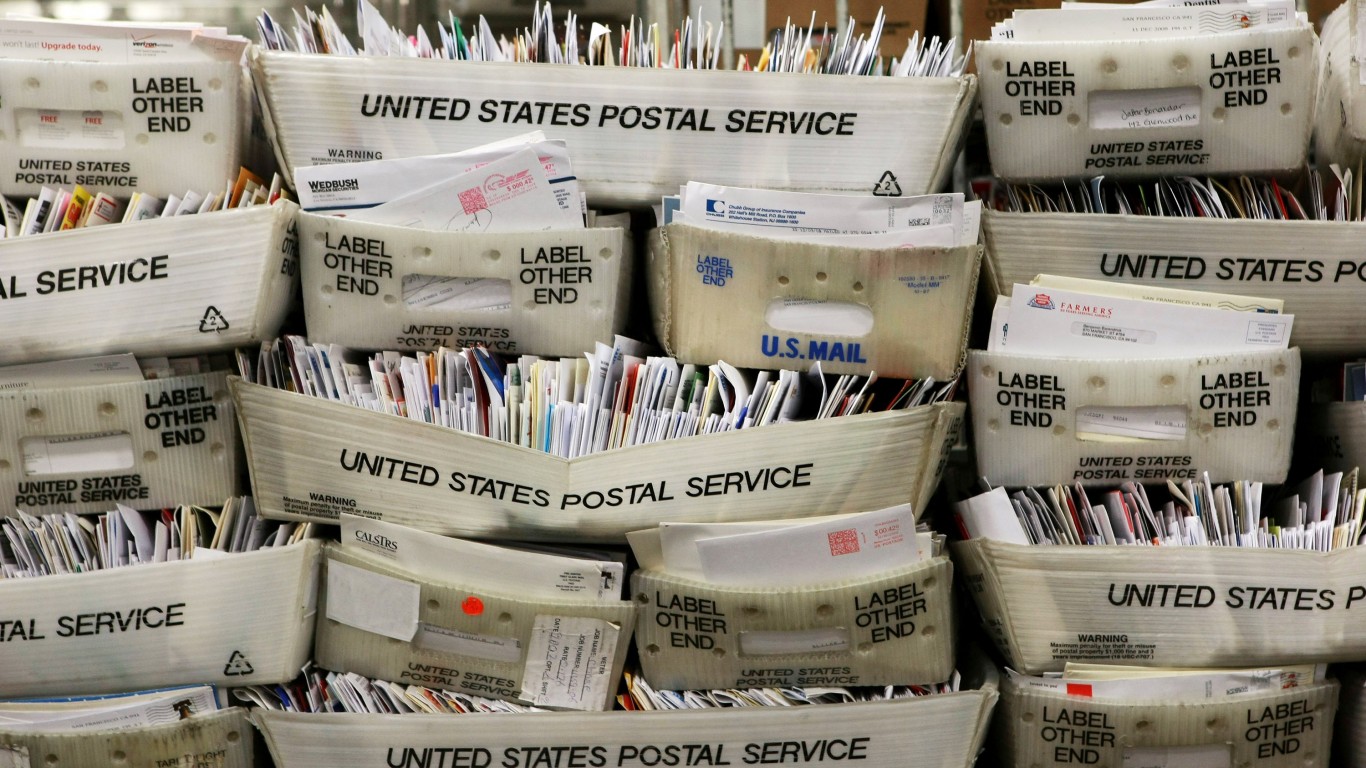
© Justin Sullivan / Getty Images News via Getty Images

Douglas A. McIntyre is the co-founder, chief executive officer and editor in chief of 24/7 Wall St. and 24/7 Tempo. He has held these jobs since 2006.
McIntyre has written thousands of articles for 24/7 Wall St. He is an expert on corporate finance, the automotive industry, media companies and international finance. He has edited articles on national demographics, sports, personal income and travel.
His work has been quoted or mentioned in The New York Times, The Wall Street Journal, Los Angeles Times, The Washington Post, NBC News, Time, The New Yorker, HuffPost USA Today, Business Insider, Yahoo, AOL, MarketWatch, The Atlantic, Bloomberg, New York Post, Chicago Tribune, Forbes, The Guardian and many other major publications. McIntyre has been a guest on CNBC, the BBC and television and radio stations across the country.
A magna cum laude graduate of Harvard College, McIntyre also was president of The Harvard Advocate. Founded in 1866, the Advocate is the oldest college publication in the United States.
TheStreet.com, Comps.com and Edgar Online are some of the public companies for which McIntyre served on the board of directors. He was a Vicinity Corporation board member when the company was sold to Microsoft in 2002. He served on the audit committees of some of these companies.
McIntyre has been the CEO of FutureSource, a provider of trading terminals and news to commodities and futures traders. He was president of Switchboard, the online phone directory company. He served as chairman and CEO of On2 Technologies, the video compression company that provided video compression software for Adobe’s Flash. Google bought On2 in 2009.






 Top Gaining Stocks
 Top Losing Stocks