WeWork’s End Is in Sight

Photo of Douglas A. McIntyre
By Douglas A. McIntyre Published
This post may contain links from our sponsors and affiliates, and Flywheel Publishing may receive compensation for actions taken through them.
WeWork’s End Is in Sight

© Image Source / DigitalVision via Getty Images

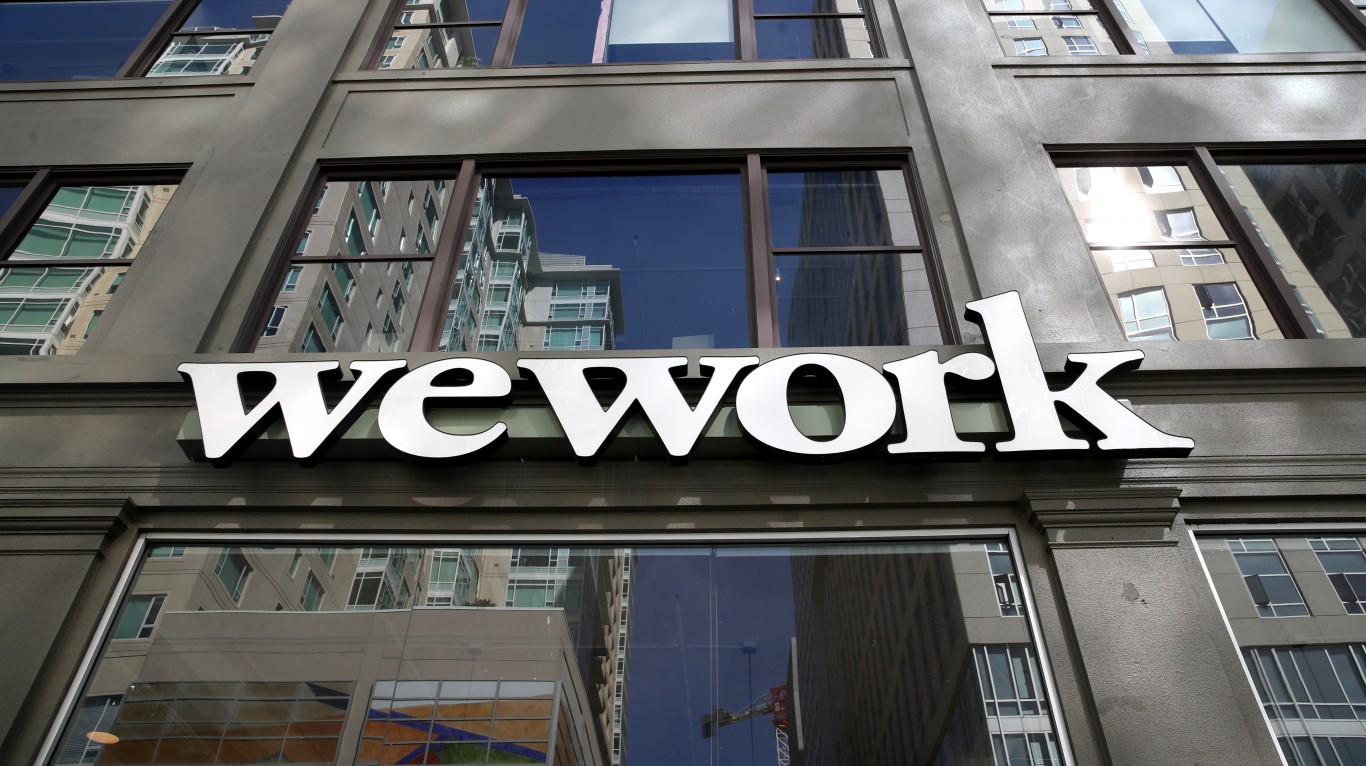
WeWork did not invent shared office space, but it made it cool. It had 20 million square feet of offices and nearly 1,000 locations at its peak. Its top valuation was $47 billion, about the size of Ford’s, the second-largest car company in America. However, it was overbuilt, and the overbuilding resulted in the collapse of WeWork financially and the start of a series of layoffs. An IPO that was supposed to save it never materialized. (These are America’s 25 dying industries.)
[in-text-ad]
The death blow to WeWork was the COVID-19 pandemic, when people could not work at offices anywhere. WeWork could not afford that downturn in its share rental population. However, it was stuck with the long-term leases it had entered to keep its empire growing.
[nativounit]
CEO Sandeep Mathrani left recently, and the chief financial officer resigned after that. Investors must have wondered why they left so quickly. They likely saw that WeWork would go into bankruptcy and they might be pushed out without immediate prospects for work.

WeWork disappeared as it is known today. No one will want the whole company. It is still too large and burdened financially. It will be broken up and its offices will be sold in pieces. Some will be closed completely. At that point, it would be as if WeWork had never existed.
[wallst_email_signup]
The issue of overexpansion is among the most significant strategic challenges to companies. If they grow too quickly, they resist unsupportable financial burdens.
[recirclink id=1255873]
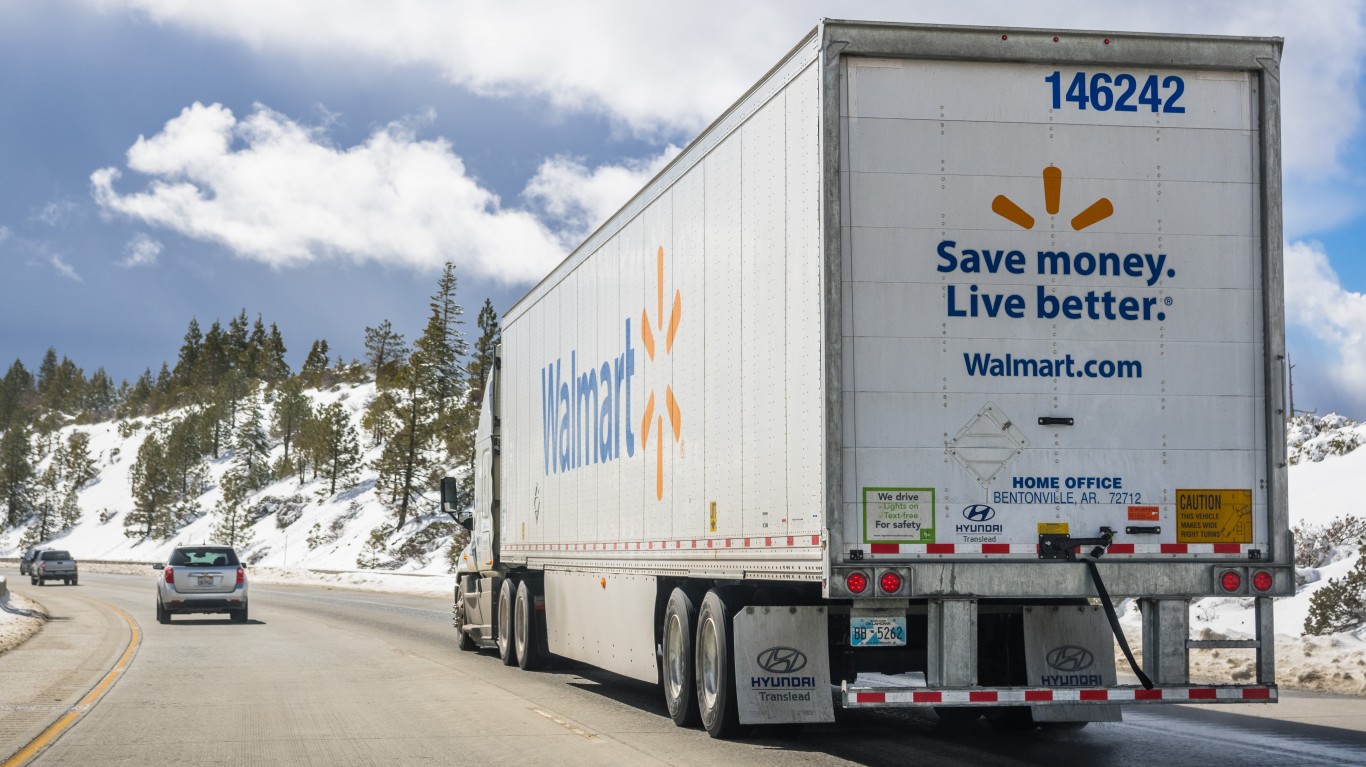
Walmart may be the best example in American history of growth was very rapid but was carefully considered. It has become America’s largest company. No one has ever said Walmart’s rapid growth put it in danger. In reality, if it had not grown, J.C. Penney, Sears and Kmart might still be huge American retailers, and Walmart only a niche retailer with most of its stores located in the South.

WeWork was never a Walmart.

Photo of Douglas A. McIntyre
About the Author Douglas A. McIntyre →

Douglas A. McIntyre is the co-founder, chief executive officer and editor in chief of 24/7 Wall St. and 24/7 Tempo. He has held these jobs since 2006.

McIntyre has written thousands of articles for 24/7 Wall St. He is an expert on corporate finance, the automotive industry, media companies and international finance. He has edited articles on national demographics, sports, personal income and travel.

His work has been quoted or mentioned in The New York Times, The Wall Street Journal, Los Angeles Times, The Washington Post, NBC News, Time, The New Yorker, HuffPost USA Today, Business Insider, Yahoo, AOL, MarketWatch, The Atlantic, Bloomberg, New York Post, Chicago Tribune, Forbes, The Guardian and many other major publications. McIntyre has been a guest on CNBC, the BBC and television and radio stations across the country.

A magna cum laude graduate of Harvard College, McIntyre also was president of The Harvard Advocate. Founded in 1866, the Advocate is the oldest college publication in the United States.

TheStreet.com, Comps.com and Edgar Online are some of the public companies for which McIntyre served on the board of directors. He was a Vicinity Corporation board member when the company was sold to Microsoft in 2002. He served on the audit committees of some of these companies.

McIntyre has been the CEO of FutureSource, a provider of trading terminals and news to commodities and futures traders. He was president of Switchboard, the online phone directory company. He served as chairman and CEO of On2 Technologies, the video compression company that provided video compression software for Adobe’s Flash. Google bought On2 in 2009.

Featured Reads

Our top personal finance-related articles today. Your wallet will thank you later.

Continue Reading

Top Gaining Stocks

CBOE Vol: 1,568,143
PSKY Vol: 12,285,993
STX Vol: 7,378,346
ORCL Vol: 26,317,675
DDOG Vol: 6,247,779

Top Losing Stocks

LKQ
LKQ Vol: 4,367,433
CLX Vol: 13,260,523
SYK Vol: 4,519,455
MHK Vol: 1,859,865
AMGN Vol: 3,818,618