


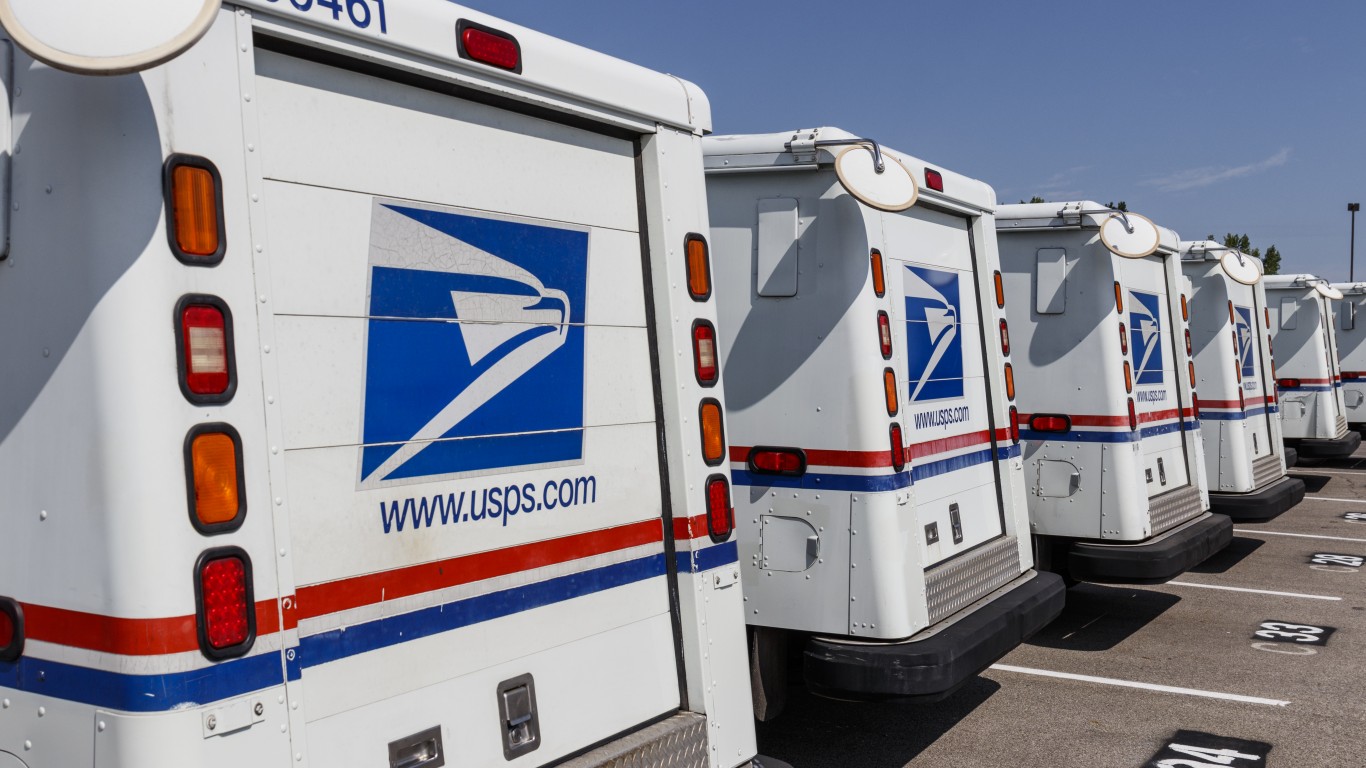
U.S. Postmaster General David Steiner says his organization could run out of money as soon as a year from now. That means the future of the U.S. Postal Service (USPS), founded in 1775 with Ben Franklin as the first postmaster general, is in doubt.
The Post Office (as it is often called) lost $9 billion in the fiscal year that ended in September. Its 640,000 workers, 525,00 of which are career personnel, are a burden. The American Postal Workers Union represents 200,000 current workers and retirees. They have resisted privatization, which might save the USPS money.
Among the financial drags on the USPS is that it delivers mail and packages Monday through Saturday via a system anchored by just over 31,000 locations. Virtually every American home and business benefits from this. That includes people in both large cities and rural areas, where homes can be miles apart. To say the system is antiquated is to state the obvious.
Many Americans do not need the USPS at all. They communicate through email instead of physical mail. Most “packages” could be email attachments. Tens of millions of Americans get and pay their bills online. To make a case for daily delivery and such a large number of post offices is nearly impossible.
To make matters worse, the USPS could lose a $6 billion a year contract with Amazon. As CNN points out, “The Amazon contract reportedly brings in about $6 billion a year to the agency, money it can’t afford to lose.” The hole it could create would be more than crippling. A USPS plan to shift services to another company has upset Amazon.
For now, there is no plan to fund the Post Office going forward. Thus, that raises the question of what the future of mail in America will be.
The Fed’s December Rate Cut Means Social Security Retirees Could Be in for a COLA Surprise







 Top Gaining Stocks
 Top Losing Stocks