COVID-19: This Is Why Social Distancing May Not Work, Scientists Say

Photo of Douglas A. McIntyre
By Douglas A. McIntyre Published
This post may contain links from our sponsors and affiliates, and Flywheel Publishing may receive compensation for actions taken through them.
COVID-19: This Is Why Social Distancing May Not Work, Scientists Say

© Gabriel Kuchta / Getty Images News via Getty Images

The rate of the spread of COVID-19 has slowed across America. Infection numbers dropped to their lowest point in almost a year for the week of May 17 — which itself showed a decrease of 26% from the previous seven days.  

Nevertheless, close to 600,000 Americans have died of the disease. That accounts for almost 20% of the approximately 3.5 million people claimed by the pandemic worldwide. We’re obviously not out of the woods yet. (This is the city in every state with the most COVID-19 cases.) 

Variants have become a large part of the conversation among public health officials and epidemiologists. The Centers for Disease Control and Prevention (CDC) officially tracks a number of them. According to The New York Times, as of May 24, some 49% of Americans have received at least one dose of a vaccine, and 39% are fully vaccinated — but authorities worry that vaccines might not fully protect against all the new variations, some of which may be not only more transmissible but also deadlier than others. (These are the states where the most people are refusing the COVID-19 vaccine.)

While vaccines are a major weapon against the spread of the disease, there are several others that have long been in place.

Click here to see why scientists say that social distancing may not work.

Mario Tama / Getty Images News via Getty Images

What else can we do to protect ourselves besides getting vaccinated?

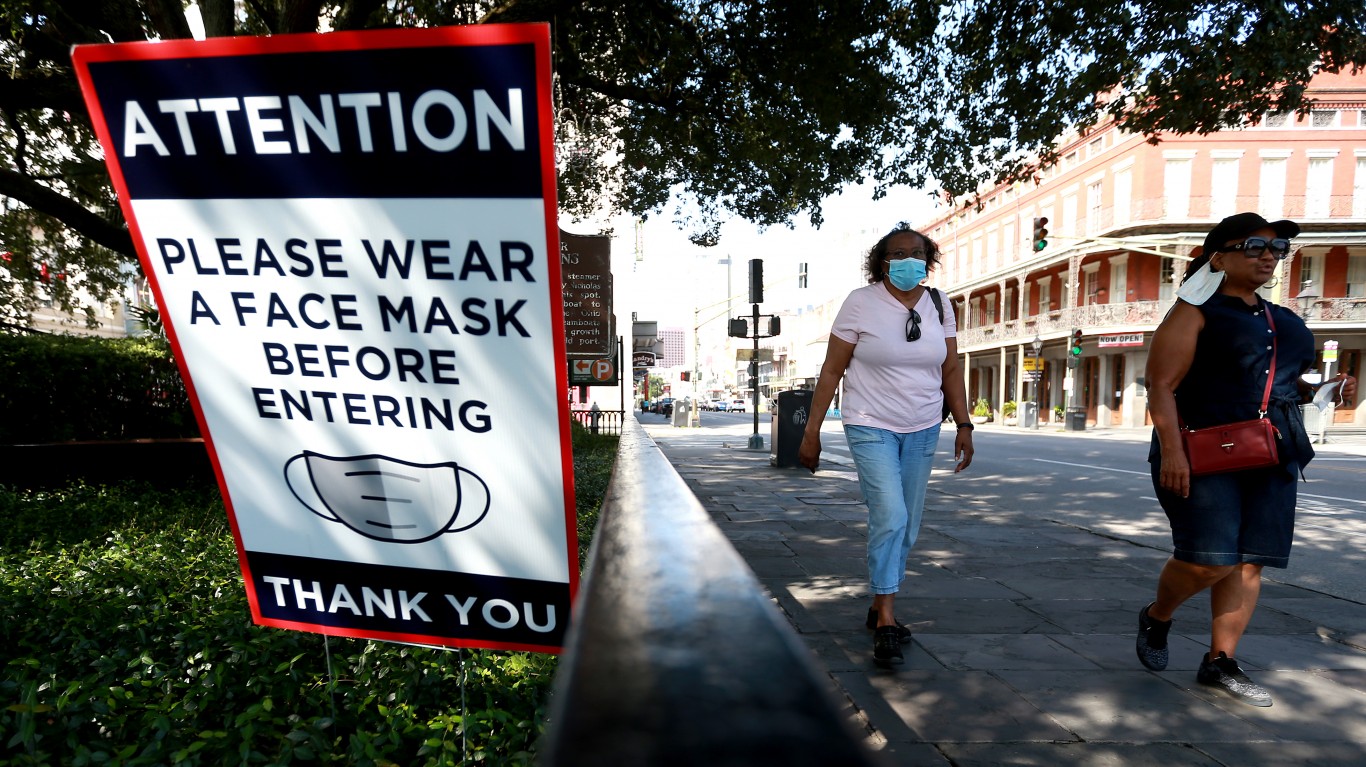
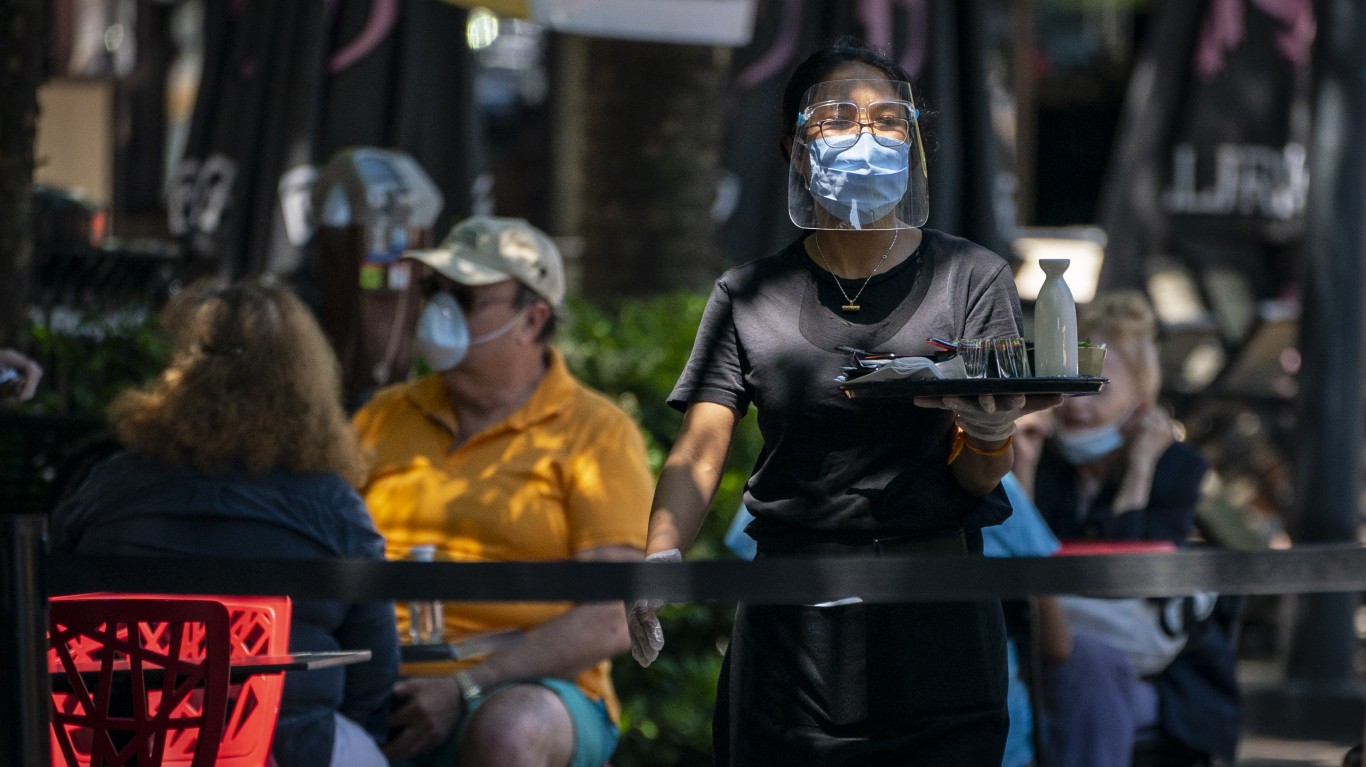
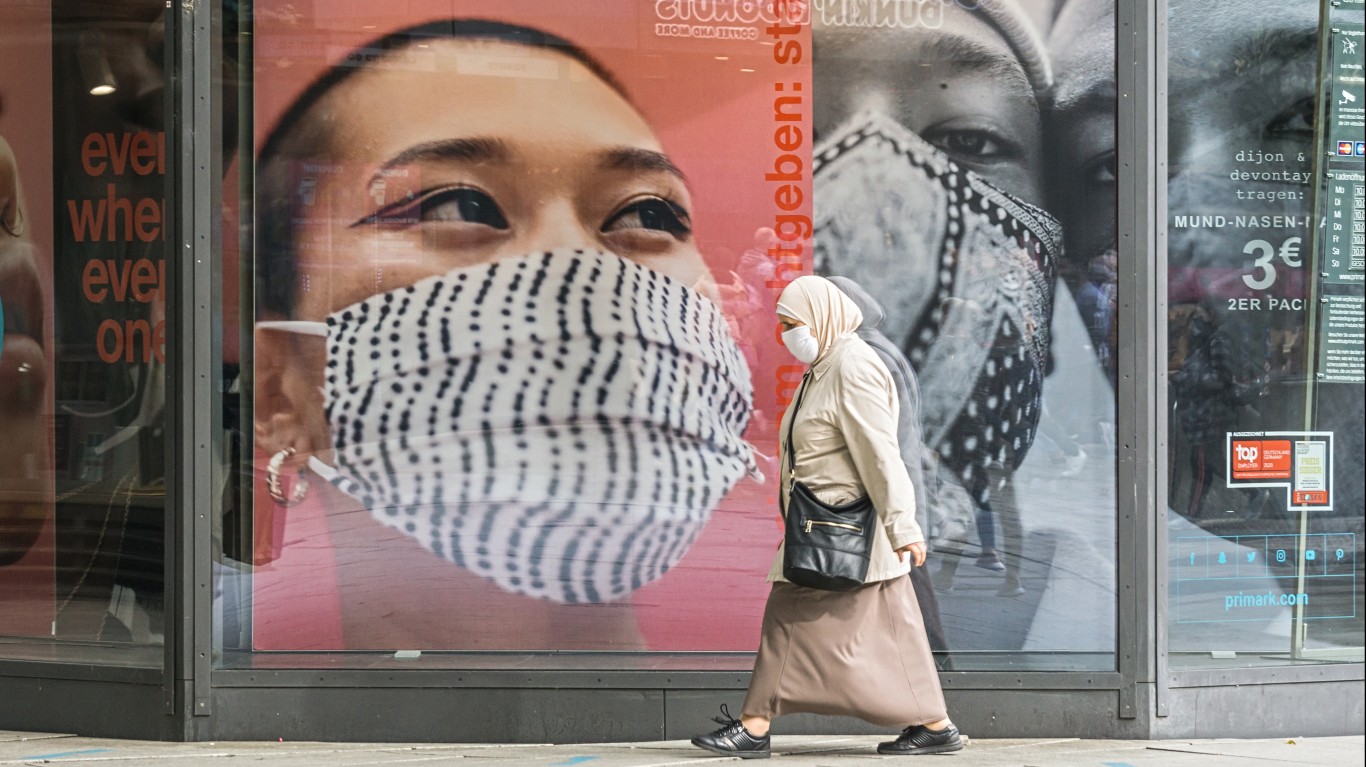
The same things that have been recommended to us since (almost) the beginning: wear a mask and observe social distancing, even as vaccination rates increase.

[in-text-ad]
Ore Huiying / Getty Images News via Getty Images

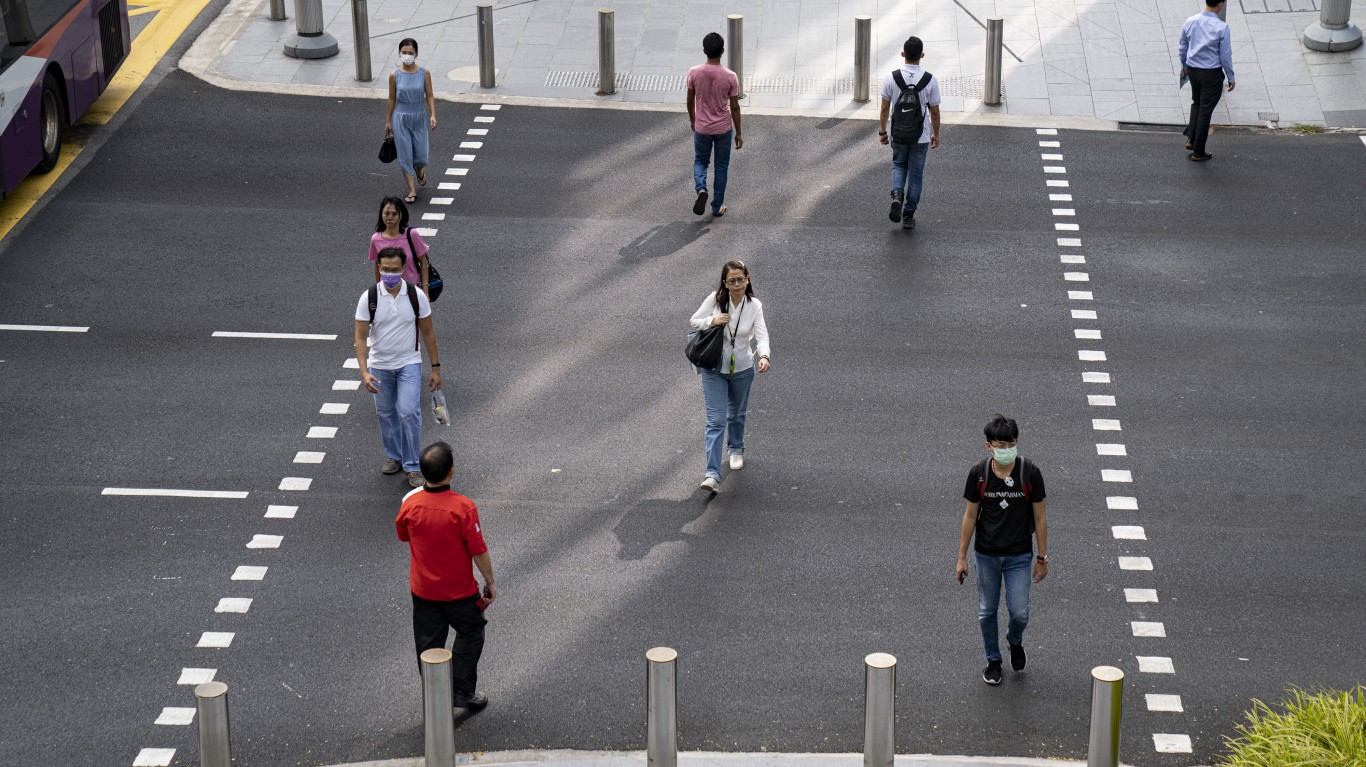
Does social distancing really work?

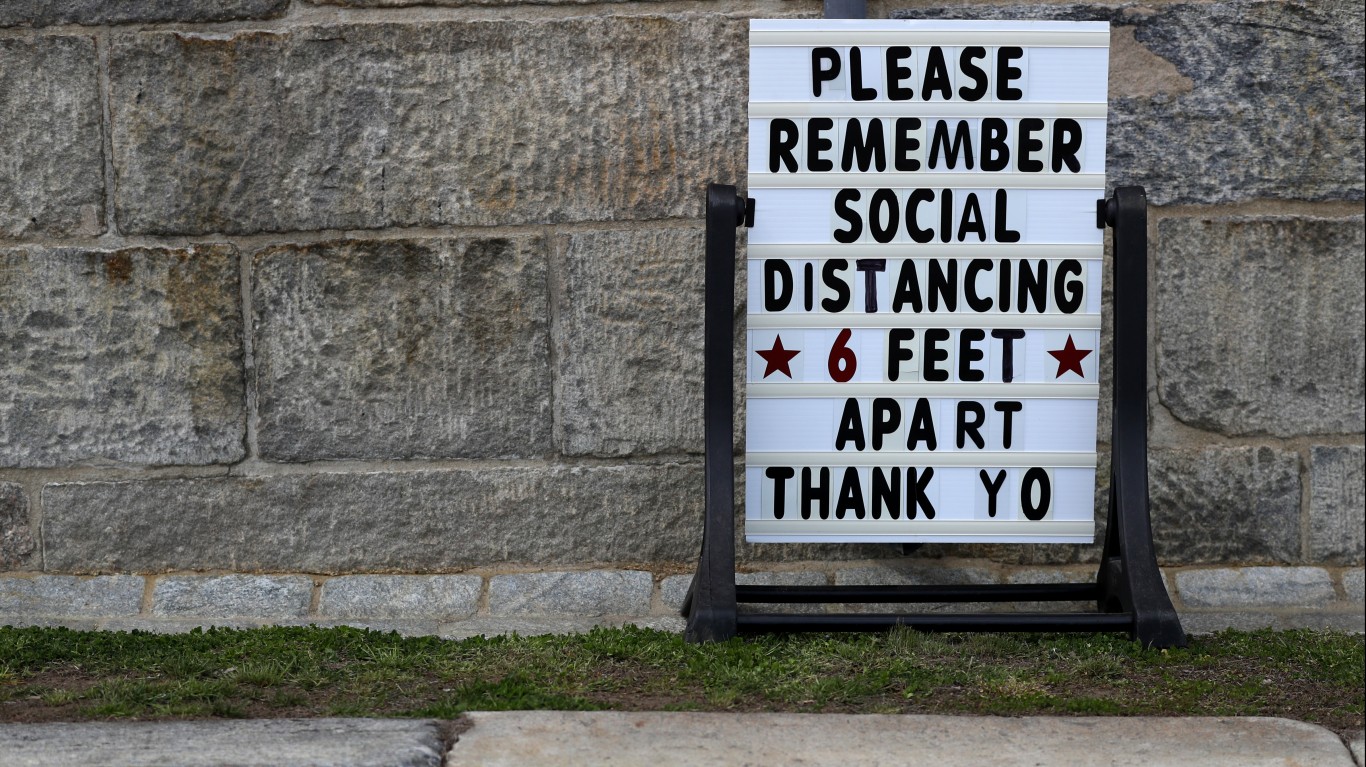
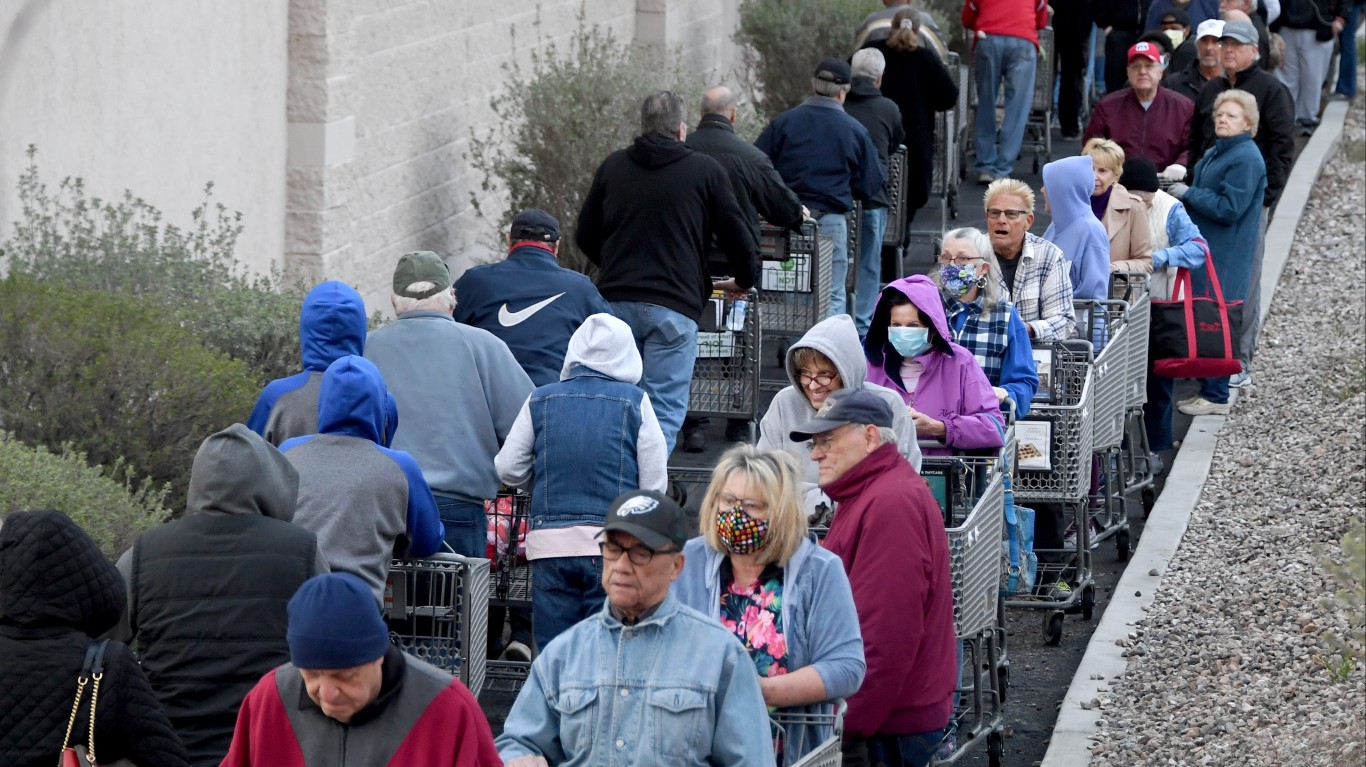
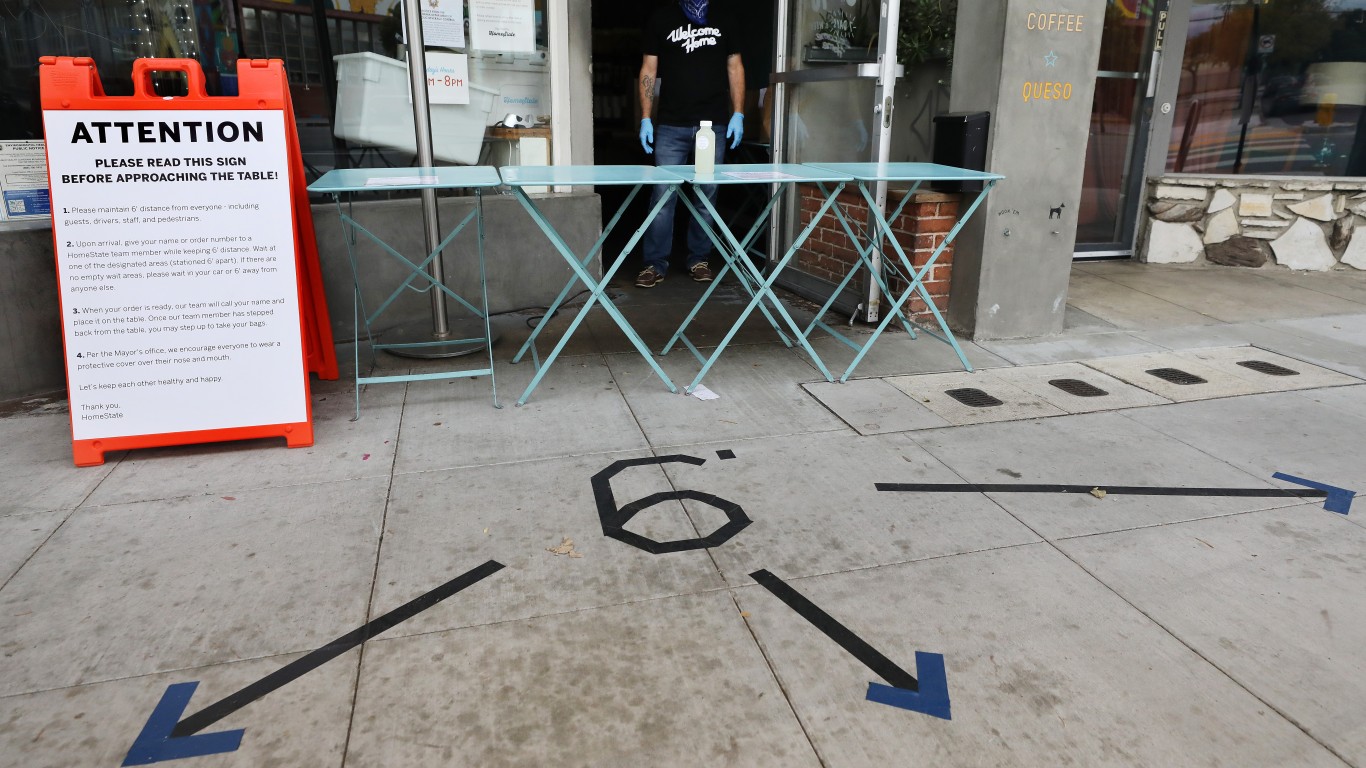
Yes, though perhaps not as efficiently as we might think it does. We’ve long been told that in circumstances requiring social distancing, we should stay at least six feet away from other people. It turns out, though, that six feet isn’t necessarily the magic number.

[recirclink id=885391]
Sarah Silbiger / Getty Images News via Getty Images

How far apart should we stay, then?

That depends. In a paper published in April, two scientists from MIT noted that “the Six-Foot Rule [is] a guideline that offers little protection from pathogen-bearing aerosol droplets sufficiently small to be continuously mixed through an indoor space.” In well-mixed spaces, they add, “one is no safer from airborne pathogens at 60 ft than 6 ft.”
Mario Tama / Getty Images News via Getty Images

Why one size doesn’t fit all

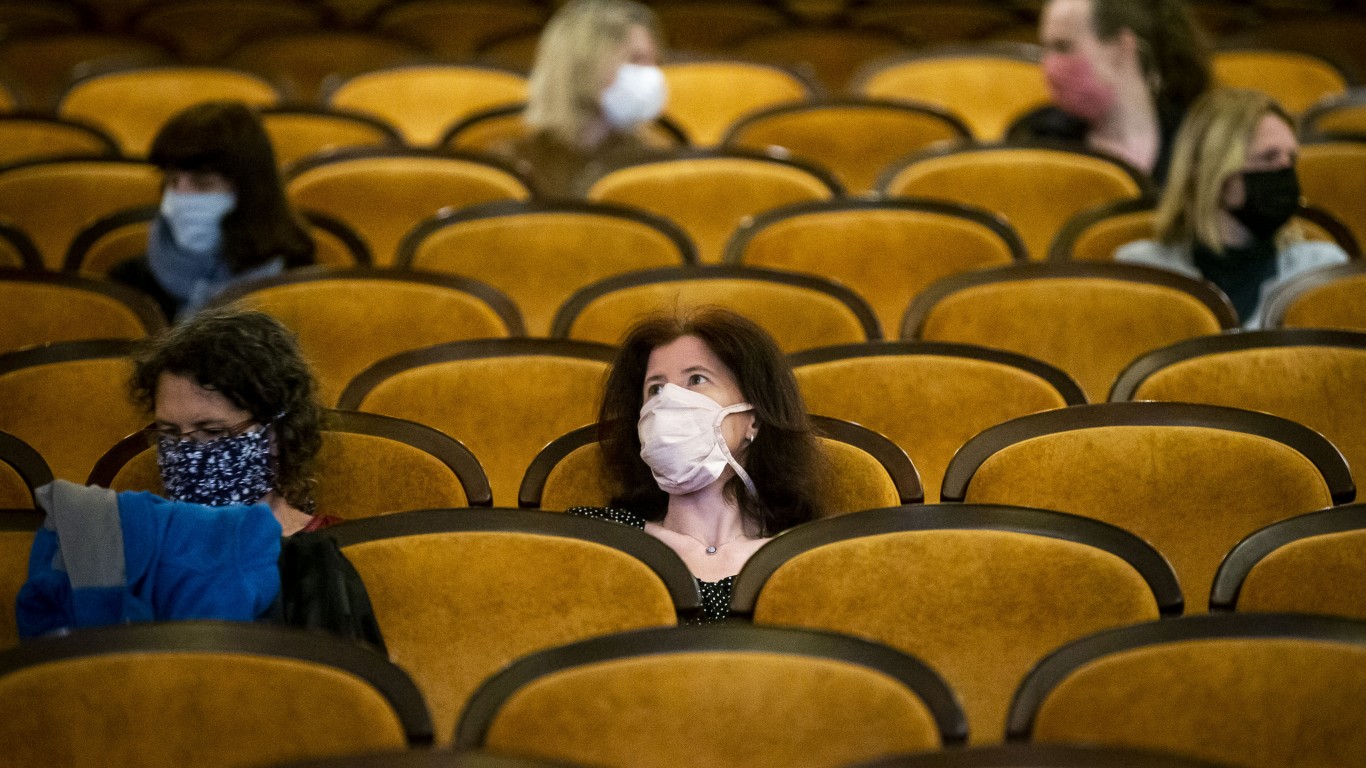
The scientists explain why one indoor space with six-foot social distancing might be safe while others might not be. Safety, they say, “depends on the rates of ventilation and air filtration, dimensions of the room, breathing rate, respiratory activity and face mask use of its occupants, and infectiousness of the respiratory aerosols.”

[in-text-ad-2]
What does all this mean?

That extra caution is warranted in indoor spaces, even as vaccination rates increase and infection rates decline — and that there is still a great deal to be discovered about how this pernicious disease is spread.

Photo of Douglas A. McIntyre
About the Author Douglas A. McIntyre →

Douglas A. McIntyre is the co-founder, chief executive officer and editor in chief of 24/7 Wall St. and 24/7 Tempo. He has held these jobs since 2006.

McIntyre has written thousands of articles for 24/7 Wall St. He is an expert on corporate finance, the automotive industry, media companies and international finance. He has edited articles on national demographics, sports, personal income and travel.

His work has been quoted or mentioned in The New York Times, The Wall Street Journal, Los Angeles Times, The Washington Post, NBC News, Time, The New Yorker, HuffPost USA Today, Business Insider, Yahoo, AOL, MarketWatch, The Atlantic, Bloomberg, New York Post, Chicago Tribune, Forbes, The Guardian and many other major publications. McIntyre has been a guest on CNBC, the BBC and television and radio stations across the country.

A magna cum laude graduate of Harvard College, McIntyre also was president of The Harvard Advocate. Founded in 1866, the Advocate is the oldest college publication in the United States.

TheStreet.com, Comps.com and Edgar Online are some of the public companies for which McIntyre served on the board of directors. He was a Vicinity Corporation board member when the company was sold to Microsoft in 2002. He served on the audit committees of some of these companies.

McIntyre has been the CEO of FutureSource, a provider of trading terminals and news to commodities and futures traders. He was president of Switchboard, the online phone directory company. He served as chairman and CEO of On2 Technologies, the video compression company that provided video compression software for Adobe’s Flash. Google bought On2 in 2009.

Featured Reads

Our top personal finance-related articles today. Your wallet will thank you later.

Continue Reading

Top Gaining Stocks

CBOE Vol: 1,568,143
PSKY Vol: 12,285,993
STX Vol: 7,378,346
ORCL Vol: 26,317,675
DDOG Vol: 6,247,779

Top Losing Stocks

LKQ
LKQ Vol: 4,367,433
CLX Vol: 13,260,523
SYK Vol: 4,519,455
MHK Vol: 1,859,865
AMGN Vol: 3,818,618