


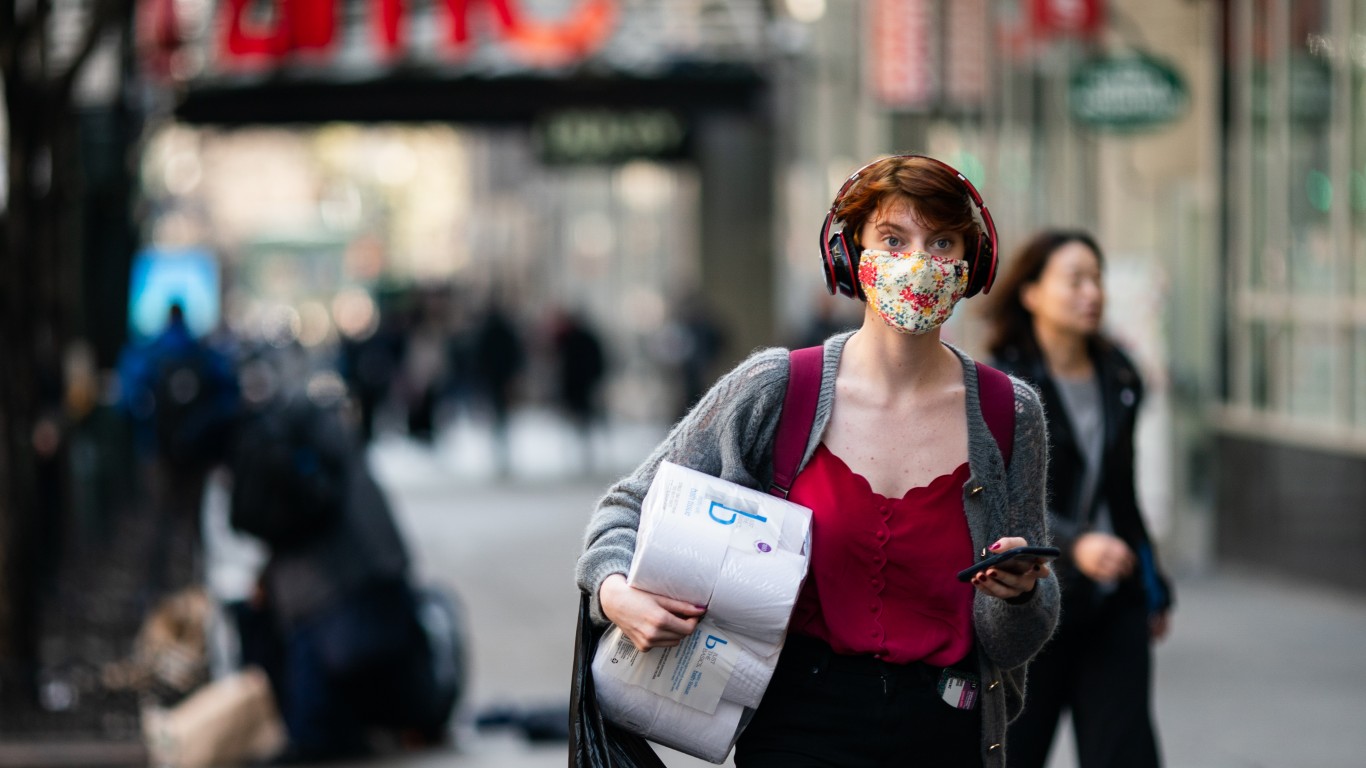
The rate of the spread of COVID-19 has slowed across America. The country reported its lowest number of new infections in nearly a year for the week of May 17, representing a drop of 26% from the previous seven days.
Nevertheless, as of May 24, some 589,517 Americans had died of the disease, which is about 17% of the world’s total (a staggering 3.47 million). Reported cases have reached 33,137,938 in the U.S., but hospitalizations, which were over 100,000 a day during the peak wave, are less than a third of that today. (As of the end of 2020, these were the US cities with the highest COVID-19 death rates.)
Variants have become a large part of the conversation among public health officials and epidemiologists. One variant, first identified in the United Kingdom and known as B.1.1.7, is more transmissible than the strain that was dominant in the United States over most of the pandemic.
The Centers for Disease Control and Prevention (CDC) also officially tracks these other variants: B.1.351, P.1, B.1.427 and B.1.429. Worries are that some may be more deadly than others and that vaccines may not protect against one or more variants. Scientists believe that new variants will continue to appear, some of which may originate in America and others that may come from overseas. The most recent one to be discovered, dubbed B.1.617.2, now dominant in India, may prove to be more transmissible even than B.1.1.7, the one that spurred the deadly surge in the UK this winter.
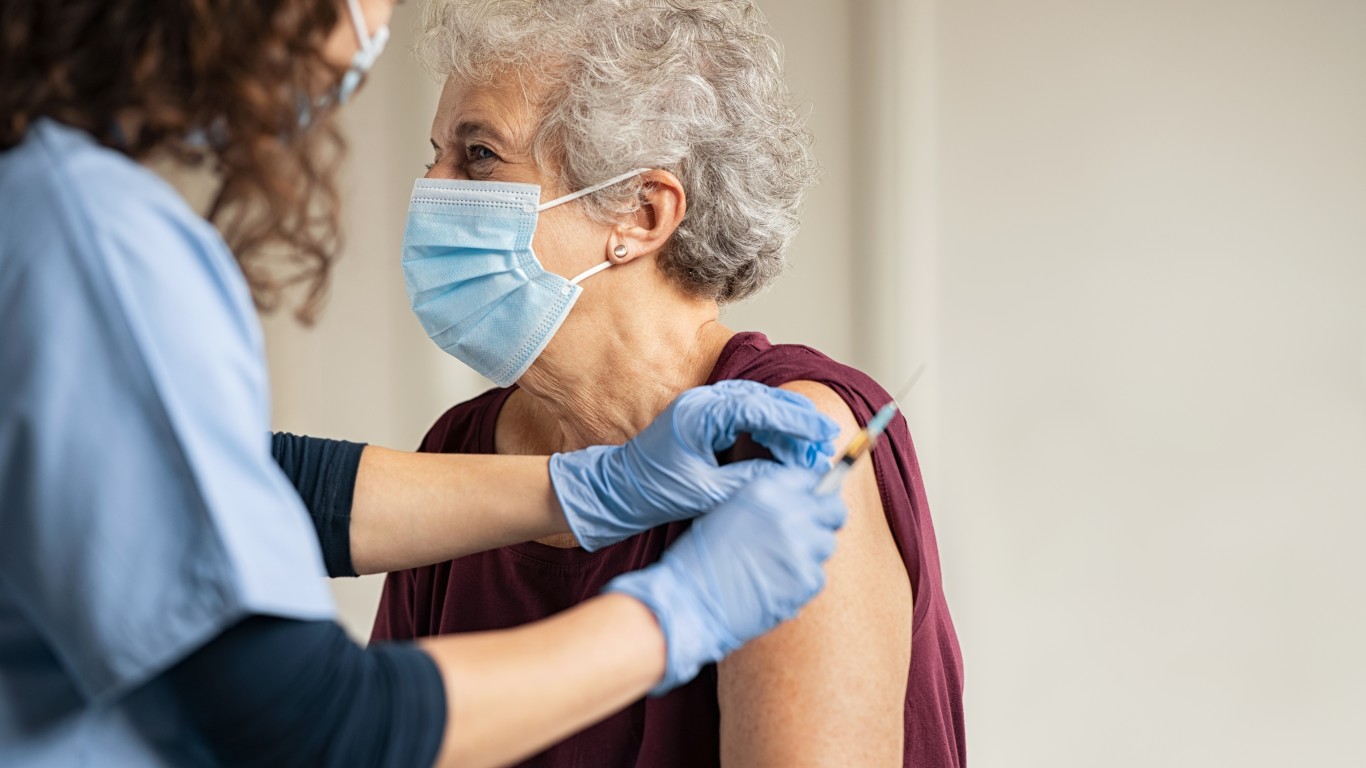
The good news on our shores is that, at this point, according to The New York Times on May 24, some 49% of Americans have received at least one dose of a vaccine, and 39% are fully vaccinated. There has been a debate among scientists and doctors, however, about if and when people will need additional doses. Some of this has to do with how effective vaccines prove to be against the variants. Another major issue, of course, is that many Americans are still saying no to vaccination. (These are the states where the most people are refusing the COVID-19 vaccine.)
Click here to see when Americans will need the third shot according to health experts.
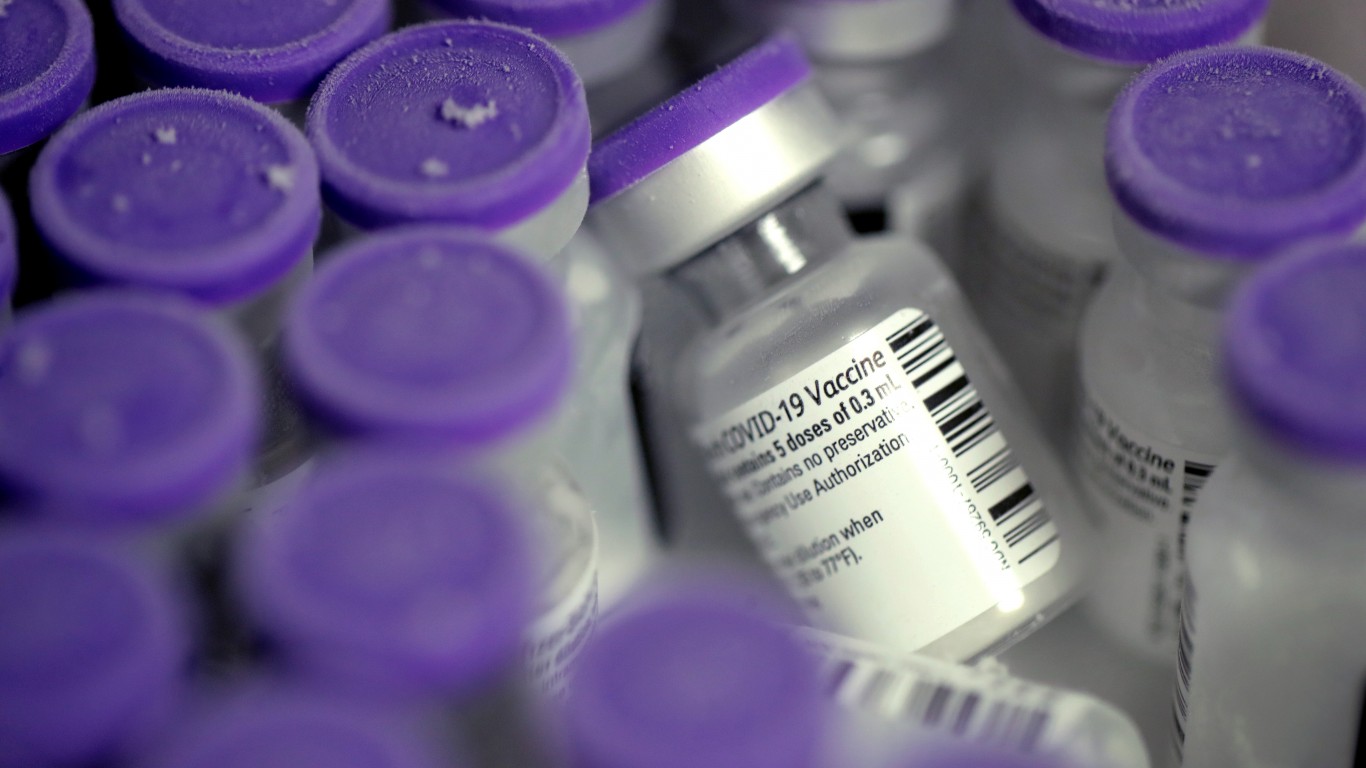
Will people need booster shots?
Pfizer CEO Albert Bourla has said that people will likely need a third dose of his vaccine, which is initially delivered in two doses, for continued effectiveness.
[in-text-ad]
How soon will boosters be needed?
Albert Bourla of Pfizer says that boosters should probably be administered within 12 months of being vaccinated.
[recirclink id=882874]

Is it possible that boosters will be needed sooner?
To be on the safe side, both Pfizer and Moderna say that their trials show high levels of protection against COVID for six months after the second dose. That doesn’t mean the protection weakens after that point, only that it has only been verified that far.
So is it six months or a year?
The truth is, nobody knows for sure. “It could be more, it could be a little less,” said Dr. Peter Marks, director of the FDA’s Center for Biologics Evaluation and Research at a recent virtual press conference. “We’re gonna have to figure it out as we go.”
[in-text-ad-2]

Will be need more boosters after the first one?
Probably. Dr. Ozlem Tureci, the chief medical officer of BioNTech, which helped Pfizer develop its vaccine, told CNBC that “people will need to get vaccinated against the coronavirus annually, like for the seasonal flu.”
Why will boosters be needed?
Because, according to Dr. Tureci, it is expected that vaccine-induced immunity against the virus will decrease over time.






 Top Gaining Stocks
 Top Losing Stocks