


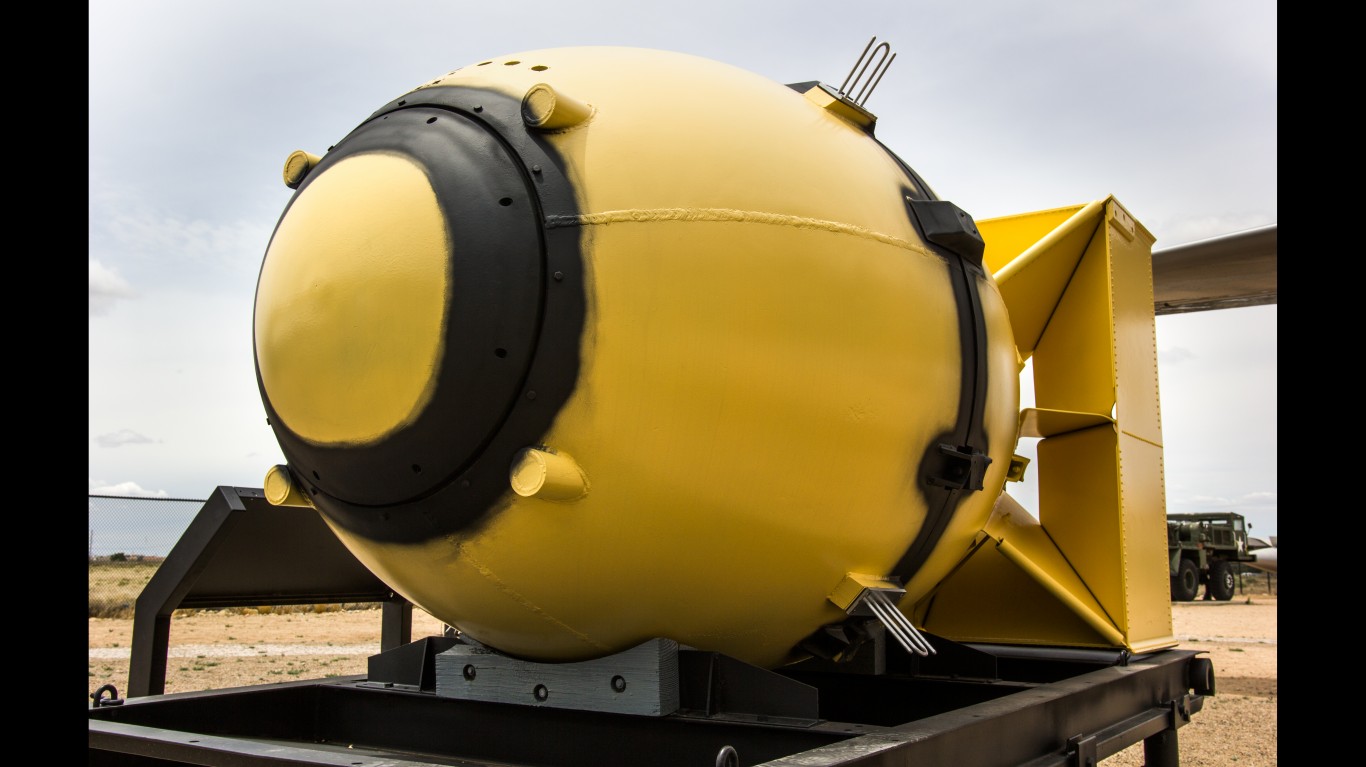
Since the dawn of man, there have been conflicts throughout the world driven by territorial disputes, acquisition of resources, and ideological differences. These clashes have prompted the pursuit of military advantage, a quest that has led to the development of increasingly deadly technologies that often disregard the horrifying consequences of these new weapons. As a result, military technology has evolved over millennia, yielding instruments of destruction with astonishing effectiveness. (These are The Future Weapons the US is Spending Billions in R&D On.)
24/7 Wall St. reviewed a report called “Quantification Related to Weapon Lethality,” to identify history’s deadliest weapons. It was originally issued in 1964 by the Historical Evaluation and Research Organization for the U.S. Army Combat Developments Command. It rates the lethal potential of various weapons on such quantifiable measures as number of potential targets per strike, relative effect, effective range, accuracy, reliability, and mobility. (Also see: 17 prototype guns rejected by the US military.)
It’s important to recognize that this list is meant to be an example of some of the deadliest weapons — there are other highly deadly nuclear weapons besides those noted here. Some entries underscore the rapid technological development since the Industrial Revolution. Take the sword, a tool used across cultures and eras, which retains ceremonial significance in military contexts. In contrast, the weapons employed in World War I were rendered obsolete at the outset of World War II.
The progression of military technology often originates from scientific advancements in unrelated fields. For instance, the airplane, initially conceived as a rapid mode of transportation, swiftly found application in warfare. This relationship is reciprocal; gunpowder, employed in Chinese warfare as early as the 10th century, serves not only as a tool for destruction but also as a means to excavate tunnels and provide entertainment through fireworks. (Here are some World War II Weapons That Didn’t Work.)
Here are the most lethal weapons in history
18. Arquebus
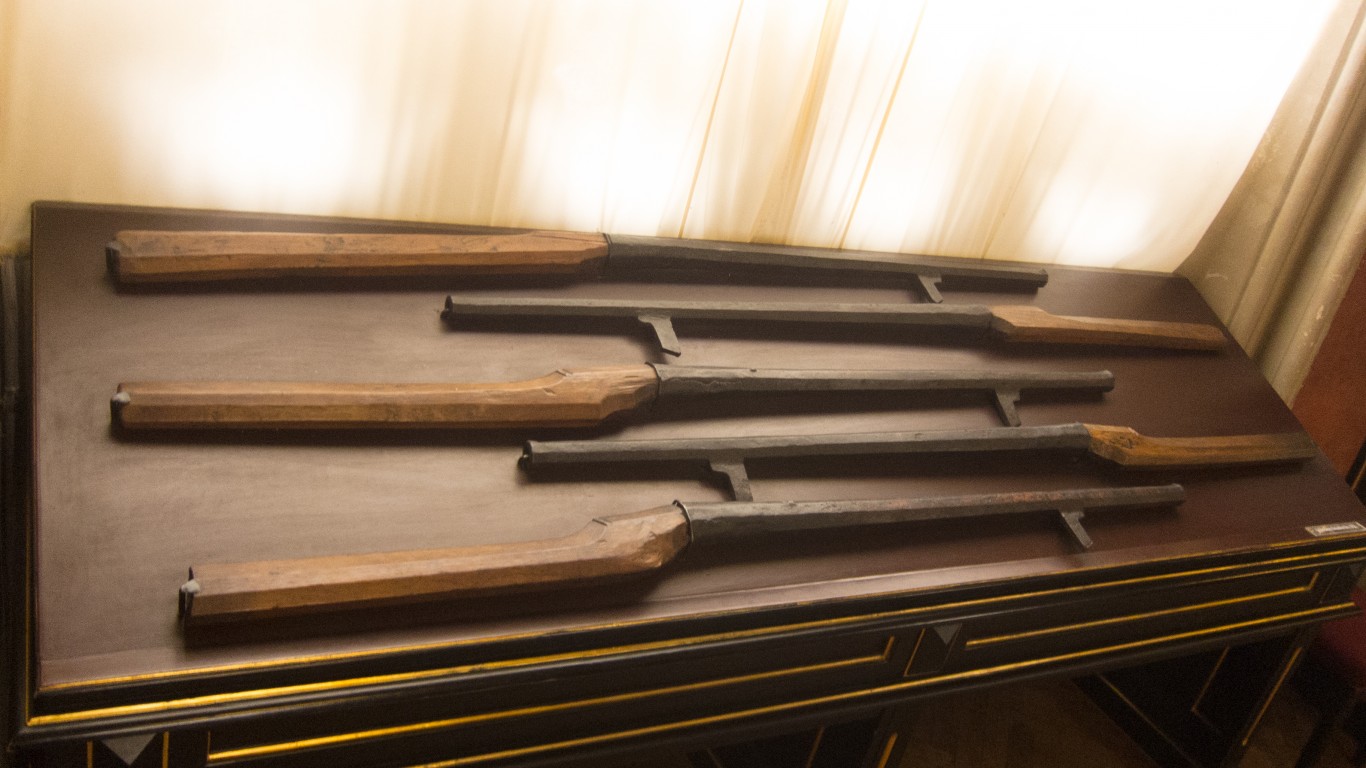
- Lethality index score: 10
The arquebus was an early firearm that appeared in 15th-century Europe. It was slow to reload, inaccurate and so heavy that it had to be mounted on a pole to fire. Originally, it was used as a defensive weapon for protecting cities and other fortifications. There is a potent French spirit called Arquebuse de l’Hermitage, which legend has it was first formulated to treat those wounded by an arquebus.

- 16. Crossbow
- Lethality index score: 32
First seen in East Asia, crossbows applied many of the principles of bows while allowing users to harness more power and accuracy. They were easier to operate than conventional bows, so took considerably less training to be used effectively.
15. 16th-century cannon
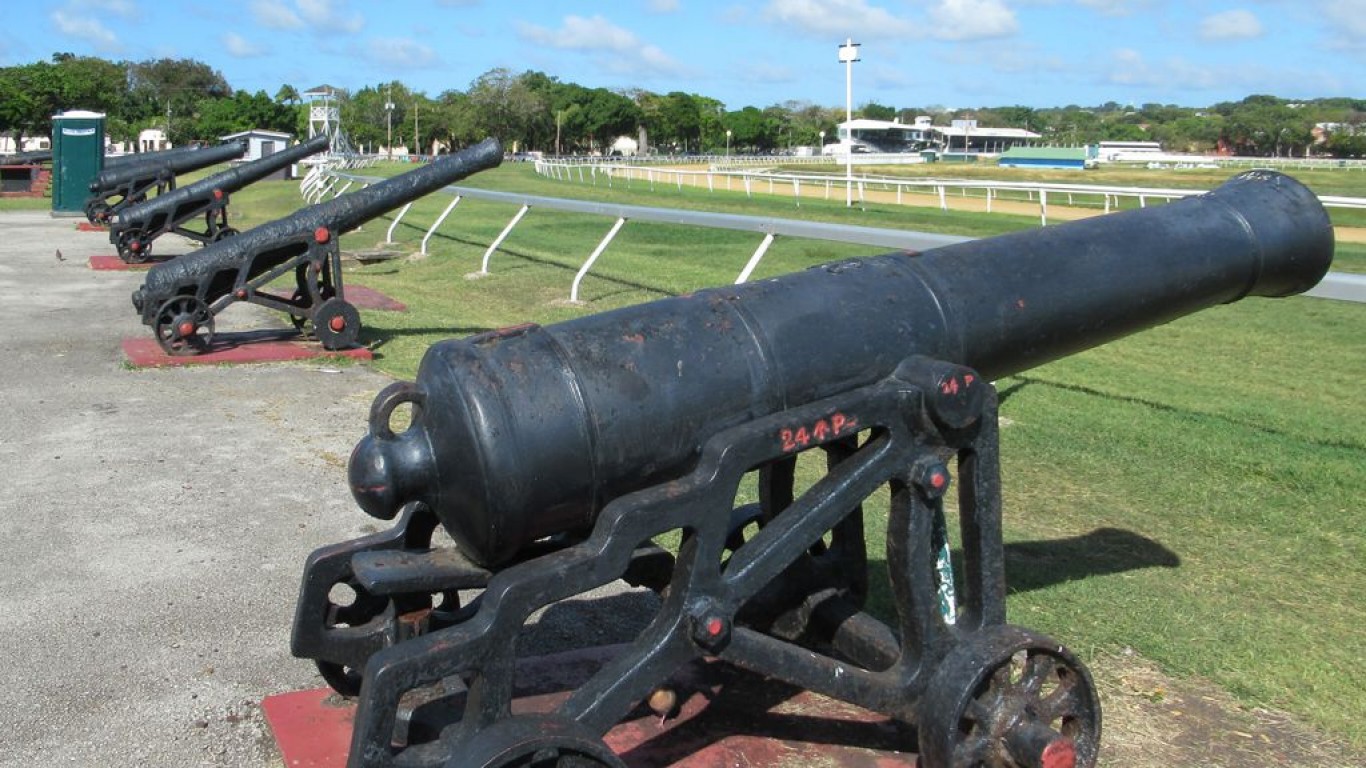
- Lethality index score: 43
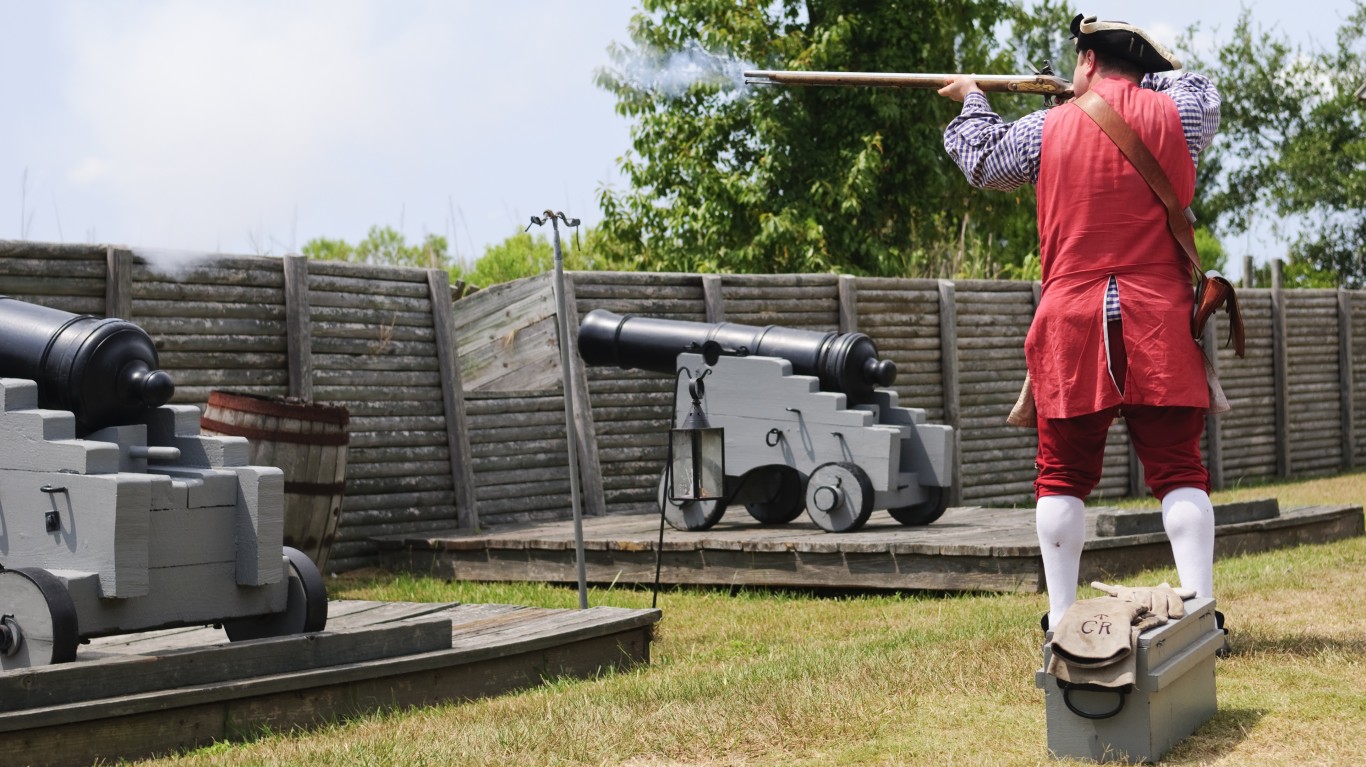
The rise of cannons changed warfare on land and sea. Fortifications were forced to adapt to siege from cannon fire and in turn, arm themselves with these powerful weapons. Cannons in this period were often difficult to maneuver and not very accurate. However, they would do massive damage if they found their mark.
14. Flintlock musket
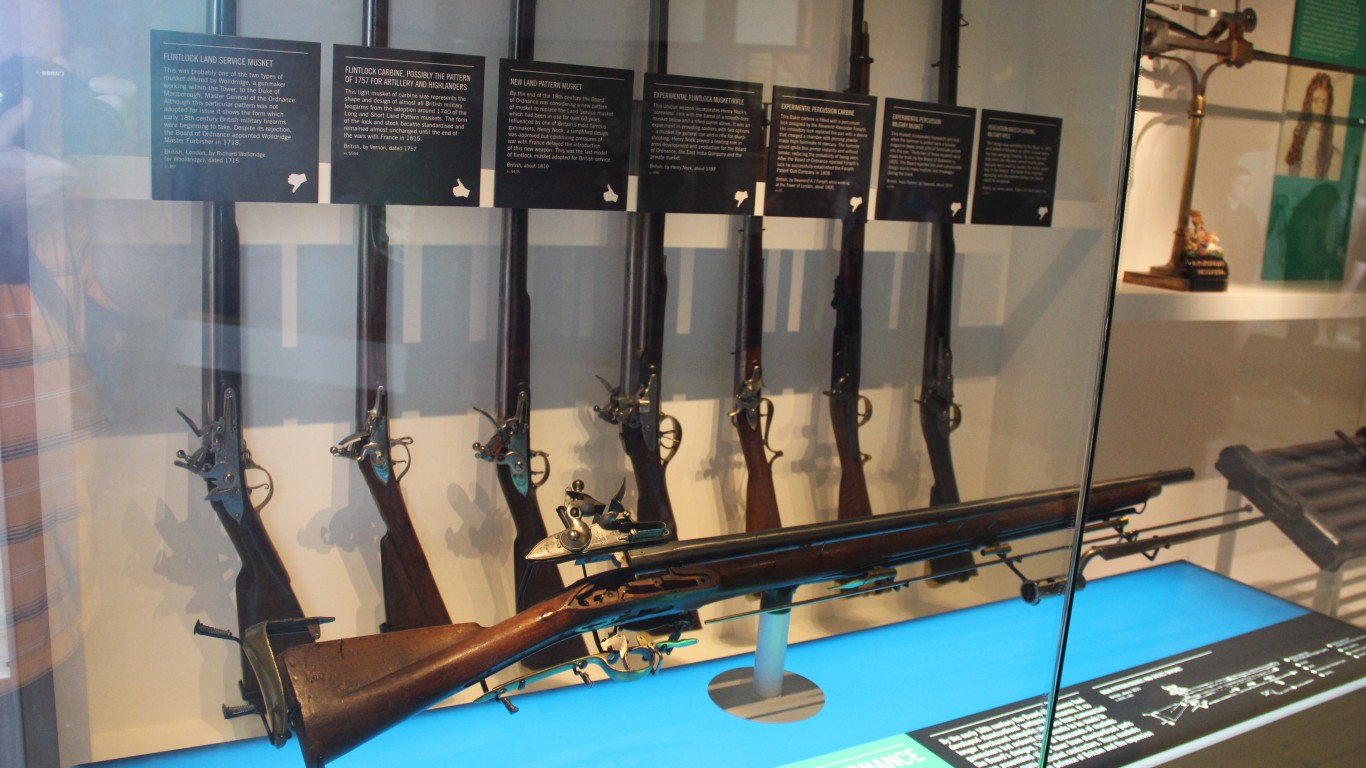
- Lethality index score: 47
Flintlocks are front-loading firearms that use flint to ignite gunpowder. It replaced guns with other firing mechanisms in the 17th century. While not the most accurate, flintlocks could be effective if fired in large numbers. The weapon stayed popular until midway through the 19th century.
13. Breech-loading rifle
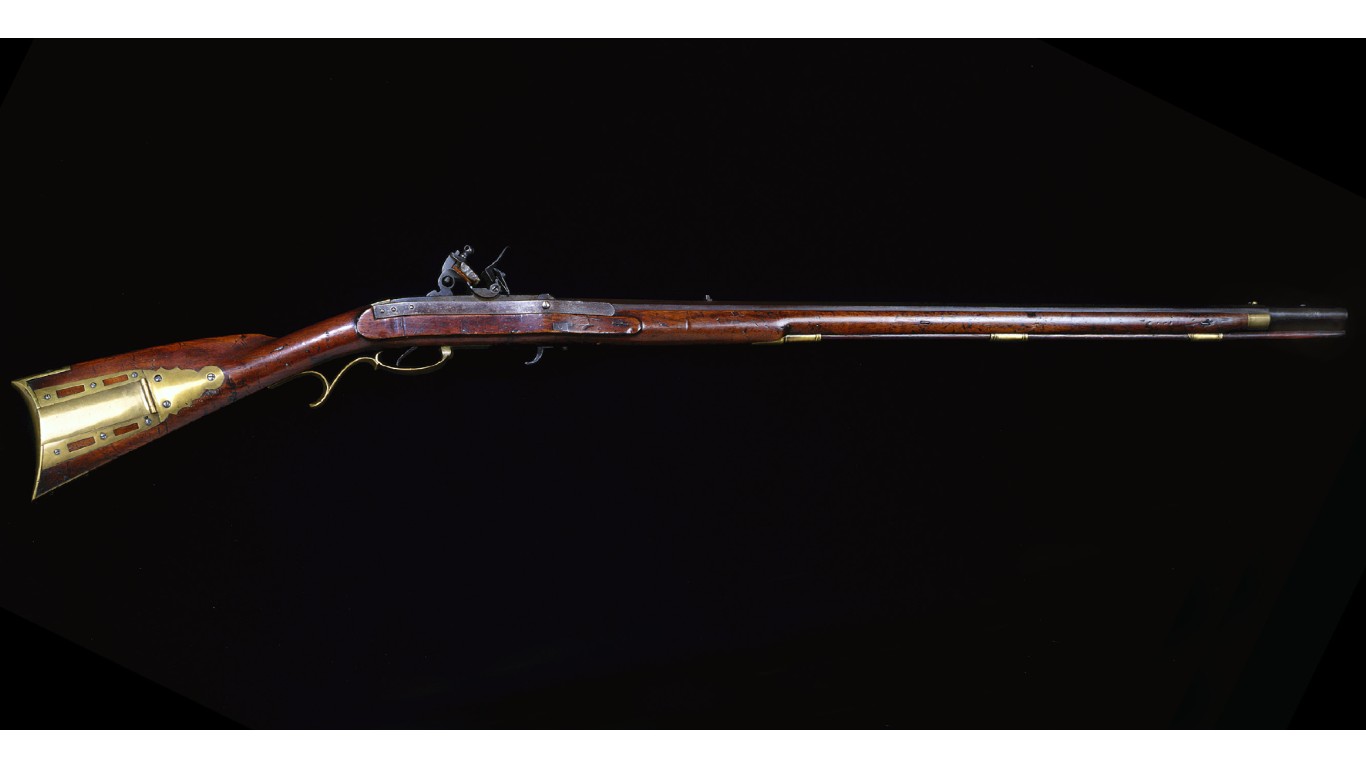
- Lethality index score: 229
Breech-loading firearms took off in the 19th century with the advancement of the precision machinery needed to make them effective. These firearms are loaded from the rear instead of the front of the gun. This method is much faster and safer and is used in almost all modern weapons. Combined with their rifling — the spiraling of the inside of the barrel for accuracy — breech-loading rifles were far more lethal and effective than muskets.
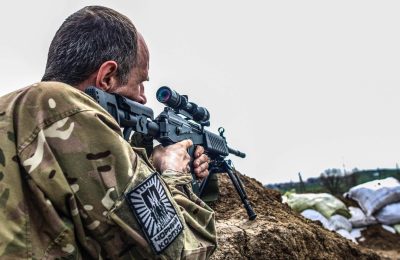
12. Springfield 1903 sniper rifle
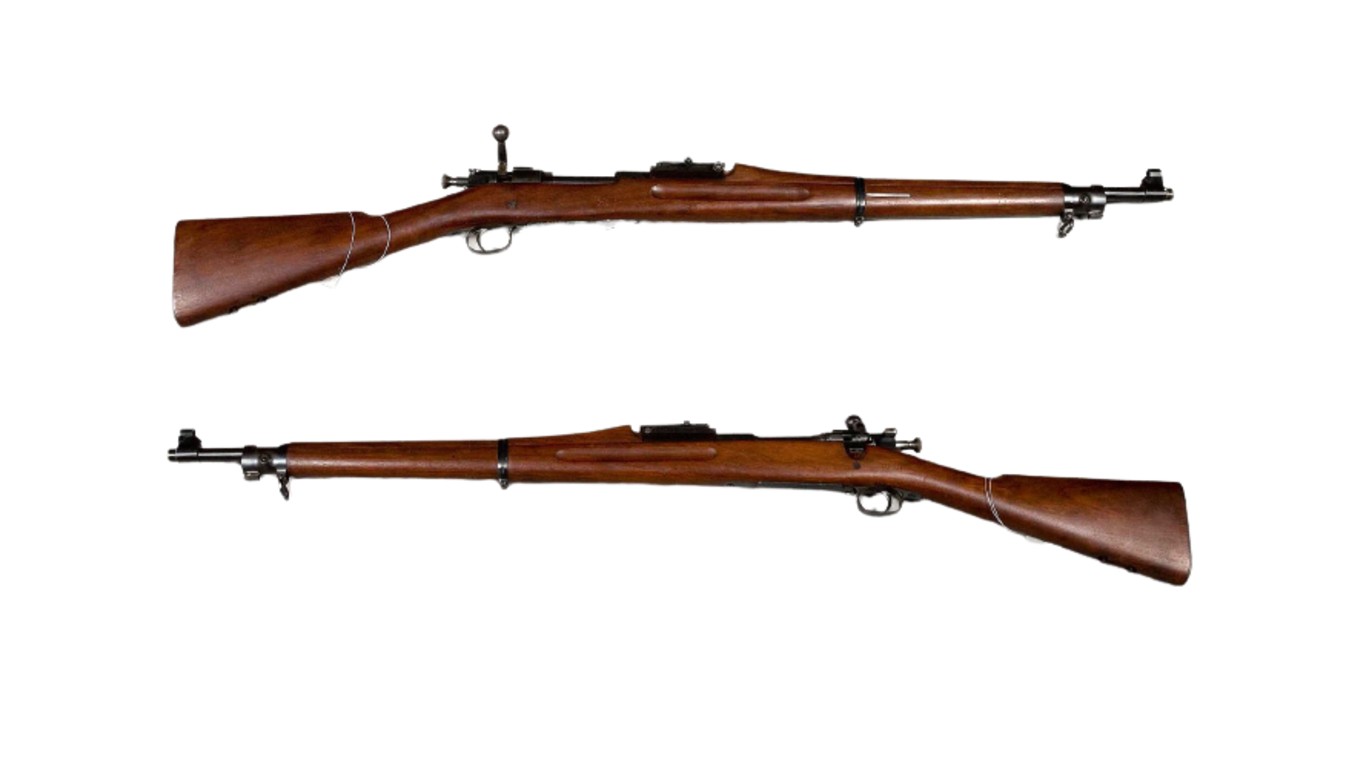
- Lethality index score: 778
- 11. Assault rifle
- Lethality index score: 4,200
The first assault rifle was German-made and first saw widespread action during World War II. Assault rifles have detachable magazines for rapid reloading and several different rates of fire. ARs are the most popular weapon for soldiers in the modern world and have improved considerably since their first conception. The Soviet AK-47 and American M16 are two of the most iconic assault rifles.
10. World War I machine gun
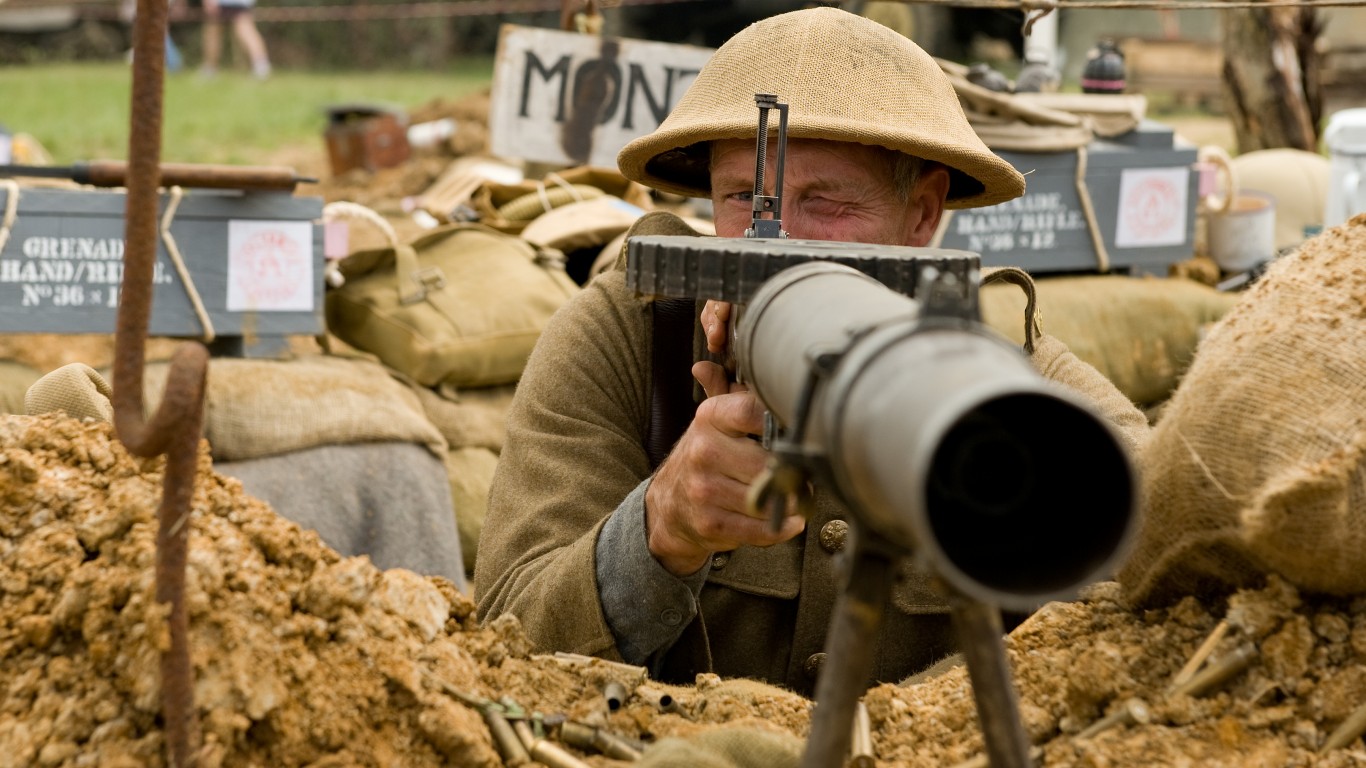
- Lethality index score: 12,730
Machine guns saw widespread use in World War I with devastating effects. At the time, machine guns were heavy, required several people to operate, and were prone to overheating. However, they unleashed carnage on the battlefield like the world had never seen before. In many ways, the weapons of the time were ahead of the tactics, and commanders often foolishly sent soldiers and cavalry to charge in only to see them mowed down by these rapid-fire weapons.
9. World War I tank
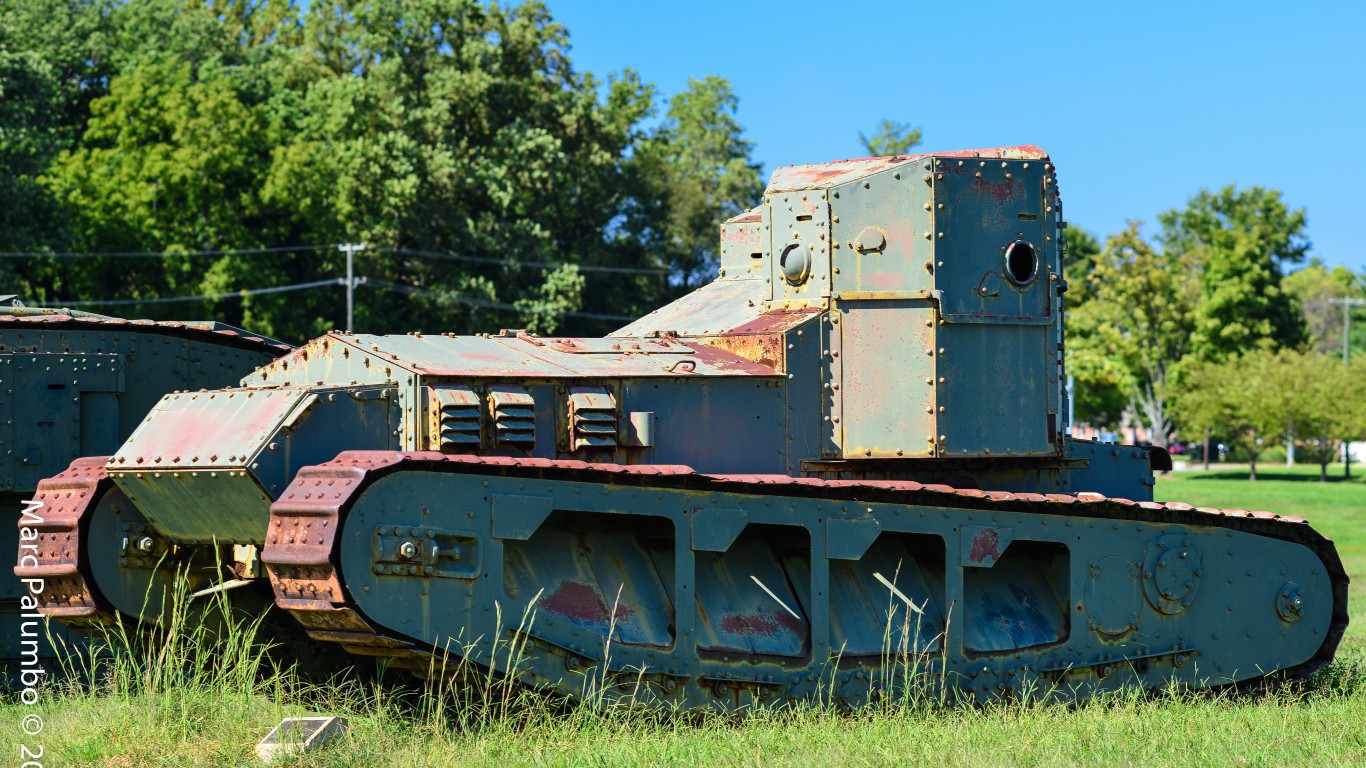
- Lethality index score: 68,300
Tanks were originally invented to break the deadlock of World War I trench warfare. These heavily armored vehicles used treads instead of wheels and were armed with machine guns and naval cannons. Winston Churchill is regarded as one of the key figures who pushed for the development of tanks to turn the tide of the war.
8. World War I fighter-bomber
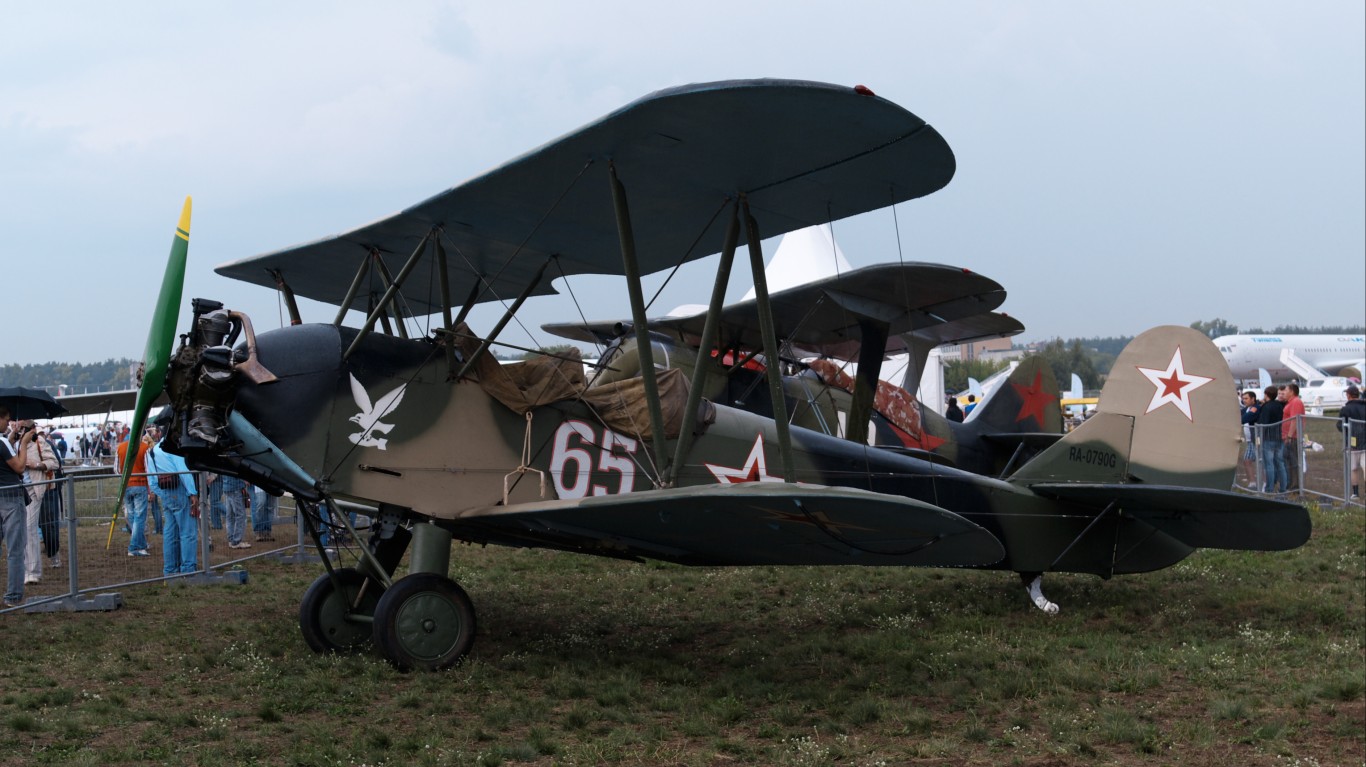
- Lethality index score: 229,200
World War I was the first time airplanes saw widespread action in combat. Fight-bombers were equipped with machine guns to take down enemy aircraft and a limited number of bombs to drop on targets. Bombing accuracy was poor at the time but a successful hit could devastate exposed enemy troops. Pilots suffered high numbers of casualties and flying was still very dangerous even when not in combat.
7. French 75mm gun
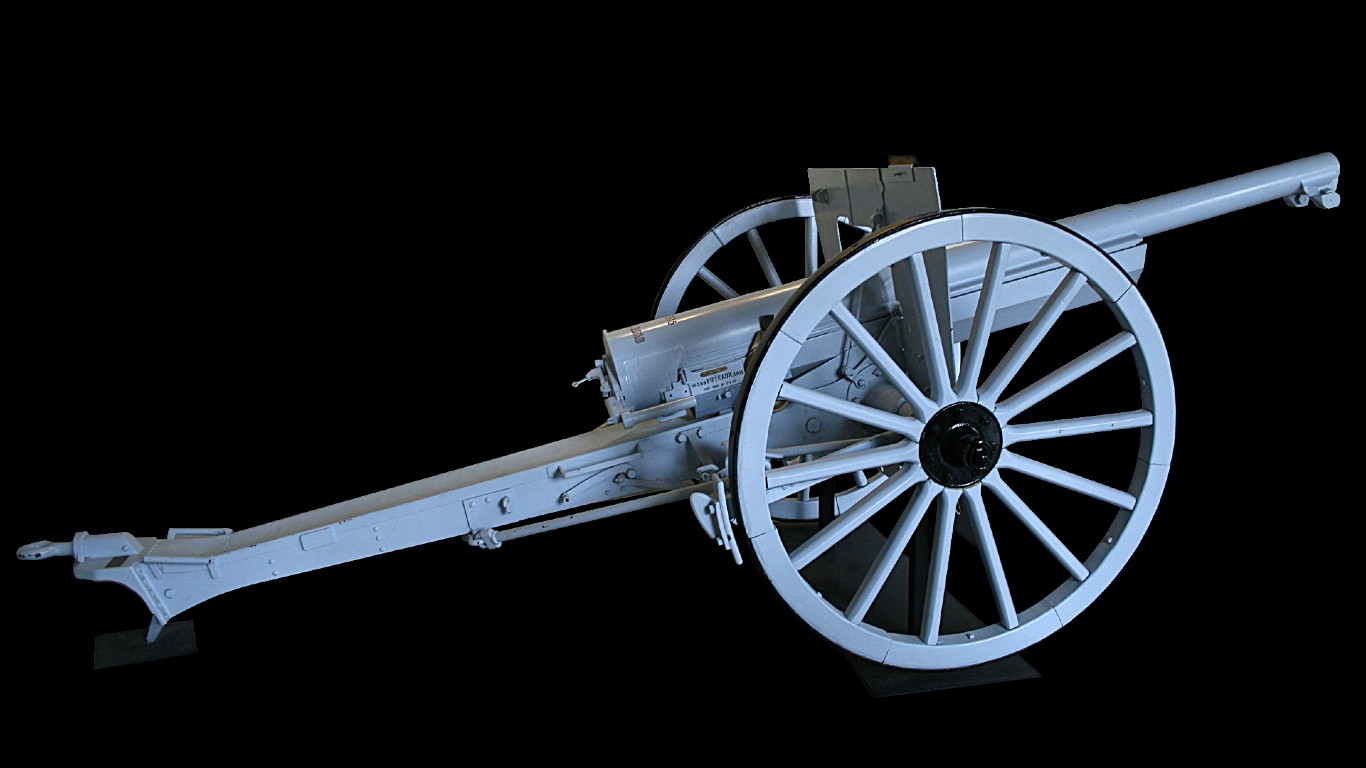
- Lethality index score: 340,000
Commonly known as the French 75, the cannon was originally designed to fire anti-personnel shrapnel shells but was later adapted to also use high-explosive shells and toxic gas shells. It was first adopted by French forces in 1898 and was a huge advancement in technology. New aiming and loading technology meant the cannon could fire significantly faster than other similar weapons at the time. Further, the gun did not shift after firing so artillery crews were not forced to re-align it after every shot. It saw extensive usage in World War I and some in World War II.
6. V-2 ballistic missile
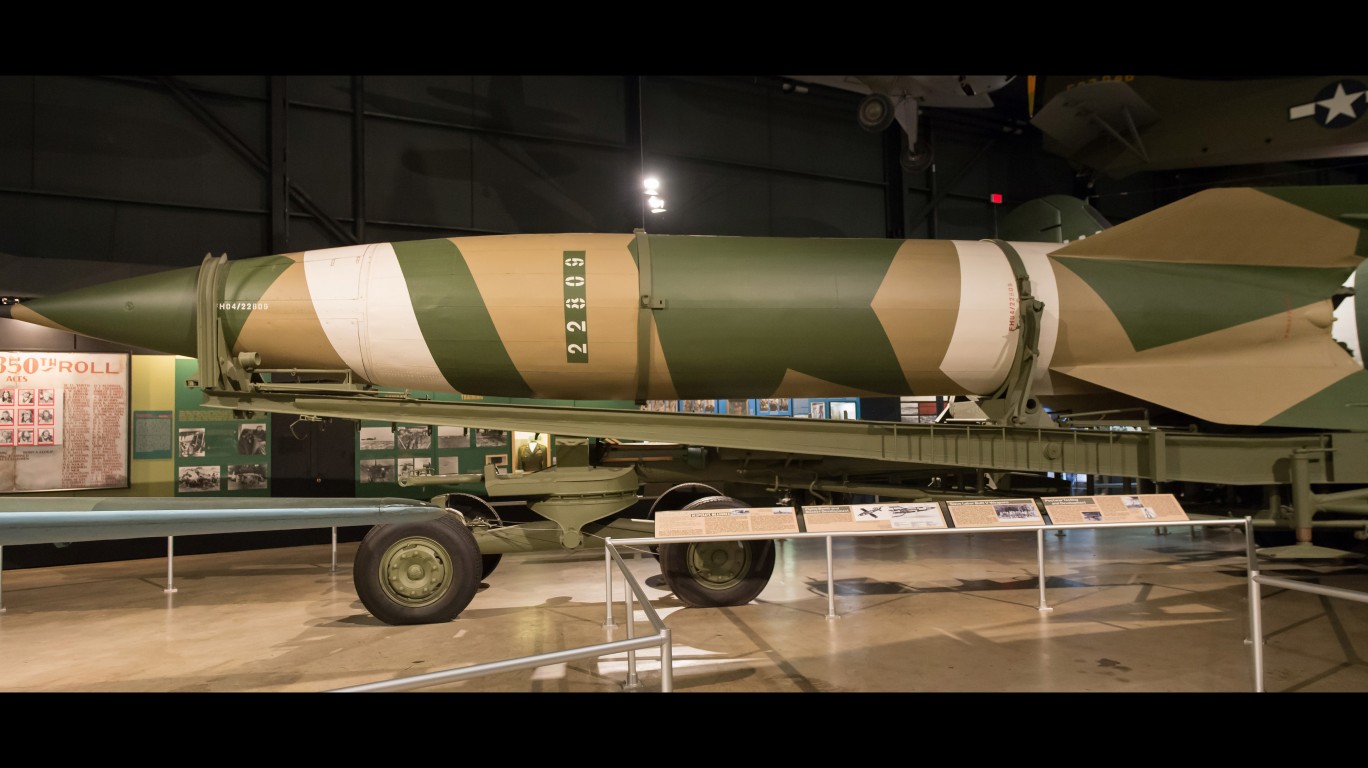
- Lethality index score: 861,000
Created by the Nazis to retaliate against Allied forces for bombing German cities during World War II, the V-2 was the world’s first long-range ballistic missile. Together with V-1s, and its cruise missile predecessors, the V-2 rained down on British cities in 1944 and ’45. There was no way to defend against them and very little warning before they arrived. After the defeat of the Nazis, the Americans and Soviets jostled to acquire V-2 technology and the scientists that had invented the missiles.
5. Automatic grenade launcher
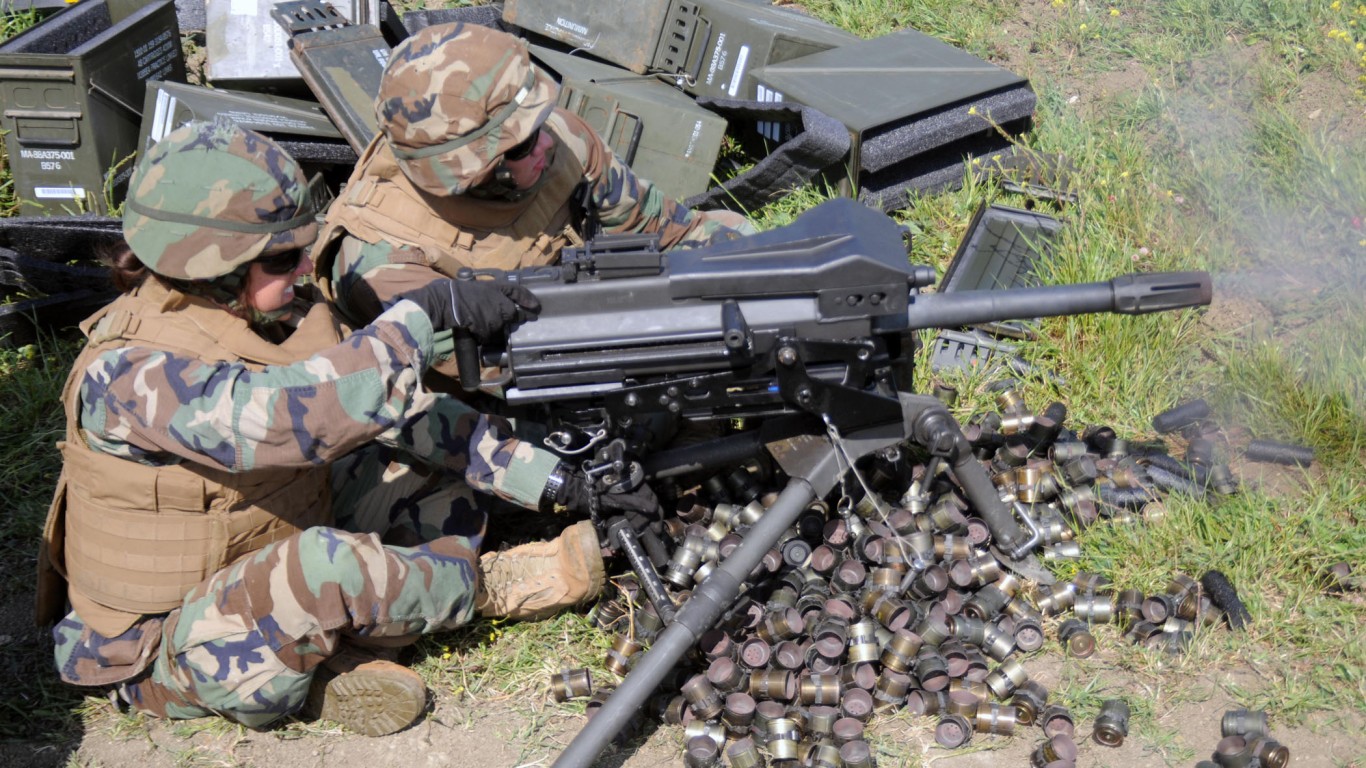
- Lethality index score: 1,500,000
Automatic grenade launchers are usually mounted on vehicles or helicopters and can rapidly fire grenades to devastating effect. The U.S. first introduced its M19 automatic grenade launcher in 1966 and used it throughout the Vietnam War. The weapons are used for direct fire on targets and indirect fire like mortars. As technology has advanced some launchers now fire smart grenades that explode at certain points in the air.
4. World War II tank (Sherman M4)
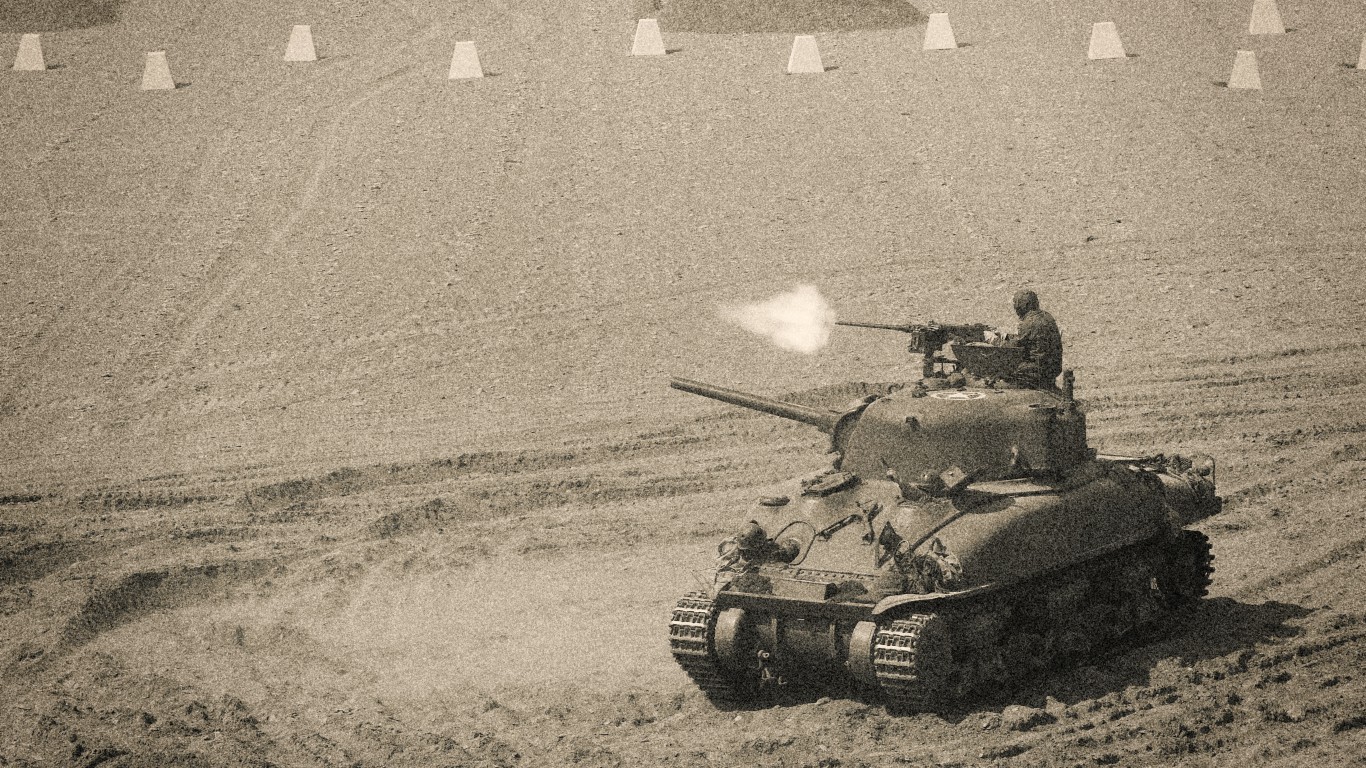
- Lethality index score: 2,203,000
Tank technology advanced rapidly during the interwar period. In World War II they were a critical part of combat. Nazi forces took massive amounts of territory with rapid tank advances known as blitzkriegs — literally “lightning wars.” Their ability to move quickly while being armored and carrying massive firepower shocked several armies into submission in the early days of the war. However, as tank technology advanced so did anti-tank weapons, proving that the vehicles were not invincible.
3. World War II fighter-bomber
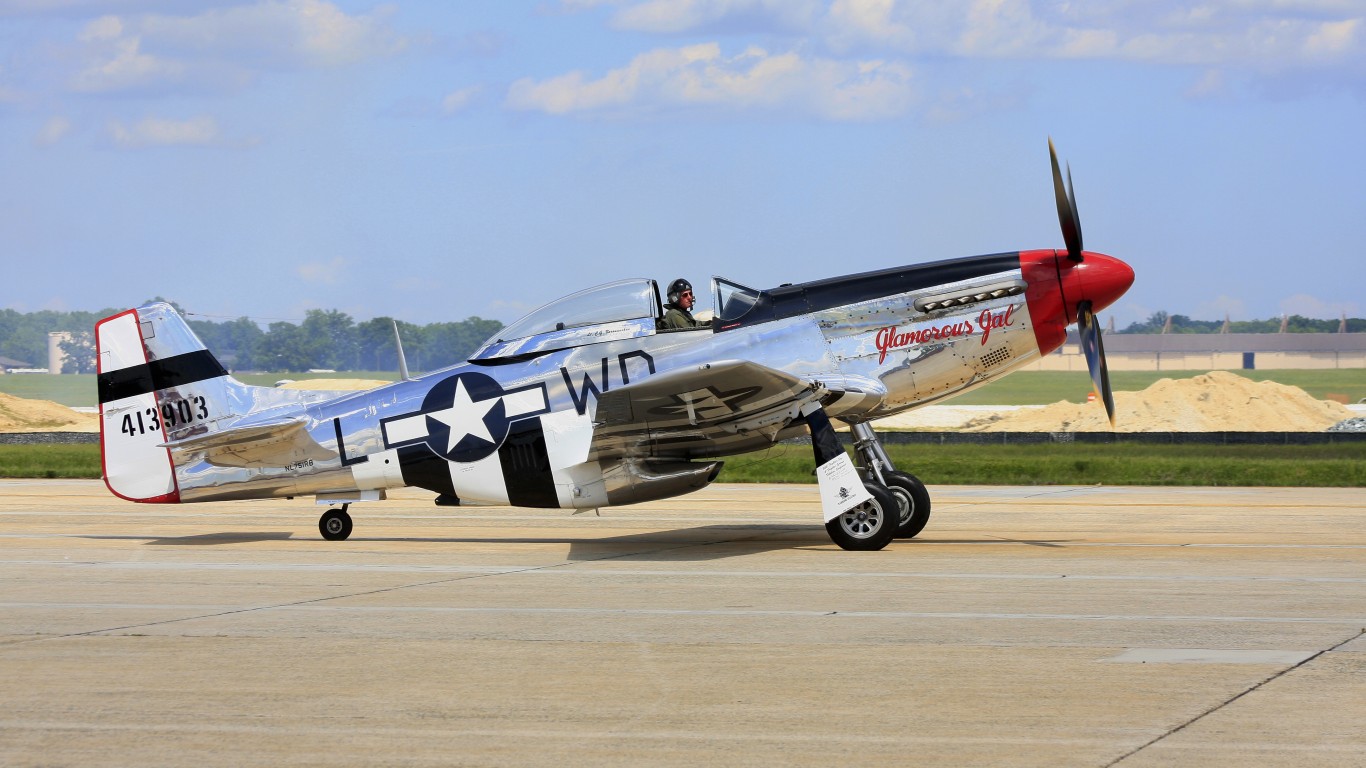
- Lethality index score: 3,037,900
As with tanks, aircraft technology advanced significantly in the inter-war period. Most militaries adopted single-wing aircraft and air power became another staple of combat. Fighter bombers were capable of shooting down other planes as well as devastating ground targets. Advances in weapons and flying technology meant that these planes had significantly larger ranges more firepower, and more advanced tactical abilities.
2. 20-kiloton nuclear bomb (“Fat Man”)
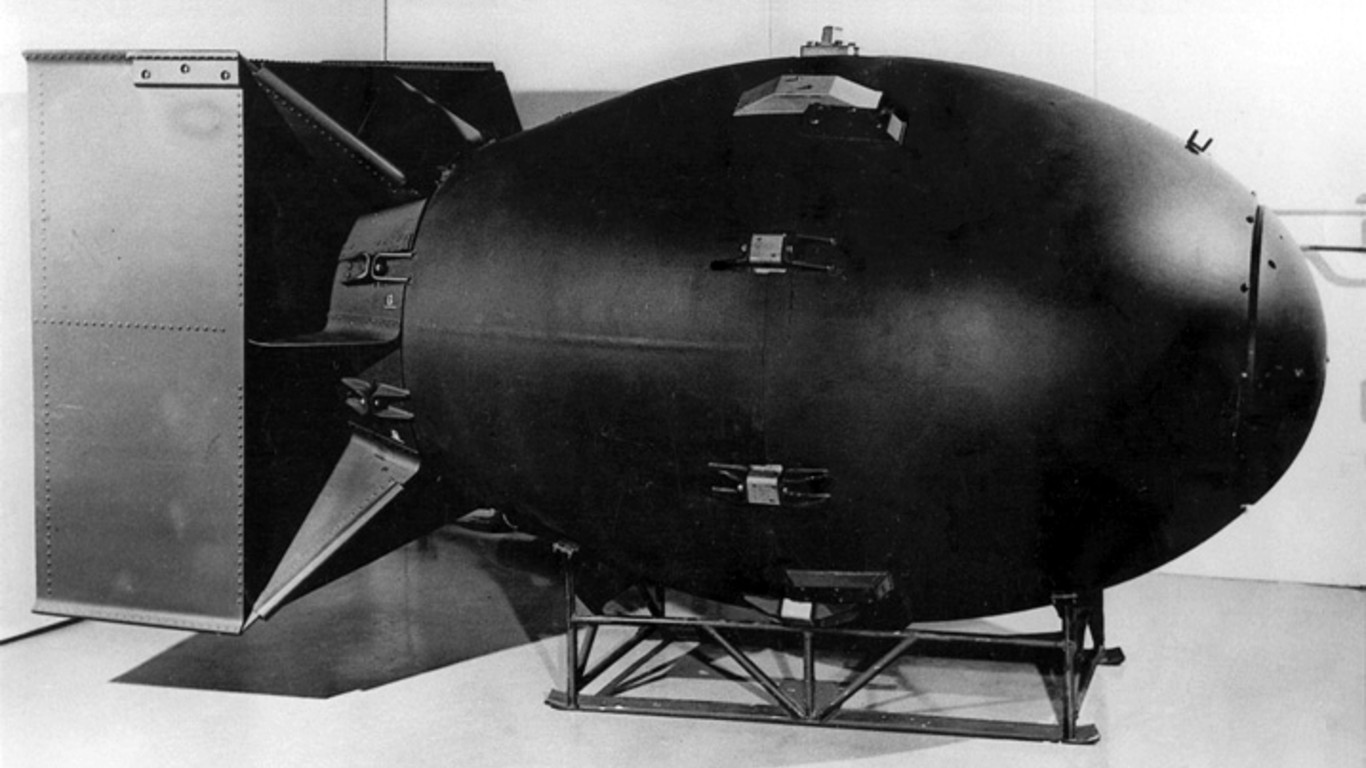
- Lethality index score: 48,550,000
The atomic bomb nicknamed “Fat Man” brought Armageddon to Nagasaki, Japan, at the end of World War II. More powerful than the bomb dropped on Hiroshima three days earlier, it destroyed Nagasaki in a split second, killing tens of thousands instantly and leaving many more seriously wounded by the blast and sickened by nuclear fallout. The explosion would lead to unconditional surrender by the Japanese. It remains only the second time a nuclear bomb has been used in war.
1. 25-megaton hydrogen bomb
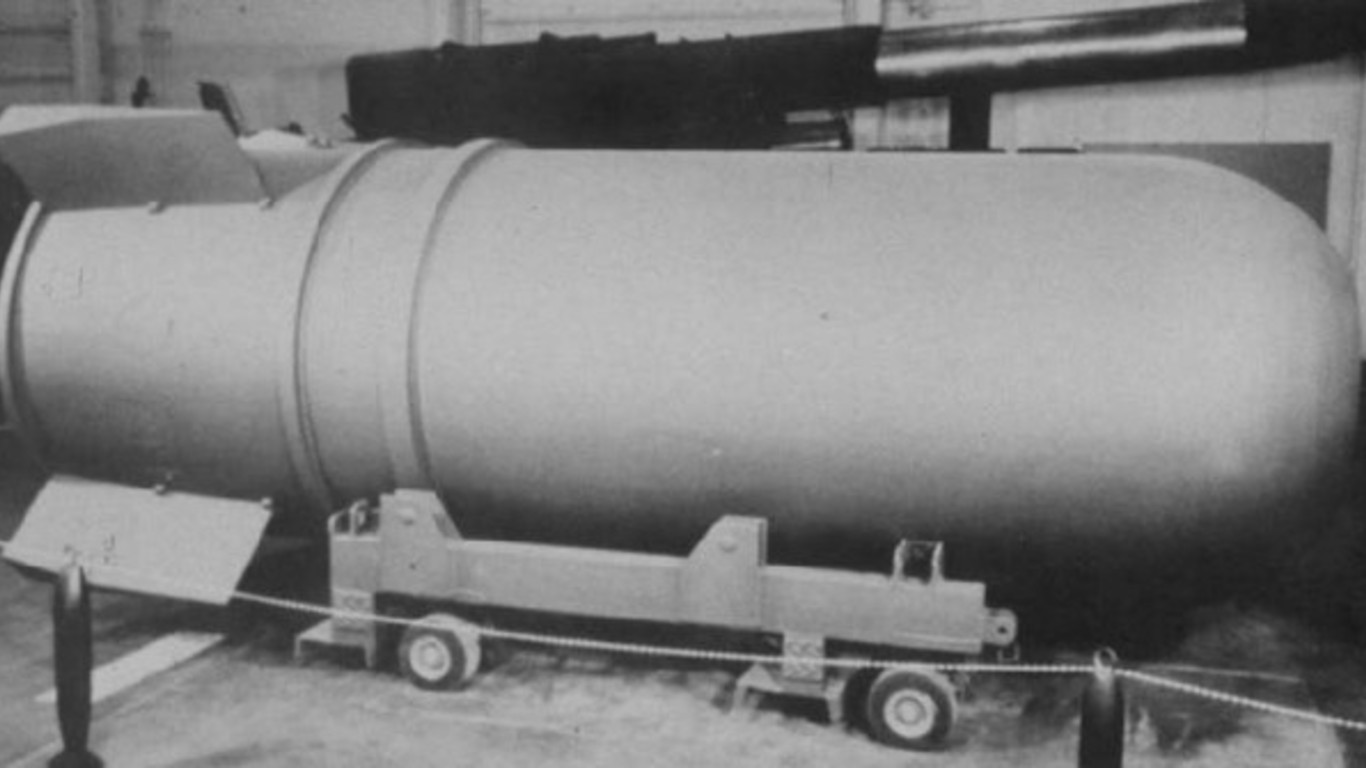
- Lethality index score: 210,000,000,000
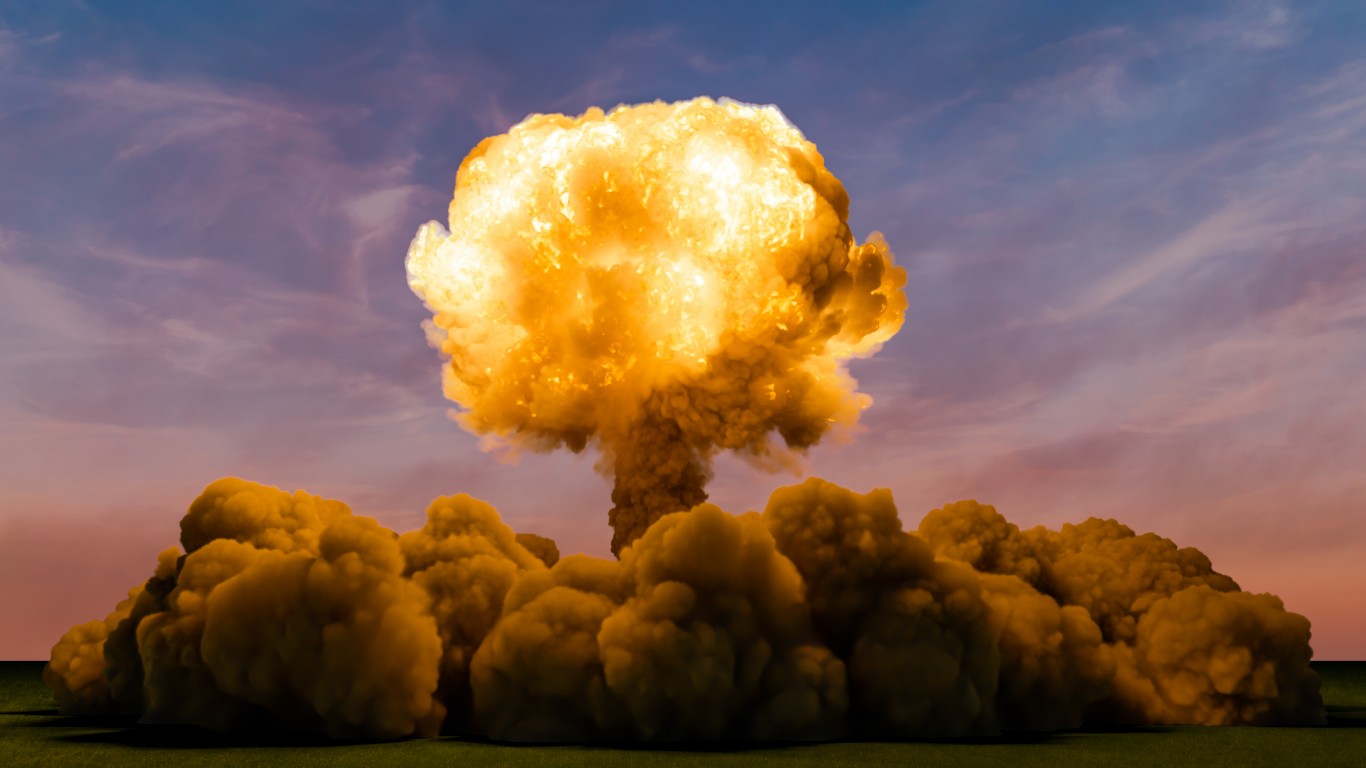
The B-41 hydrogen bomb is the deadliest weapon on this list. It was created in the manic arms race of the Cold War and although the bomb has never been used in warfare, it is capable of destruction on a colossal scale. Its 25-megaton payload is equivalent to 25 million tons of TNT and significantly more powerful than Fat Man’s 20 kilotons of destructive power. The bomb entered US military service in 1961 and was retired in 1976.







 Top Gaining Stocks
 Top Losing Stocks