


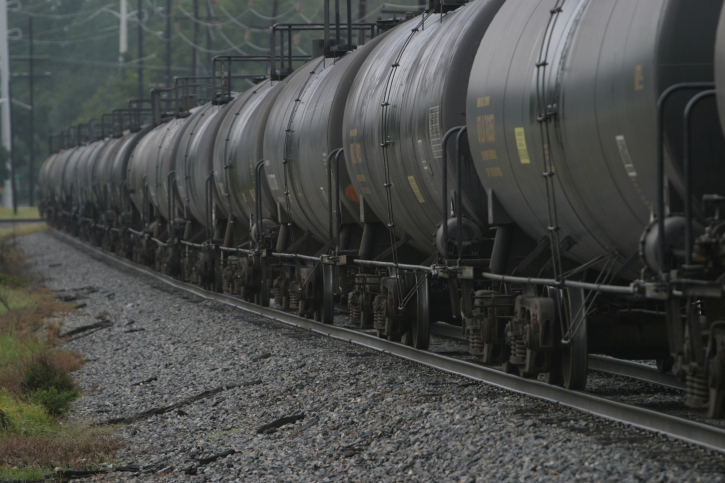
The agreed practices include:
- Increased track inspections
- Improved braking systems on trains
- Adopt new rail traffic routing technology
- Reduced speeds
- Additional community relations
- Better trackside safety technologies
- Better training for local emergency responders
- Create an inventory of emergency response resources
The industry itself has identified 27 risk factors associated with transporting hazardous materials, but the 8 steps the industry plans to take in no way address all of them.
For example, the steps do not retire the old tanker cars, known as DOT-111s. These are known to be more likely to break apart in a crash. Instead, the industry will now “operate trains with 20 or more tank cars carrying crude oil that include at least one older DOT-111 car no faster than 40 miles-per-hour in the federally designated 46 high-threat-urban areas (HTUA) as established by DHS regulations.” Those 46 routes are not publicly disclosed.
On the plus side, any steps the industry takes to self-regulate can be implemented much more quickly than any federally regulated steps can be proposed, debated, adopted and challenged. BNSF, the railroad owned by Warren Buffett’s Berkshire Hathaway In. (NYSE: BRK-B), said last week that it will acquire up to 5,000 of the new rail tankers. Other rail operators and oil producers have said they will scrap the old DOT-111s.
It pays to remember that U.S. railroads are virtually self-regulating. Railroad consultant Fred Millar told the New York Times, “There is a telling lack of any new reporting and accountability measures, and federal resource augmentations, that could signal a new federal determination to reduce risks.” For the country’s railroads, this is an old story.
Another question worth pondering: Are the risks of another disaster such as the one that killed 47 people and destroyed a section of Lac-Mégantic, Quebec, higher or lower than the risks of a spill or explosion on the proposed Keystone XL pipeline?






 Top Gaining Stocks
 Top Losing Stocks