


The number of people who travel by air on a given day has dropped by as much as 80%. Carriers have mothballed large jets by the thousands. Tens of thousands of airline workers face job loss. Even government bailouts may not solve the industry’s financial problems in the long term. If air travel stays down for over a year and continues to remain below last year’s levels, it begs the question of whether the United States needs four big carriers.
Approximately 82% of seats on each flight were filled when the airline industry was doing well last year. That means the excess capacity in the industry was already considerable. A small number of carriers take up a very large part of the market share of fliers.
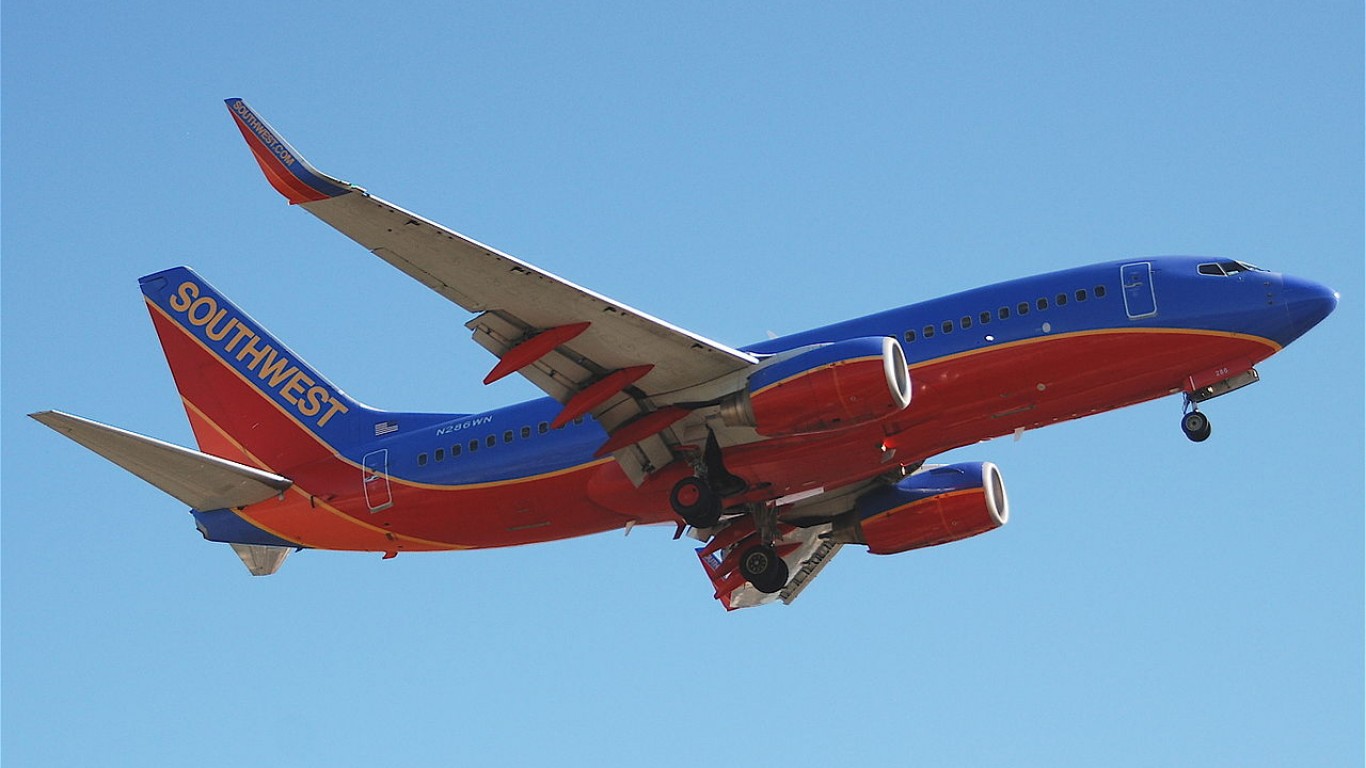
Last year, American Airlines Group Inc. (NASDAQ: AAL | AAL Price Prediction) flew 215 million people, and Delta Air Lines Inc. (NYSE: DAL) flew 204 million. Southwest Airlines Co. (NYSE: LUV) and United Airlines Holdings Inc. (NASDAQ: UAL) each flew 163 million people. No other carrier few more than 50 million people. However, the smaller carriers do add seat capacity to the system, which puts more financial pressure on the largest carriers.
Part of the competitive landscape in the airline industry is that most major and many midsized airports are destinations for two or more carriers. The competition will not be so keen or profitable if air travelers are slow to come back. The four largest carriers will abandon some of these markets. As the destinations served by carriers fall, so will the number of airplanes and employees they will need to serve a smaller service footprint. The four largest carriers could have spare capacity by the tens of millions of seats.
During the Great Recession, airline travel dropped more than 9% and stayed down until the recession ended. The pandemic will keep people off flights for economic reasons. What will cause much larger attrition is the fear of contracting the disease in an enclosed space where people sit near one another for hours.
[nativounit]
How is the airline industry capacity issue solved? One method would be through a major merger, which would allow the merged companies to stop flying duplicate routes on their own. They will need fewer planes and fewer employees. Another is the possibility of a large bankruptcy by a big carrier. It may have to downsize to pay debts.
Does the United States need American, Delta, Southwest and United to travel now? No. And they may not need them all in the future.
[recirclink id=677227]
[wallst_email_signup]





 Top Gaining Stocks
 Top Losing Stocks