


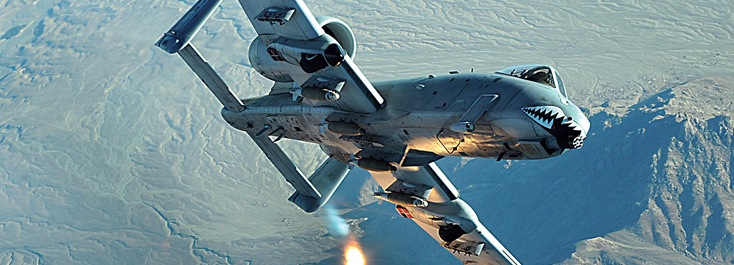
The A-10 was designed and first built by Fairchild Republic, which was acquired by Northrop Grumman Corp. (NYSE: NOC) in 1987. According to an April 2015 report from FlightGlobal, the USAF had 288 Warthogs in active service. In order to transition maintenance and support smoothly to a new plane, the Air Force wants to retire the A-10 and move the maintenance crews to the anointed successor F-35 from Lockheed Martin Corp. (NYSE: LMT).
ALSO READ: NATO Defense Spending Lags
The GAO is not convinced. In its cover letter to “appropriate congressional committees” and various defense department divisions the GAO said:
Without a reliable estimate of savings, neither we nor any other organization has a reliable basis from which it could identify potential alternative savings and assess their relative risk, including to air superiority and global strike.
Nor has the USAF considered fully the implications of retiring the A-10:
Air Force divestment of the A-10 will create potential gaps in close air support (CAS) — a mission involving air action against hostile targets in proximity to friendly forces — and other missions, and DOD is planning to address some of these gaps. For example, A-10 divestment results in an overall capacity decrease in the Air Force’s CAS-capable fleet. This capacity reduction is mitigated by phasing A-10 divestment over several years and by introducing the F-35 into the fleet, but Air Force documentation also shows that the F-35’s CAS capability will be limited for several years. Air Force analysis shows that divestment of the A-10 would increase operational risks in one DOD planning scenario set in 2020.
Last October, the Indiana Air National Guard’s 122nd Fighter Wing deployed about a third of its force of A-10s and crews to support ground operations for the U.S. Central Command.
ALSO READ: US Government Approves Fighter Plane Sale to Lebanon






 Top Gaining Stocks
 Top Losing Stocks