


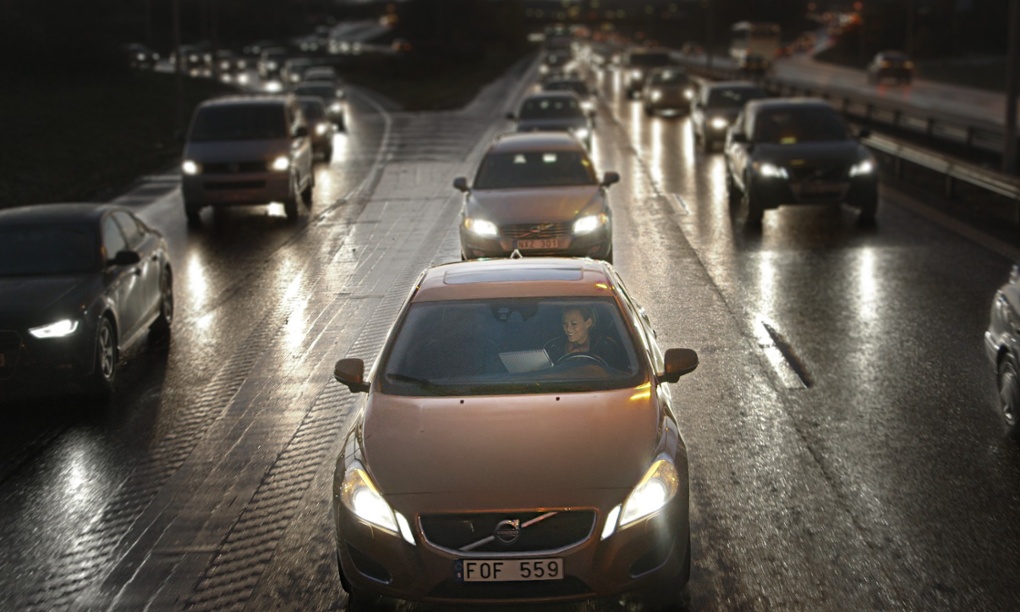
The study on which this observation was based comes from the University of Michigan Transportation Research Institute. However, it is not based on putting people into cars and testing them directly, so the results may not mean much.
Nevertheless, according to a summary of the results of “Motion Sickness in Self-Driving Vehicles“:
Motion sickness is expected to be more of an issue in self-driving vehicles than in conventional vehicles. The reason is that the three main factors contributing to motion sickness (conflict between vestibular and visual inputs, inability to anticipate the direction of motion, and lack of control over the direction of motion) are elevated in self-driving vehicles. However, the frequency and severity of motion sickness is influenced by the activity that one would be involved in instead of driving.
This report calculates the expected frequency and severity of motion sickness in fully self driving vehicles based on the expected frequencies of different activities from a recent survey of what individuals would be likely to do in a fully self-driving vehicle — a survey performed in the U.S., China, India, Japan, the U.K., and Australia. The results indicate that, for example, 6%-10% of American adults riding in fully self-driving vehicles would be expected to often, usually, or always experience some level of motion sickness. Analogously, 6%-12% of American adults riding in fully self-driving vehicles would be expected to experience moderate or severe motion sickness at some time. Calculations for the other five countries are also presented.
ALSO READ: How Often Will the Tesla Self-Driving Car Crash?
There is hope for the people who will get motion sickness, as the summary of the research points out:
The report concludes with a discussion of ways to minimize the frequency and severity of motion sickness in self-driving vehicles.
Self-driving cars, therefore, may also have medical aides.







 Top Gaining Stocks
 Top Losing Stocks