


The much-publicized recovery of the economy of the City of Detroit is barely a recovery at all. What was once the world’s auto capital continues to lose population and its tax base. In some ways, Detroit is worse off than it was a decade ago, according to one highly regarded credit rating firm.
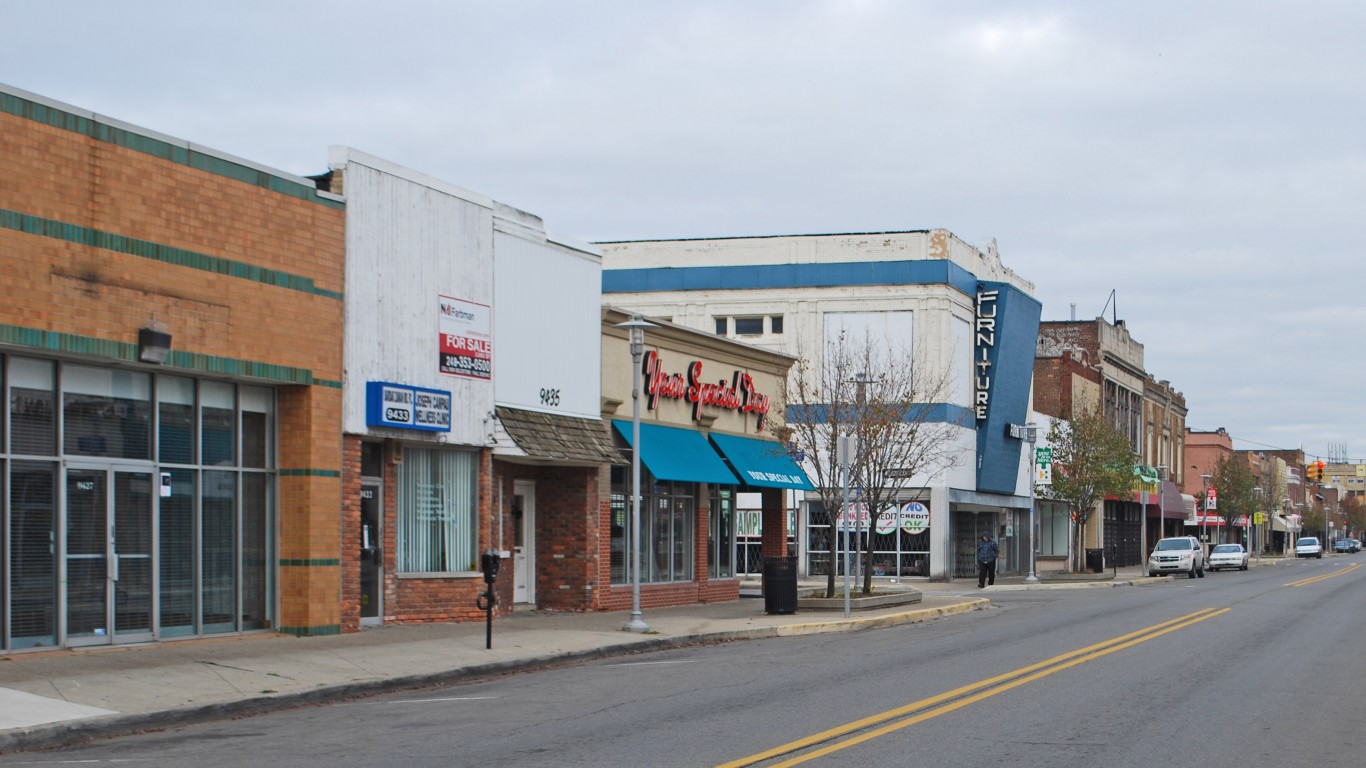
Moody’s Investor Services recently released a report titled “Detroit’s downtown development fueling growth, but city’s demographics remain weak.” The report points out that Detroit’s recovery is limited to a small part of the city. The balance of the city continues to have economic conditions that are much worse. Taken together, the recovery of Detroit, viewed as an entire city, has not happened.
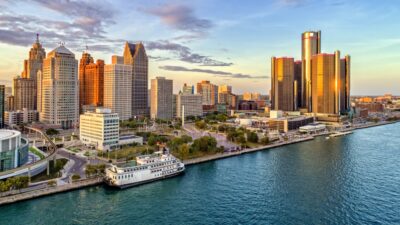
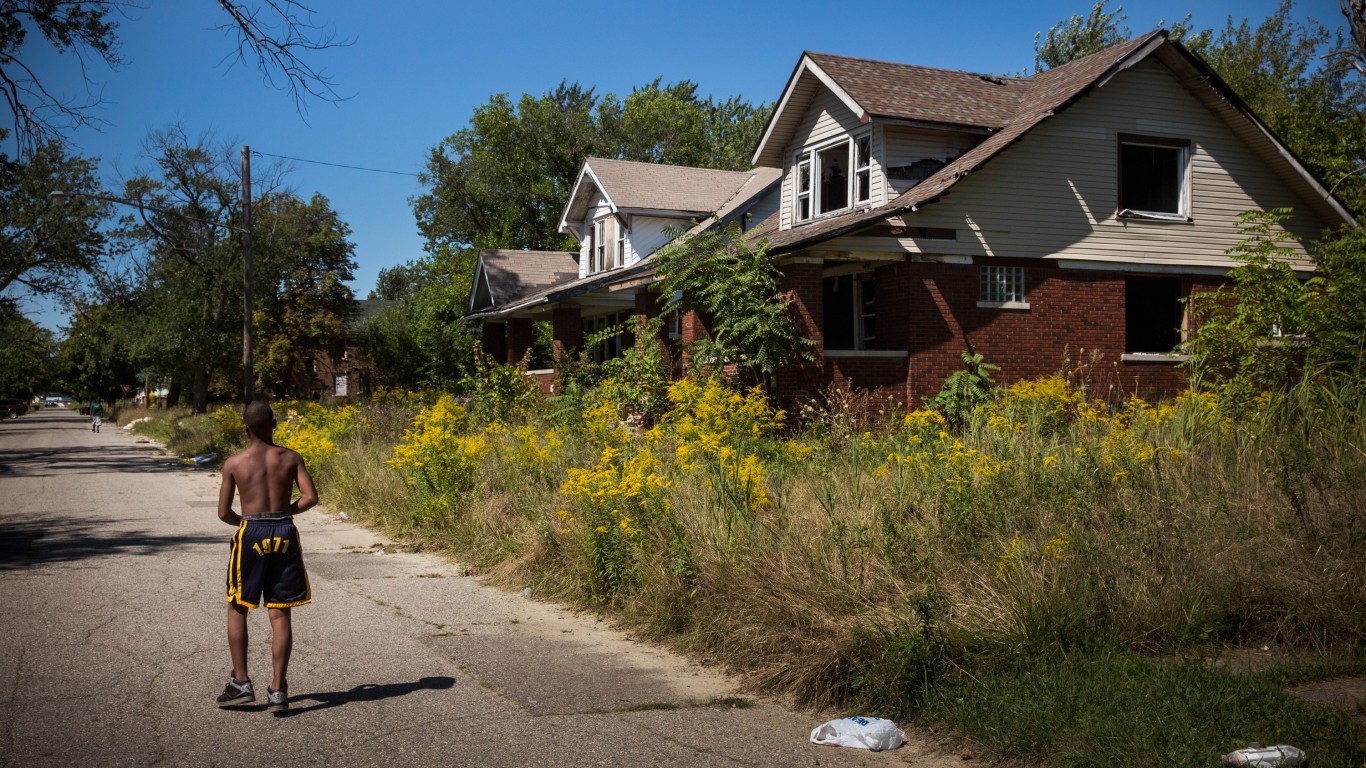
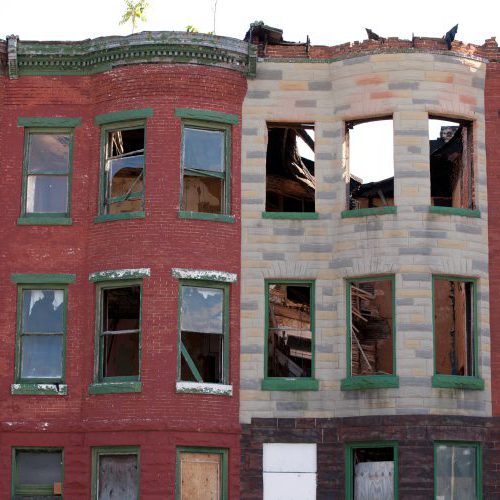
Moody’s experts write that the area of sharp recovery covers only seven square miles downtown. The balance of Detroit’s 143 square miles are mired in poverty and these sections continue to lose population. The portion of Detroit that has benefited from the improvement includes only 6% of the total people who live in the city. Their prosperity has not been enough to offset Detroit’s troubled tax base.
The Moody’s report offers several statistics to prove its point. Commuters to the downtown center and the people who have moved there permanently are “energizing income tax receipts.” However, this influx has added only 10,000 people to the downtown area since 2010. Over the same period, 35,000 people have left the city. Taken together, the per-capita income of the city is only 52% of the national average.
In summary, David Levett, a Moody’s vice president, wrote: “Downtown Detroit’s growth will continue due to several large development projects in the pipeline. However, this growth will need to accelerate over a wider area to significantly alter Detroit’s weak demographic profile or stem overall population loss.”
These trends are decades old. Detroit’s population in 1950 was 1.85 million according to the U.S. Census. It was estimated to drop to 673,000 last year. The poverty rate is just under 35%, one of the highest levels for any city in America.
Detroit was once home to Ford, General Motors, Chrysler, and car companies like Dodge that have been bought out or disappeared. In 1913, Henry Ford created the modern production line that helped drive an influx of people to Detroit, many of whom had good-paying jobs in the early part of the 20th Century. As late as the mid-1960s, American car companies had almost 90% of all sales in the U.S. Imports, and some say poor quality manufacturing by American car companies, deeply eroded that market share. The market share of “The Big Three” was 45% of American cars sales in the first 10 months of this year.
Several large companies tried to revitalize downtown Detroit in 1977 when they built the 73-story Renaissance Center. Whatever success the development and improvements in the area around it may have had, Detroit’s population continued to skid from 1.2 million in 1980.
The turnaround in Detroit continues to be burdened by legacy problems, which will not go away








 Top Gaining Stocks
 Top Losing Stocks