


While this sounds like a great alternative to short-term bond investing, we want you to pay close attention to the fee structure here against the current interest rate environment. The fees may actually offset the boost in performance from an actively managed strategy.
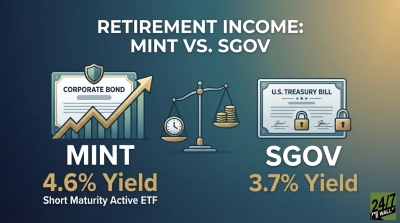
Actively managed ETFs are still relatively new and are far less common than most of the pure index-tracking ETFs we see. AdvisorShares is one of the top players in actively managed ETFs. Its website shows 17 actively managed ETFs that have about $630 million in total assets. The MINC ETF “seeks to provide current income consistent with preservation of capital, while limiting fluctuations in net asset value due to changes in interest rates.” It sounds like a money-market fund alternative.
It is said that there is a three-step process focusing on sector analysis and allocation, security selection and portfolio construction. It is also said to use an opportunistic approach to actively manage the ETF by overweighting and underweighting 14 different bond sectors. The long and short of the matter is that this ETF seeks to represent an alternative to short-term investments.
The Net Asset Value launch price will be $50.00 with 1,100,000 shares outstanding. Its top two holdings are short-term Treasury notes and bills:
- US TREASURY N/B 0.25 2/28/2015 at 49.11% weighting
- US TREASURY N/B 0.375 3/15/2016 at 24.56% weighting
What is interesting is that the fees are not extremely high for actively managed ETFs, but they will be a potential issue for investors seeking to outperform short-term rates when short-term rates are so low at the same time that the fees have to be paid.
The management fee is 0.65% and other expenses are 0.12%, giving it a gross expense ratio of 0.77%. A fee waiver and expense reimbursement of 0.02% gives this ETF a net expense ratio of 0.75% for at least the first year after inception. The two-year Treasury note yields only 0.25% as of now, and the five-year Treasury note yields only 0.80%.
The problem we have with this ETF is not the strategy, because we really feel as though investors need an actively managed strategy like this to beat the low-rate or no-rate environment. We are just concerned that all of the income based on the current yield curve and low-rate environment will just pay the management fees of the ETF.













 Top Gaining Stocks
 Top Losing Stocks